


If you’re buying aged basmati rice for the Canadian market, you already know your customers won’t settle for less. A Punjabi grandmother in Brampton can tell new crop from properly aged basmati before the pot’s even finished cooking. We sell aged basmati rice in 1121, 1509, Pusa, Super Kernel and traditional varieties, raw, steam and sella, aged to the period you ask for, packed in metric bags with bilingual labels, and shipped by the container to Canadian importers, distributors, grocers and restaurants.
This post explains why aged basmati rice for the Canadian market sells the way it does, what aging actually does to the grain, how to check that the age on the paperwork is real, what Canadian import and labelling rules involve, and what we offer, with full specifications. I’ve written it the way I’d explain it to a new customer over a cup of tea, without the sales fluff.
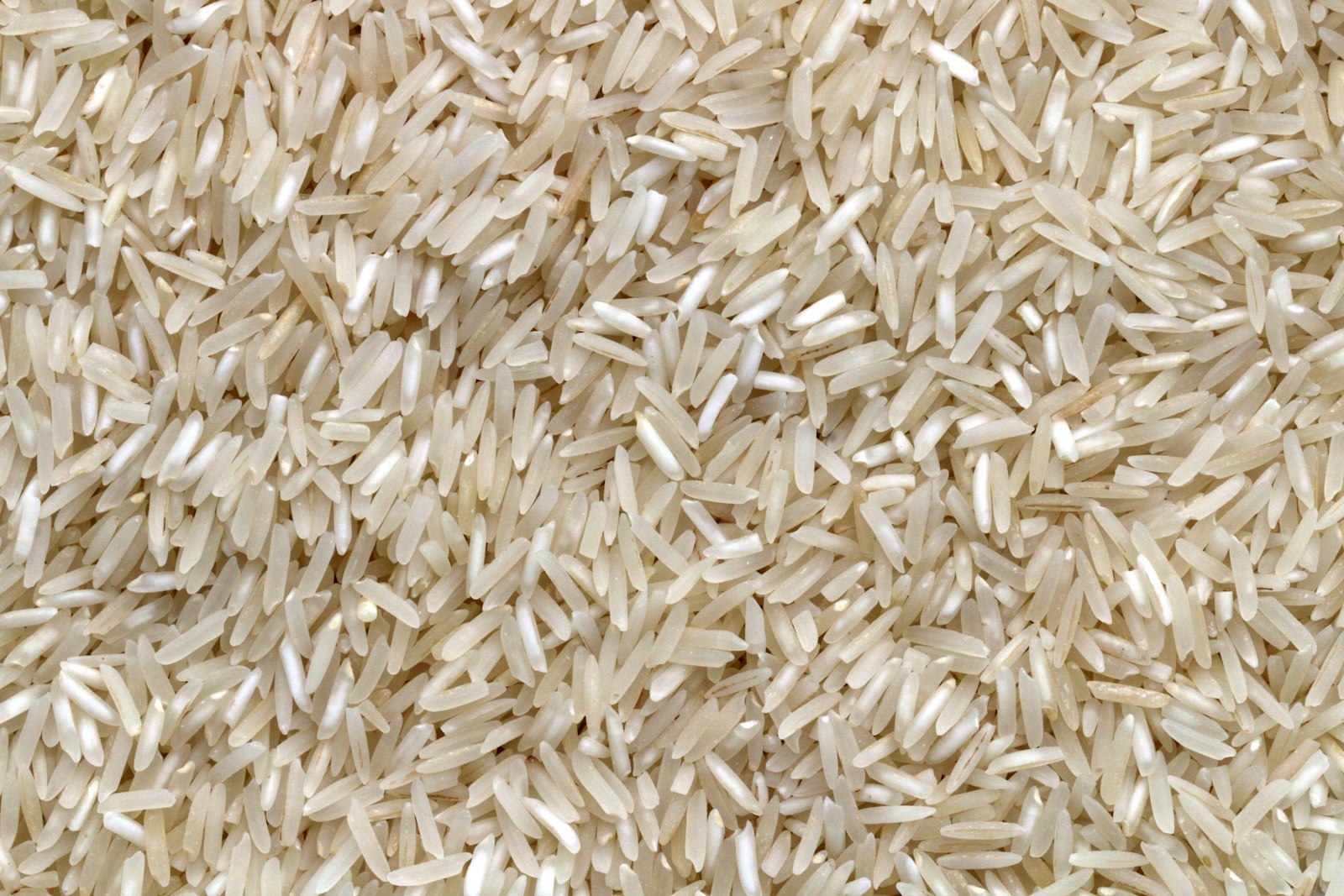
Table of Contents
Table of Contents
Why Aged Basmati Rice for the Canadian Market Sells So Well
To understand aged basmati rice for the Canadian market, start with the people. Canada has one of the largest South Asian populations outside South Asia, concentrated around Brampton, Mississauga and the wider Toronto area, Surrey and Vancouver, Calgary, Edmonton, Winnipeg and Montreal. For most of these families, basmati isn’t a side dish. It’s daily food and the centre of every celebration.
And for a lot of them, especially Punjabi, Pakistani and Afghan households, aged basmati is simply what proper basmati means. New crop basmati cooks softer, breaks more easily and doesn’t stretch as long. Aged rice comes out long, firm, separate and fragrant. People notice the difference at a wedding buffet, and they talk about it.
Add Canada’s busy Indian, Pakistani, Persian and Middle Eastern restaurant trade, plus mainstream supermarkets stocking basmati as a standard line, and you get steady demand for aged basmati rice for the Canadian market that doesn’t really have an off season.
What Aging Actually Does to Basmati
Aging isn’t a marketing word, or it shouldn’t be, and it’s the whole point of aged basmati rice for the Canadian market. Basmati paddy or rice is stored under controlled conditions for months after harvest, and several things happen:
- Moisture drops. Drier grains absorb water more evenly and are less likely to burst.
- The grain firms up. Starches settle, so the cooked rice stays separate instead of turning sticky.
- Elongation improves. Aged 1121 can stretch to around twice its raw length when cooked.
- The aroma matures. Many cooks say aged basmati has a deeper, more rounded smell.
- Colour changes slightly. Aged raw basmati often looks a touch creamier than new crop.
The trade off is cost. Storing rice ties up money, warehouse space and care for months, so aged basmati rice for the Canadian market always costs more than new crop. Most buyers find the price difference is easily covered by what customers will pay.
How long is “aged”?
There’s no single rule for aged basmati rice for the Canadian market. In the trade you’ll see rice sold as aged after roughly six months, with premium lots at twelve months and some specialist rice aged eighteen months to two years. What matters is that the age is stated, documented and true. We confirm the crop year and aging period of every lot in writing.
Our Aged Basmati: Specifications
| Specification | Details |
|---|---|
| Varieties | 1121, 1509, Pusa, Super Kernel, traditional basmati |
| Styles | Raw (white), steam, golden sella, white sella, brown |
| Aging | Aged to order, crop year and aging period stated per lot |
| Grain type | Extra long, slender, aromatic |
| Average grain length | By variety, confirmed per contract |
| Purity | 95% minimum |
| Moisture | 13% maximum |
| Broken grains | 1% to 5% depending on grade |
| Damaged and discoloured grains | 1% maximum |
| Foreign matter | 0.5% maximum |
| Sorting | Fully sortexed |
| Origin | Confirmed on each quotation |
| Shelf life | 18 to 24 months with proper storage |
| Canadian packing | 1, 2, 4.54 (10 lb), 9.07 (20 lb), 18.14 (40 lb), 20 and 25 kg |
| Labels | English and French, metric first, your brand or ours |
| Bags | Non woven with handles, jute look, BOPP laminated, PP woven |
More detail is on our basmati rice for sale page. For general background on the rice, the Wikipedia article on basmati is a decent primer.
Which Aged Basmati Suits Which Canadian Buyer
Aged 1121 raw or steam
The headline product for South Asian grocery in Ontario and BC. Steam 1121 is easier for home cooks because it’s firmer and more forgiving. Raw 1121 has the stronger aroma. Both sell, and many importers carry both.
Aged 1121 golden or white sella
The restaurant and catering rice. Banquet halls in the GTA cooking for four hundred guests want rice that won’t break or clump in a big pot, and sella delivers. Afghan and Middle Eastern buyers often prefer sella at home too. See golden sella vs white sella parboiled rice for the details.
Aged Super Kernel and traditional
A strong following among Pakistani Canadian families and anyone who prefers the classic basmati taste over sheer length.
1509
The value option. It’s long and aromatic and costs less than 1121, so it’s popular as a second brand or with mainstream supermarkets.
How to Check That Aged Basmati Is Really Aged
This is where buyers get caught. Selling new crop as aged is one of the oldest tricks in the basmati trade, because it’s hard to prove from a raw sample. Here’s how to protect yourself when buying aged basmati rice for the Canadian market.
- Get the crop year and aging period in writing, in the contract, not just in an email.
- Cook the sample. Aged rice elongates more and stays separate. New crop tends to stick, break and swell sideways.
- Measure elongation. Measure 20 raw grains, cook, measure 20 cooked grains. Aged 1121 should come close to doubling.
- Look at the colour. Aged raw basmati is often slightly creamier, though this varies.
- Ask for a pre shipment sample from your actual lot and compare it to the approval sample.
- Use an independent surveyor at loading for quality and weight.
- Build a relationship. Honestly, the best protection is a supplier who values repeat business more than one quick sale.
Importing Aged Basmati Rice for the Canadian Market: The Rules
Like all food, aged basmati rice for the Canadian market falls under the Safe Food for Canadians Regulations, administered by the Canadian Food Inspection Agency. I’m a rice exporter, not a Canadian regulatory advisor, so check the specifics with your customs broker. In general, importers deal with the following.
SFC licence
Most businesses importing food into Canada need a Safe Food for Canadians licence, applied for online through My CFIA.
Preventive control plan
A written plan showing how you make sure the food you import is safe and correctly labelled. Our supplier documents, test reports and specifications slot straight into it.
Traceability
One step back and one step forward. We print lot codes on every bag.
Residue testing
Canada sets maximum residue limits for pesticides, and some products used on rice in South Asia are tightly limited. We test lots at an independent lab before loading and send you the report. The CFIA’s step by step guide to importing food is worth reading before your first container.
Duties and taxes
Rice has generally entered Canada with low or no duty, and plain rice is usually zero rated for GST and HST as a basic grocery. Confirm the current position for your tariff code with your broker.
Labelling Aged Basmati for Canada
Labels are where most problems with aged basmati rice for the Canadian market start, so get these right before printing.
- English and French on the required parts of the label. “Aged Basmati Rice / Riz basmati vieilli”.
- Metric net quantity. “9.07 kg (20 lb)” works well, metric first.
- Dealer name and address, usually the importer, with “Imported by / Importé par”.
- Country of origin.
- Bilingual Nutrition Facts table on retail packs.
- Lot code for traceability.
- Aging claims. If you print “aged 12 months”, be able to back it up. That’s another reason to have the aging period in the contract.
We print bilingual bags to your approved artwork all the time. Our post on private label rice covers the proof and printing process.
Bag Sizes Canadian Shoppers Expect
| Bag size | Who buys it |
|---|---|
| 1 kg and 2 kg | Mainstream supermarkets, premium retail |
| 4.54 kg (10 lb) | Supermarkets and South Asian grocery |
| 9.07 kg (20 lb) | South Asian grocery, the standard family bag |
| 18.14 kg (40 lb) | Large families, small restaurants |
| 20 kg and 25 kg | Restaurants, banquet halls, caterers |
You can mix sizes of aged basmati rice for the Canadian market in one container. A lot of our Canadian buyers ship mainly 20 lb bags with some 10 lb for supermarkets and some 40 lb for the trade.
Shipping Aged Basmati to Canada
Aged basmati rice for the Canadian market usually travels one of two ways. West coast buyers bring it in through Vancouver or Prince Rupert, with rail on to Alberta, the Prairies and Ontario. Ontario and Quebec buyers often prefer the route via the Suez Canal to Montreal or Halifax, then rail or truck inland. Transit times vary a lot by route and carrier, so we confirm them on each booking.
Plan for winter. Rail and road delays across the Rockies and the Prairies in January and February are normal, and Diwali, Eid and wedding season stock needs to land well before the rush.
Each container comes with a commercial invoice, packing list, bill of lading, certificate of origin, phytosanitary and fumigation certificates, a certificate of analysis, an independent quality and weight certificate, the residue test report and a halal certificate on request. See our rice export documents checklist for the full list.
Seasons That Drive Aged Basmati Sales in Canada
- Diwali, usually October or November, is a huge period for South Asian grocery.
- Ramadan and Eid, which move through the calendar each year.
- Wedding season, roughly late spring through autumn, which pushes catering and banquet demand.
- Vaisakhi in April, especially in Surrey and Brampton.
Aged basmati rice for the Canadian market has to be in the warehouse before these peaks, not on the water. Work back at least two to three months from each one.
Pricing and Minimum Order
The price of aged basmati rice for the Canadian market depends on variety, style, aging period, packing, freight and the season. Aged 1121 sella sits at the top, new crop 1509 at the lower end. We quote on a dated offer, FOB or CFR and CIF to your Canadian port. Minimum order is usually one 20 foot container, with mixed varieties and sizes allowed. For more on comparing offers, read FOB vs CIF rice price, and our minimum order quantity guide explains how loads are split.
More for Canadian Buyers
Many Canadian importers who buy basmati from us also take Thai rice: Thai Hom Mali rice for East Asian shoppers, Thai jasmine rice for value lines and glutinous rice for desserts. Our guide to jasmine rice imports to Canada covers that side of the business.
If you also sell into the US, read basmati rice importers in the United States. For extra long 1121 in bulk, see extra long grain basmati rice wholesale, and for food service long grain, Thai long grain white rice bulk suppliers USA and Thai long grain rice vs American long grain rice.
Aged Basmati Rice for the Canadian Market, Region by Region
Canada’s basmati buyers aren’t all the same, and a container that sells out in Surrey can sit in a Montreal warehouse. Here’s how we see the main markets.
Greater Toronto and Brampton
The biggest market for aged basmati rice for the Canadian market by a wide margin. Large South Asian supermarket chains, hundreds of independent grocers, banquet halls and restaurants. Shoppers here know their rice, and aged 1121 steam and sella in 20 lb and 40 lb bags are the core of the trade. Price competition is fierce, which is why quality and consistency matter so much: you can’t win on price alone against the big names.
Surrey and Metro Vancouver
A strong Punjabi community with a firm preference for well aged rice. Buyers here are particular about aroma and elongation, and they’re close to the Pacific ports, which helps with freight.
Calgary and Edmonton
Fast growing South Asian and Middle Eastern populations, plus a busy restaurant trade. Rice usually arrives by rail from Vancouver. Sella does well because of the number of Afghan, Pakistani and Middle Eastern restaurants.
Montreal
A smaller basmati market than Toronto but a loyal one, with South Asian, North African and Middle Eastern buyers. French labelling has to be spot on here.
Winnipeg and the Prairies
Growing, often supplied from Toronto or Vancouver distributors. Some importers here are starting to bring in their own containers as volume builds.
How Restaurants and Banquet Halls Use Aged Basmati
Food service is where aged basmati really earns its price. A banquet kitchen cooking biryani for a wedding of five hundred people can’t afford rice that breaks or clumps. Aged sella and aged steam 1121 hold their shape in huge pots, stay separate when they’re layered with meat and masala, and keep looking good on a buffet for hours. That’s why so many catering buyers ask specifically for aged basmati rice for the Canadian market rather than whatever’s cheapest that month.
Restaurant buyers usually want:
- 20 kg or 40 lb bags, easy to lift and store.
- The same rice every delivery, so the cooks don’t need to change their water ratios.
- Sella for biryani and pulao, steam or raw for plain rice.
- A supplier who won’t run out during wedding season.
We plan regular shipments for food service distributors so stock is in place before the busy months.
Cooking Notes for Canadian Shoppers
New Canadian shoppers, and many mainstream supermarket customers, cook basmati like ordinary rice and are then disappointed. Printing a short method on the bag helps a lot.
- Aged raw or steam basmati: rinse three or four times, soak 30 minutes, cook with about 1.5 to 1.75 cups of water per cup of rice, covered on low heat for 12 to 15 minutes, then rest 5 minutes.
- Aged sella: rinse, soak 30 to 60 minutes, then boil in plenty of water and drain, or cook with about 2 cups of water per cup.
- Brown basmati: about 2 to 2.25 cups of water per cup and around 40 minutes.
Aged rice usually needs a little more water than new crop. Mentioning that on the bag saves a lot of “the rice was hard” complaints.
Building Your Own Aged Basmati Brand in Canada
Plenty of Canadian importers start by distributing well known brands and then launch their own. Private label gives you control over price and shelf space, and your customers’ loyalty belongs to you rather than to a brand owner who might sign with your competitor next year.
What tends to work for a new brand of aged basmati rice for the Canadian market:
- A clear age claim on the front, backed by your contract.
- Two tiers: premium aged 1121 and a value 1509 or new crop line.
- Matching restaurant packs, so your name gets known in the trade.
- Bilingual bags that look as good as the big brands.
We handle printing, packing and shipping. You handle the selling, which is the part you know best.
Storing Aged Basmati in a Canadian Warehouse
Canada’s climate is kind to rice for most of the year. Cool, dry air helps aged basmati keep its aroma. There are still a few things to watch.
- Condensation in winter. A container that’s crossed the Prairies at minus twenty and is opened straight into a heated building can sweat. Let it settle before unloading where you can, and keep air moving.
- Humid summers. Toronto and Montreal get hot and sticky in July and August. Rotate stock faster then.
- Odours. Rice picks up smells. Keep it away from spices, soaps and fuel.
- Pallets and gaps. Off the floor, away from walls, with room to inspect.
Handled well, aged basmati rice for the Canadian market keeps its quality for well over a year in the warehouse, and some buyers find it keeps improving for a while.
Frequently Asked Questions
What is aged basmati rice for the Canadian market?
Basmati that’s been stored for months after harvest so it cooks longer, firmer and more separate, packed with metric bilingual labels for Canadian retail and food service.
How long is your basmati aged?
To order. Tell us the aging period you want and we’ll confirm availability, with the crop year and aging stated in writing.
Can you print bilingual labels?
Yes, English and French, metric first, to your artwork.
Do you test for pesticide residues?
Yes, at an independent lab before loading.
Which port is best?
Vancouver for the West and much of Ontario by rail. Montreal or Halifax for Quebec and parts of Ontario, depending on freight rates.
Do you sell outside Canada?
Yes. We export worldwide.
Can I get samples?
Yes. We courier samples so you can cook and measure them.
Is aged basmati worth the extra cost for a small grocer?
Usually, yes. Customers who buy basmati every week notice the difference quickly, and they’ll come back for the rice that cooks well. Start with a few pallets of aged 1121 alongside your regular stock and watch which one sells through faster. Most of the grocers we hear from end up shifting the bulk of their shelf to aged rice within a few months.
What’s the minimum order?
Normally one 20 foot container, and you can split it across varieties, styles and bag sizes. Smaller buyers sometimes share a container with a neighbouring distributor for the first order.
Buy Aged Basmati Rice for the Canadian Market
De Thai Products 1989 Company Limited exports basmati rice alongside Thai Hom Mali, Thai jasmine, white, parboiled and glutinous rice, and ships worldwide. If you need aged basmati rice for the Canadian market with honest aging, clean test results and labels that pass, talk to us. Our quality control page explains how lots are checked.
Tell us the variety, style, aging period, bag sizes, label details, quantity and port, and we’ll send samples and a dated offer. Email info@dethairice.com, WhatsApp +66 81 034 6390, or use our contact page.
One thought on “Aged Basmati Rice for the Canadian Market: Best Offer”