


Thai glutinous rice 10% broken is the grade we’d point most wholesale buyers to if they asked us for one sticky rice that does a bit of everything. We sell it direct from Thai mills, by the container, in 25 kg and 50 kg bags or retail packs from 1 kg, plain or under your own brand. It goes to importers, distributors, restaurant suppliers and food factories all over the world. On this page you’ll find the full spec sheet, packing, loading, documents, how pricing works and how to place an order.
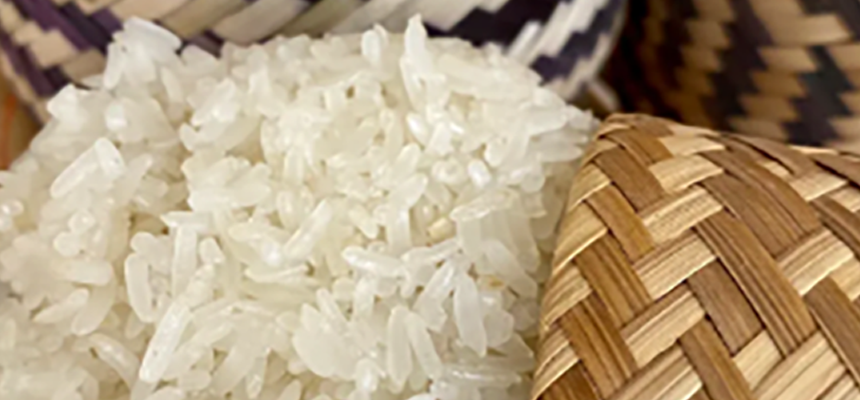
The 10% grade sits in the middle of the sticky rice range. It’s cleaner and more whole than the 25% broken grade, so it still looks good when it’s served as plain sticky rice. And it costs less than the 5% grade, which matters a lot when you’re buying 25 tons at a time. That balance is why Thai glutinous rice 10% broken is one of our steadiest sellers.
Table of Contents
Who We Are
We’re De Thai Products 1989 Company Limited, a Thai rice exporter since 1989. Our glutinous rice comes from mills in the north and northeast of Thailand, where sticky rice is the daily staple. Besides sticky rice we export Hom Mali, jasmine, white and parboiled rice.
We sell direct, so there’s no trading house in the middle. When you order Thai glutinous rice 10% broken from us, the same team quotes it, checks it and loads it.
What 10% Broken Means
When paddy is milled, some grains always break. A “broken” grain is any piece shorter than a set fraction of a whole kernel, under the Thai standard usually less than about 8 tenths of a whole grain. The grade name tells you the maximum share of those pieces in the lot by weight.
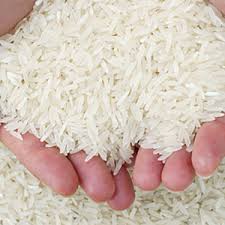
So Thai glutinous rice 10% broken has up to 10 broken pieces in every 100 grams, and at least 90% whole or nearly whole grains. It’s the same variety, same crop and same milling as the 5% grade. The only difference is how hard the broken pieces are screened out. Our explainer on what 5% broken rice means covers the idea in more depth, and it applies to sticky rice too.
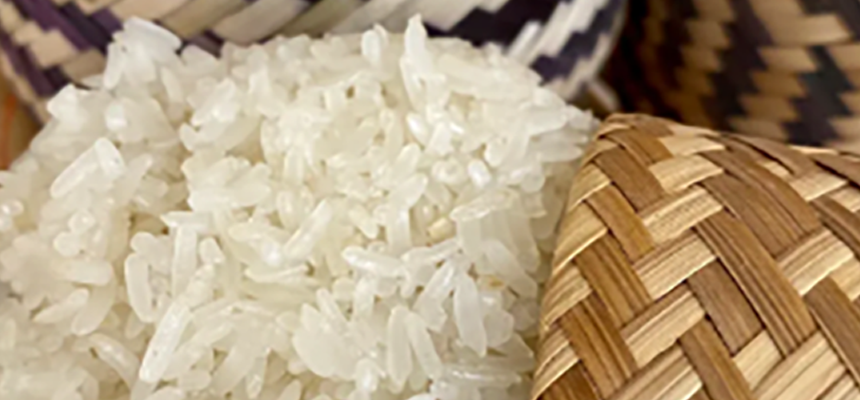
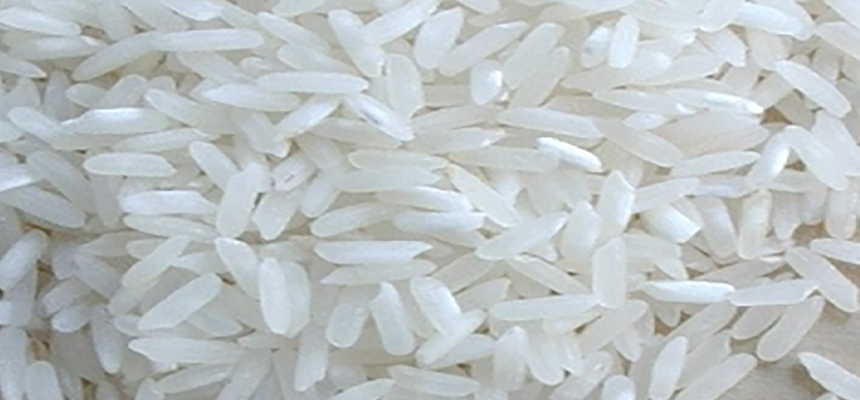
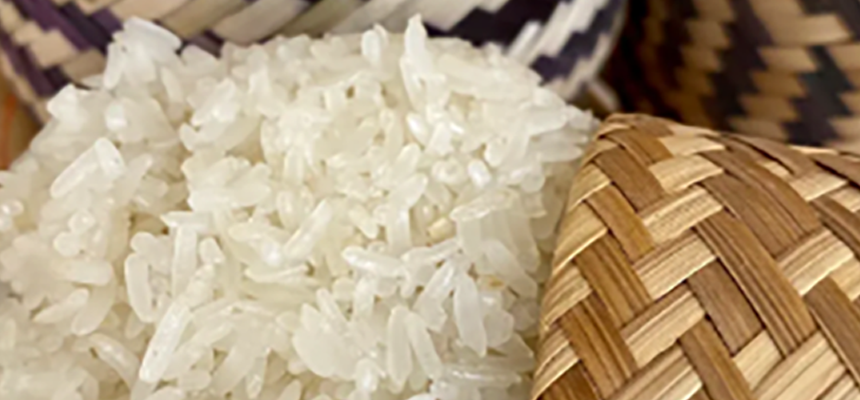
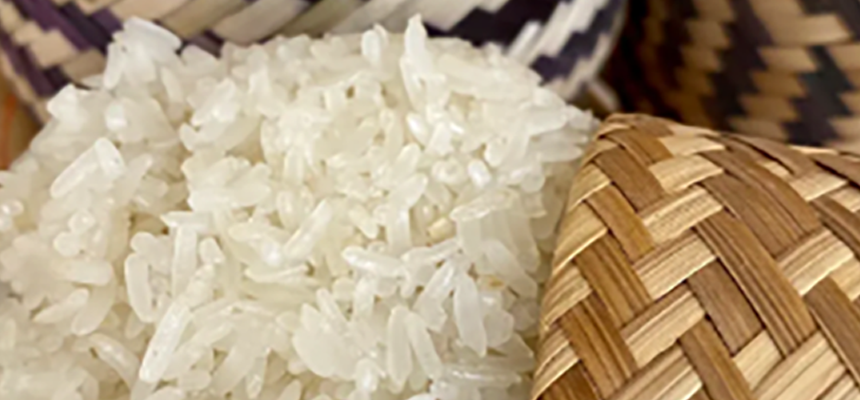
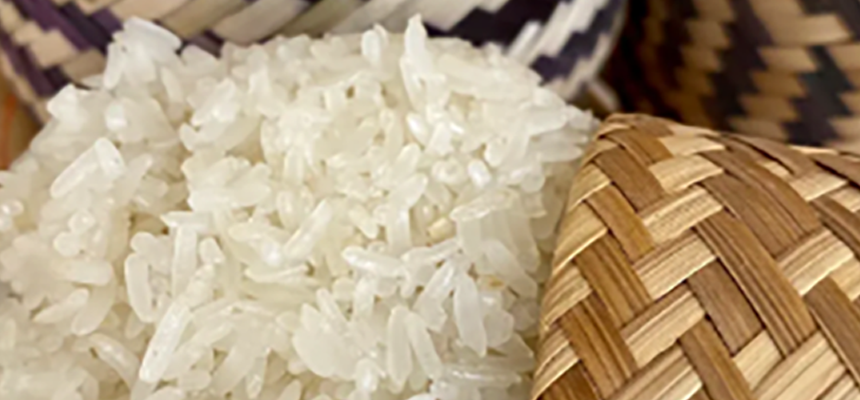
Glutinous rice itself is the opaque white rice whose starch is nearly all amylopectin. That’s what makes it soft and clingy once it’s soaked and steamed. There’s no gluten in it. The Wikipedia page on glutinous rice has the science if you want it.
Thai Glutinous Rice 10% Broken Specification
This is the spec we load to. Send us yours if your buyers need tighter limits.
| Parameter | Specification |
|---|---|
| Product | Thai glutinous rice 10% broken |
| Origin | Thailand |
| Type | White glutinous (sticky) rice |
| Crop | Current crop, or as agreed |
| Grain | Short to medium, opaque milky white |
| Average whole grain length | About 6.0 to 6.4 mm |
| Broken grains | Max 10% |
| Small brokens (C1) | Max 0.5% |
| Moisture | Max 14% |
| Glutinous purity | Min 95% |
| Non-glutinous grains | Max 5% |
| Damaged grains | Max 1% |
| Yellow grains | Max 0.5% |
| Red and red-streaked grains | Max 1% |
| Paddy grains | Max 10 per kg |
| Foreign matter | Max 0.2% |
| Milling degree | Well milled, polished, sortexed |
| Cooked texture | Soft, sticky, slightly chewy |
| Shelf life | 12 to 24 months in proper storage |
We grade to the Thai national rice standard and keep within Codex Alimentarius limits for contaminants and residues. Our rice standard page goes through the grading terms.
How 10% Compares With 5% and 25%
| Point | 5% broken | 10% broken | 25% broken |
|---|---|---|---|
| Whole grains | 95% or more | 90% or more | 75% or more |
| Look when served plain | Best | Very good | Fair |
| Price | Highest | Middle | Lowest |
| Glutinous purity | Min 95% | Min 95% | Min 92% |
| Best for | Retail, premium desserts | Restaurants, wholesale, food service | Flour, snacks, rice wine |
In the kitchen, the difference between 5% and Thai glutinous rice 10% broken is small. Once it’s steamed and pressed into a ball, most diners won’t see it. Where you will notice is in a clear retail bag on a supermarket shelf, where the 5% looks a touch cleaner. That’s why we often suggest 5% for retail packs and 10% for everything sold by the sack. You can see our other grades on the Thai glutinous rice and Thai glutinous rice 25% broken pages.
Why Buyers Choose the 10% Grade
- Price. It’s cheaper than 5%, and over a year of containers that adds up.
- Looks. It still looks clean and whole when cooked and served.
- Texture. Cooking quality is the same as 5%, because it’s the same rice.
- Flexibility. One grade covers restaurants, caterers and small factories.
- Supply. Mills produce plenty of it, so it’s usually easy to book.
If you only want to stock one sticky rice, Thai glutinous rice 10% broken is a sensible choice. It keeps restaurant customers happy and doesn’t price you out of food service.
Who Buys Thai Glutinous Rice 10% Broken
- Importers and distributors who sell to restaurants and caterers
- Thai, Lao, Chinese and Vietnamese restaurants
- Hotel and airline kitchens
- Dessert chains making mango sticky rice and rice balls
- Asian grocery wholesalers selling 25 kg and 50 kg sacks
- Mid-sized factories making frozen dumplings, zongzi and rice cakes
It also works well for dishes where the rice is mixed with other things, like lo mai gai, zongzi or stuffed lotus leaves. Nobody can see a broken grain once it’s wrapped in a leaf.
Packing Options
| Pack | Type | Notes |
|---|---|---|
| 50 kg | PP woven, liner optional | Lowest cost per ton |
| 25 kg | PP woven or BOPP printed | Most popular for food service |
| 10 kg and 5 kg | BOPP or PE printed | Restaurants and cash and carry |
| 1 kg and 2 kg | PE or vacuum, in cartons | Retail shelves |
| Jumbo bag | About 1 MT | Factories with bulk handling |
We can print your brand on any of these. Bags are machine weighed and stitched, with a small overfill so you get full net weight after the voyage. Every bag carries the product name, grade, net weight, origin, milling date and best before date. We send a print proof first. Our brands page has examples, and our post on glutinous rice 25kg bag wholesale goes deep on the 25 kg pack.
Container Loading
| Container | Packing | Net weight |
|---|---|---|
| 20ft | 25 kg bags, floor stacked | 25 to 26 MT |
| 20ft | 50 kg bags, floor stacked | 25 to 26 MT |
| 20ft | Retail packs in cartons | About 20 to 23 MT |
| 20ft | Bags on pallets | About 20 MT |
We load at Bangkok and Laem Chabang. Containers are cleaned, inspected and lined with kraft paper, with desiccant on long routes. See our guide to how many tons of rice fit in a 20ft container.
Transit Times
| Region | Typical transit |
|---|---|
| East and Southeast Asia | 5 to 15 days |
| Middle East | 16 to 28 days |
| Europe | 28 to 40 days |
| North America | 20 to 45 days |
| Australia and New Zealand | 15 to 30 days |
| Africa | 20 to 50 days |
| Pacific Islands | 20 to 35 days |
Documents With Every Shipment
- Commercial invoice and packing list
- Bill of lading
- Certificate of origin, with preferential forms where your country has a trade deal with Thailand
- Phytosanitary certificate
- Fumigation certificate
- Certificate of quality and weight from an independent surveyor
- Certificate of analysis
- Health certificate if required
Rules differ by country, so ask your customs broker what they need and we’ll match it. Our list of rice export documents explains each paper.
Price of Thai Glutinous Rice 10% Broken
We quote on the day. Sticky rice prices follow the northern and northeastern harvest, the baht and freight rates, and they can move week to week. The 10% grade usually sits between the 5% and 25% prices. The gap depends on the season. Right after harvest, when mills have plenty of whole grain, the gap between 5% and Thai glutinous rice 10% broken tends to narrow.
Your price will depend on:
- Crop year and how fresh the lot is
- Bag type and size
- Printed or plain packing
- FOB, CFR or CIF
- Volume and how often you order
The Thai Rice Exporters Association publishes weekly reference prices for Thai glutinous rice, which is a handy benchmark. Our post on the Thai glutinous rice wholesale price explains how the quote is built, and FOB vs CIF rice price covers the shipping terms. Payment is normally 30% T/T deposit with balance against a copy of the B/L, or L/C at sight, and we write every contract under Incoterms rules.
How We Check Each Lot
- Paddy is tested for variety and purity on arrival at the mill
- Milled rice is graded on screens to bring brokens to 10% or under
- Colour sorters remove yellow, red, black and damaged grains
- We test moisture, brokens and glutinous purity on every lot
- A sample is soaked and steamed to check stickiness and taste
- An independent surveyor samples and seals at loading
- You get photos of the bags and the loaded container
The broken count is easy to measure. Purity is the one that catches people out. A lot of Thai glutinous rice 10% broken can meet its broken limit and still have too much ordinary rice mixed in, and then it steams unevenly. That’s why we always cook a sample. More on our quality control page.
New Crop or Aged
New crop sticky rice is softer and stickier and needs less soaking. Over six months or so it firms up. Restaurants usually prefer new crop. Factories often like rice that’s been stored a few months because it soaks more evenly. Tell us which you want and we’ll pick the lot. Our post on old crop vs new crop jasmine rice explains the same thing in fragrant rice.
Cooking Thai Glutinous Rice 10% Broken
- Rinse until the water runs nearly clear
- Soak 4 hours, or overnight
- Drain well
- Steam in a bamboo basket or lined steamer for 20 to 25 minutes
- Flip the rice once halfway
- Keep covered
Broken pieces soak up water a little faster than whole grains, so with Thai glutinous rice 10% broken you can sometimes cut the soak by half an hour. Don’t boil it like jasmine rice. That’s the most common reason for complaints. Our post on glutinous rice vs jasmine rice explains why.
Storage
- Pallets, not the floor
- Cool, dry, well ventilated store
- Away from strong smells
- First in, first out
- Check for insects in warm weather
Kept like this, Thai glutinous rice 10% broken stays in good condition for 12 to 24 months from milling.
Private Label and Mixed Containers
We pack under your brand from 1 kg to 50 kg. Minimum for private label is usually one 20ft per design, and printed bags take two to three weeks. You can also mix sticky rice with Thai Hom Mali rice, jasmine rice, sushi rice or white rice 10% broken in one container. All of it is listed on our products page.
Timing Your Purchase
The main sticky rice crop is harvested from October to December, and new crop reaches mills from late November. Demand jumps before Lunar New Year and before the Dragon Boat Festival, when rice cake and zongzi makers stock up. If you’re buying Thai glutinous rice 10% broken for either peak, book six to eight weeks early. Our Thai rice harvest season post has the calendar.
Problems We Help Buyers Avoid
- Low purity. Regular rice mixed in. We test every lot and cook a sample.
- High moisture. Musty rice on arrival. We keep moisture under 14% and line every container.
- Wrong grade. 10% sold as 5%, or 15% sold as 10%. The surveyor’s certificate shows the real count.
- Old stock. We give the milling date for every lot.
- Print errors. We send a proof before printing.
What to Check Before You Buy
Whoever you buy Thai glutinous rice 10% broken from, ask for:
- A spec sheet with glutinous purity on it
- A courier sample to cook yourself
- Photos and video of the real stock
- A registered company you can verify
- Independent inspection at loading
- A written contract with clear terms
Good suppliers expect these questions. You can learn more about us on the about us page.
7 Proven Tips for Buying Thai Glutinous Rice 10% Broken
- Check purity as well as brokens. Brokens tell you how it looks, purity tells you how it cooks.
- Cook samples properly. Soak and steam, the way your customers will.
- Use 10% for sacks, 5% for clear retail bags. You save money where it doesn’t show.
- Ask for the milling date. Freshness changes soak time and texture.
- Line the bags on long routes. Sticky rice doesn’t like damp.
- Order ahead of festival demand. Space and prices tighten before Lunar New Year.
- Keep the same supplier. Steady rice keeps your customers loyal.
The Varieties Behind the Grade
Most Thai sticky rice comes from a handful of varieties. RD6 is the best known. It was bred from Khao Dawk Mali 105, the Hom Mali variety, so it carries a light aroma that a lot of Lao and Isan cooks look for. San Pa Tong is popular in the north and has a slightly longer grain. Kor Khor 10 (RD10) and a few newer lines are also grown widely because they yield well.
When you buy Thai glutinous rice 10% broken, you’re normally getting one of these or a blend from the same region. If your customers care about aroma, ask for RD6 and we’ll tell you honestly whether the current lot has it. If you’re making flour, the variety matters less than purity and moisture, and we’ll put you on whatever gives the best value that month. The Thai Rice Department keeps records on the official varieties if you want to read more.
How the Broken Count Is Tested
Nobody should take a broken percentage on trust, including ours. Here’s how it’s checked. A sample is drawn from many bags across the lot, mixed and divided down to a test portion, often 100 grams. The grains go through an indented cylinder grader or are sorted by hand on a board. Whole and head rice go one way, broken pieces another. The broken pieces are weighed and the share is worked out by weight.
For Thai glutinous rice 10% broken, that share has to come out at 10% or less. The surveyor does the same test at loading and puts the result on the quality certificate. If you want to check on arrival, any food lab or grain inspection company at your end can repeat it. We’d encourage you to do it on your first container. It builds trust both ways.
Thai Glutinous Rice 10% Broken in Different Markets
The same grade gets used very differently depending on where it lands.
In East Asia, buyers use it for zongzi, sticky rice in lotus leaf and fillings for buns. Purity is the big question there, and buyers often send their own spec.
In Southeast Asia, it’s daily table rice in Laos and northeastern Thai communities abroad, and dessert rice in Malaysia, Singapore and the Philippines.
In North America, Europe and Oceania, most Thai glutinous rice 10% broken goes through Asian food distributors to restaurants, with some sold in 25 kg sacks at Asian cash and carry stores.
In the Middle East, buyers are usually large Asian grocery chains and catering companies serving big Southeast Asian workforces.
In Africa and Latin America, demand is smaller but growing, mostly through Asian restaurants and specialist importers.
Wherever you sell, tell us who the end customer is. It changes our advice on crop, packing and labelling.
Questions Buyers Ask Us Most
“Can I get 10% at the 25% price?” No, and you should be wary of anyone who says yes. Screening out brokens costs money because the mill sells fewer kilos as the higher grade.
“Will the cooked rice look broken?” Not really. Once it’s steamed, the grains cling together and small pieces disappear into the mass.
“Can you do 8% instead of 10%?” Often, yes. Tell us the number and we’ll check with the mill before quoting.
“Why is my sample different from last year’s?” Crop years differ. A new crop sample will be softer than an aged one. We always tell you the crop and milling date so you can compare like with like.
“How soon can you ship?” With plain bags, usually two to three weeks from deposit. With printed bags, add another two to three weeks for the first order.
If you have a question that isn’t here, ask us directly. We’d rather spend ten minutes on the phone than have a container of Thai glutinous rice 10% broken arrive that isn’t what you expected.
How to Order
- Send grade, packing, quantity and destination port
- We send a price, spec sheet and loading date
- We agree terms and sign the contract
- You pay the deposit or open the L/C
- We mill, grade, sort, pack and book
- The surveyor checks and we load
- We send the documents and track the vessel
- You clear and collect
Frequently Asked Questions
What's the minimum order for Thai glutinous rice 10% broken?
One 20ft container, about 25 MT. It can be mixed with other rice. See our minimum order quantity page.
Does 10% broken cook differently from 5%?
Hardly at all. It’s the same rice with a few more broken pieces. It may need a slightly shorter soak.
Can you supply it in 1 kg packs?
Yes, though for clear retail bags we usually suggest the 5% grade.
Is it gluten free?
Yes. Glutinous rice has no gluten.
Can I get samples?
Yes, 1 to 2 kg by courier.
Ask for a Price on Thai Glutinous Rice 10% Broken
Send us the packing, quantity and destination port. We’ll reply with a firm price, a spec sheet and a loading date, usually within one working day. Want to cook it first? Ask for samples.
Email info@dethairice.com, WhatsApp +66 81 034 6390, or use our contact page. You might also find these useful: sweet rice wholesale, Thai glutinous rice exporter and bulk sticky rice supplier.
3 thoughts on “Thai Glutinous Rice 10% Broken: Honest Spec Sheet and 7 Proven Tips”