


FOB vs CIF rice price is the first thing to get straight when you compare offers from rice exporters. An FOB price covers the rice loaded on the ship at the port in Thailand. A CIF price covers the rice, the sea freight and the insurance all the way to your port. Same rice, two very different numbers, and if you compare one supplier’s FOB with another’s CIF you’ll get the wrong answer every time.
We export Thai rice and quote both ways every day. This guide explains what FOB and CIF really mean for rice, who pays for what, how to convert one price into the other, which one is better for you, and what we include when we quote. We also list the rice we sell with specs, so you can ask for a real price on the spot.
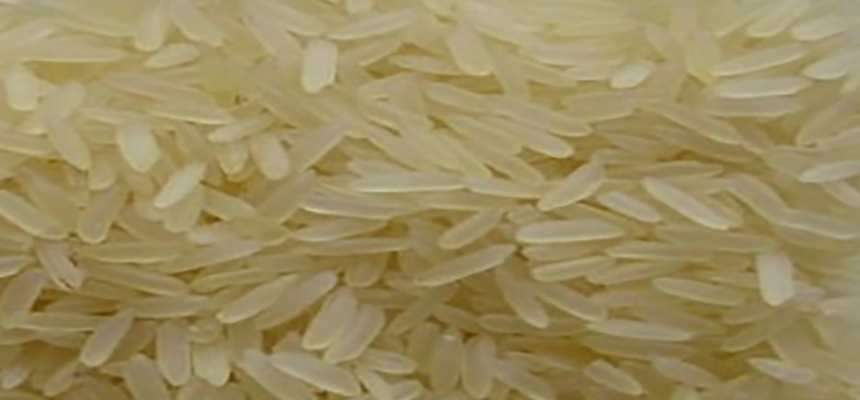
Table of Contents
FOB vs CIF Rice Price in Plain Words
Both terms come from the Incoterms rules published by the International Chamber of Commerce. They tell the buyer and seller who pays for which costs, and when the risk passes from one to the other. The full rules are on the ICC Incoterms page, but here’s what they mean for rice.
- FOB (Free On Board): we deliver the rice, cleared for export, loaded on the vessel at Bangkok or Laem Chabang. From that point, you pay the sea freight and insurance, and the risk is yours.
- CIF (Cost, Insurance and Freight): we deliver the rice on board in Thailand, but we also book and pay the ocean freight and the cargo insurance to your destination port. The price you see includes all of that.
- CFR (Cost and Freight), also written C&F: like CIF, but without insurance. You arrange your own cargo insurance.
So the gap in an FOB vs CIF rice price is basically freight plus insurance.
Who Pays for What
Here’s the breakdown most buyers want to see.
| Cost | FOB | CFR | CIF |
|---|---|---|---|
| Rice, milling, sorting, packing | Seller | Seller | Seller |
| Inland transport to port in Thailand | Seller | Seller | Seller |
| Export clearance and export documents | Seller | Seller | Seller |
| Loading on vessel / origin port charges | Seller | Seller | Seller |
| Ocean freight | Buyer | Seller | Seller |
| Cargo insurance | Buyer | Buyer | Seller (minimum cover) |
| Unloading at destination port | Buyer | Buyer (usually) | Buyer (usually) |
| Import duties, taxes, clearance | Buyer | Buyer | Buyer |
| Inland transport in your country | Buyer | Buyer | Buyer |
One point that catches people out: under CIF, the risk still passes to you when the rice is loaded on board in Thailand, not when it arrives. The seller pays for freight and insurance, but if something happens at sea, you make the claim on the insurance policy. That’s why it matters who the insurer is and what the policy covers.
A Worked Example
Let’s put real-looking numbers on an FOB vs CIF rice price so you can see how it adds up. These are examples only. Freight changes week to week and route to route.
Say you’re buying one 20ft container of Thai white rice 5% broken, 25 tonnes in 50kg bags.
| Item | Per tonne (US$) |
|---|---|
| FOB Bangkok price | 450 |
| Ocean freight (container about US$1,500, divided by 25 tonnes) | 60 |
| CFR price | 510 |
| Insurance (about 0.2 to 0.3% on 110% of CIF value) | about 1.5 |
| CIF price | about 511.5 |
So in this example, the CIF price is about 61 dollars a tonne above FOB. For a route to West Africa or South America it might be higher. For a short hop to Malaysia or Hong Kong it might be much lower.
Step by Step: From FOB Rice Price to Landed Cost
What you really care about is landed cost: what the rice costs you sitting in your warehouse. Here’s how to get there from an FOB rice price.
- Start with the FOB rice price per tonne.
- Add ocean freight per tonne (container freight divided by tonnes in the container).
- Add insurance, usually a small fraction of a percent of the value.
- That gives you a CIF number.
- Add destination port charges: terminal handling, documentation, delivery order.
- Add import duty and taxes, as set by your country.
- Add customs broker fees.
- Add inland transport from port to warehouse.
- Add bank charges and any inspection fees.
- Divide the total by the tonnes you actually receive.
Do this once with real quotes and you’ll understand your market far better than by looking at FOB or CIF numbers alone. We’re happy to help with the Thai side of the sum.
FOB vs CIF Rice Price by Destination
The gap between FOB and CIF depends mostly on where the rice is going. The figures below are rough illustrations of freight per tonne for a 20ft container of rice in normal market conditions. They are not quotes, and they can double or halve in a few weeks when the shipping market moves.
| Destination region | Rough freight per tonne (US$) | Notes |
|---|---|---|
| Southeast Asia (Malaysia, Singapore, Philippines) | 10 to 40 | Short routes, frequent sailings |
| East Asia (Hong Kong, China, Japan, Korea) | 15 to 50 | Busy routes, competitive rates |
| Middle East and Gulf | 30 to 90 | Depends a lot on Red Sea conditions |
| East Africa | 50 to 110 | Fewer direct services |
| West Africa | 60 to 140 | Longer transit, port congestion at times |
| Southern Africa | 50 to 110 | Regular services via Durban |
| Europe | 60 to 150 | Route through Suez or around the Cape |
| Americas | 70 to 160 | Long routes |
| Australia and New Zealand | 30 to 90 | Regular services |
That’s why an FOB vs CIF rice price comparison only means anything for a specific port at a specific time.
How Insurance Is Worked Out
Under CIF, the seller only has to buy minimum cover, which under Incoterms 2020 means Institute Cargo Clauses (C) for 110% of the contract value. That covers the big events, like the ship sinking or fire, but not everything. If you want wider cover, like Institute Cargo Clauses (A) “all risks”, say so in the contract, or buy CFR and insure it yourself.
Insurance premiums for rice are small, usually a fraction of a percent of the value, so they don’t move the price much. The cover itself is what matters.
FOB vs CIF Rice Price: Which Is Better for You?
There’s no single right answer. It depends on how you work.
Buy FOB if…
- You have a freight forwarder or shipping line you trust and can get good rates.
- You import regularly and have volume to negotiate with carriers.
- You want control over the vessel, the route and the timing.
- Your government or bank prefers you to buy freight in your own country.
- You want to buy your own insurance with wider cover.
Buy CIF or CFR if…
- You’re new to importing and don’t have a forwarder yet.
- You buy a few containers a year and can’t get good freight rates on your own.
- You want one price that covers everything to your port.
- Your bank or LC terms are set up for CIF.
- You want the exporter to deal with booking and shipping problems in Thailand.
Many of our buyers start on CIF, then switch to FOB once they’re importing regularly and have built relationships with forwarders. Others stay on CIF for years because it’s simpler.
Hidden Costs to Watch
When you compare an FOB vs CIF rice price, the headline number isn’t always the full story. Watch for:
- Destination port charges (THC, port handling, documentation fees). These are usually yours under both FOB and CIF.
- Bill of lading fees and telex release fees.
- Demurrage and detention at your port if containers sit too long.
- Inspection fees if you want SGS or similar.
- Fumigation and phytosanitary certificates. We include these in our price, but check with any supplier.
- Bank charges for an LC.
- Exchange rate costs if you pay in a different currency.
A cheap CIF price with a slow, unreliable carrier can cost you more in demurrage than you saved. We’d rather quote a fair price with a carrier we know.
FOB vs CIF Rice Price for Bulk and Break Bulk
Everything above is about containers, which is how most of our buyers ship. For very large orders, like 5,000 to 30,000 tonnes, rice is often shipped in bags on a break bulk vessel, or loose in bulk. Freight is then quoted per tonne on a chartered ship, and things like loading rate, laytime and demurrage come into the contract.
In those trades, FOB and CIF still mean the same thing, but there’s more to negotiate. If you’re working at that size, talk to us and we’ll go through it in detail.
How We Quote
When you ask us for a price, we can give it:
- FOB Bangkok or FOB Laem Chabang
- CFR to your port
- CIF to your port, with the insurance cover stated
Our FOB price includes the rice, sorting, packing in your chosen bags, inland transport, export clearance, fumigation, phytosanitary certificate, certificate of origin, and loading. Our CFR and CIF prices add the ocean freight and, for CIF, insurance to your named port.
We’ll always tell you the freight validity, because freight quotes from carriers only hold for a limited time. If freight moves a lot between quote and booking, we’ll tell you before we book.
Other Incoterms You May See for Rice
FOB and CIF are the big two, but rice offers sometimes use other terms:
- EXW (Ex Works): you collect the rice from the mill or warehouse. You handle everything after that, including Thai export clearance. Rare in rice export, and not a good idea unless you have a strong team in Thailand.
- FCA (Free Carrier): we hand the rice to your carrier at an agreed place, such as a container yard. The ICC recommends this over FOB for container cargo.
- CFR / C&F: freight paid by the seller to your port, insurance by you.
- CIP: like CIF, but for any mode of transport and with a higher minimum insurance cover.
- DAP (Delivered At Place): we deliver to a named place in your country, unloading and import duties are yours. Possible for some regular customers.
For most buyers, FOB, CFR or CIF is all you’ll ever need.
Why We Show Freight Separately
When we quote CFR or CIF, we show the FOB rice price and the freight as separate lines. Some exporters don’t, and that makes it hard to see whether you’re paying a fair price for the rice or a fair price for the freight.
Showing them apart lets you check the freight against your own forwarder, spot it if freight jumps between offers, and decide later whether to switch to FOB. It also keeps the conversation honest. If the rice price changes, you’ll see it. If the freight changes, you’ll see that too.
What Affects Freight on Rice
The freight part of an FOB vs CIF rice price can swing a lot. The main drivers are:
- Distance and route. Bangkok to Port Klang is cheap. Bangkok to Lagos or Santos is not.
- Global container demand and fuel prices.
- Trouble on major routes, like the Red Sea or Suez Canal.
- Season. Freight often rises before big holidays in Asia.
- Equipment. Sometimes empty containers are scarce in Thailand.
- Container size. A 40ft container usually costs less per tonne than two 20ft, but rice is heavy, so check weight limits.
Payment Terms and Incoterms
The price basis also affects payment. Common terms with our buyers:
- LC at sight: works with FOB, CFR and CIF. The bank pays when we present the right documents after loading.
- TT with deposit: usually 30% deposit, balance against copy documents.
- CAD (cash against documents): for buyers we’ve worked with before.
With CIF and CFR, the bill of lading shows freight prepaid. With FOB, it shows freight collect, unless your forwarder has arranged otherwise. Make sure your LC matches the Incoterm, or the bank may reject the documents. Our rice export documents checklist explains each paper you’ll receive.
Rice We Sell, With Specs
Here’s what you can ask us to quote FOB, CFR or CIF.
| Product | Key specs | Product page |
|---|---|---|
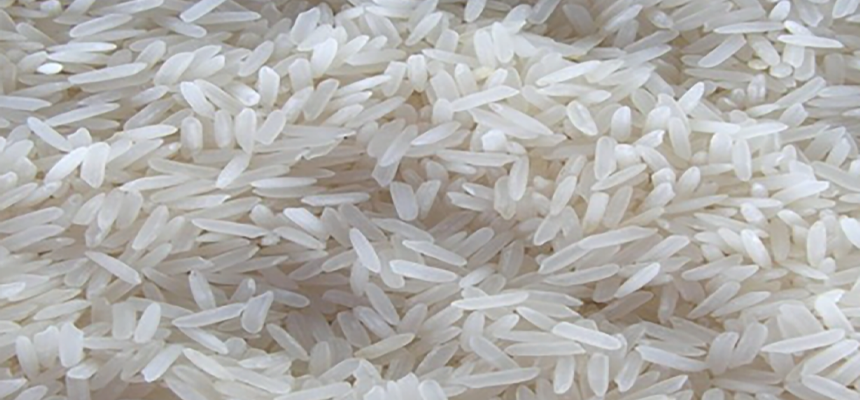
| Thai Hom Mali rice 100% Grade A | 92% purity, 4.5% broken max, 14% moisture max | Thai Hom Mali rice |
| Thai jasmine / Pathumthani fragrant rice | 5% broken max, 12 to 14% moisture, 95% purity | Thai jasmine rice |
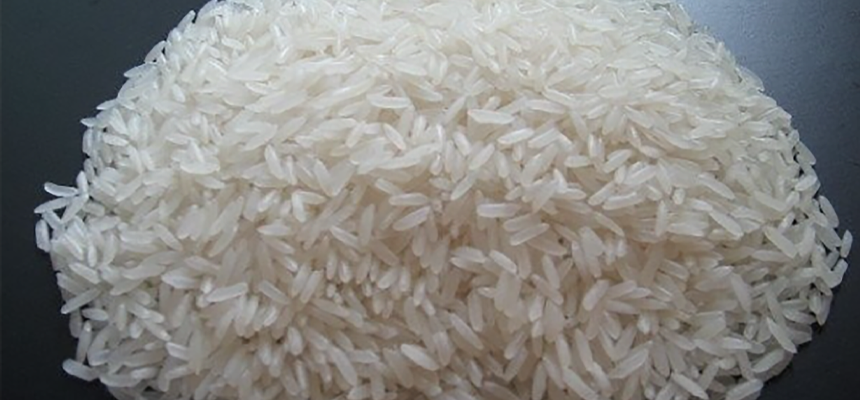
| Thai white rice 5% broken | 14% moisture max, 2% chalky max, sortexed | White rice 5% broken |
| Thai white rice 10% and 25% broken | 14% moisture max, sortexed | White rice 25% broken |
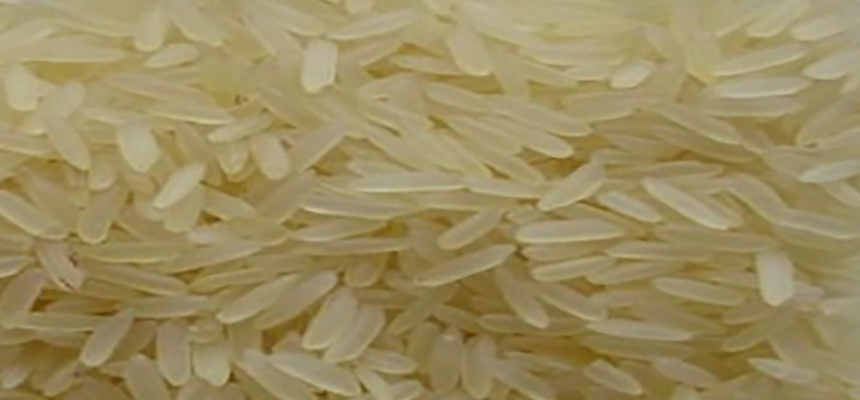
| Thai parboiled rice 5% broken | Golden, sortexed, 14% moisture max | Parboiled rice 5% broken |
| Thai glutinous rice | 5% or 25% broken, 14% moisture max | Thai glutinous rice |
| Thai white rice 100% broken | 14% moisture max, 0.1% foreign matter max | White rice 100% broken |
| Thai red cargo rice | Whole grain, unpolished | Thai red cargo rice |
For live price levels, see Thai white rice 5% broken price per ton, Thai Hom Mali rice price per ton and Thai parboiled rice 25% broken price per ton. Those are FOB numbers unless stated otherwise.
How Much Rice Fits in a Container?
This matters because freight is charged per container, so it decides your freight per tonne. A 20ft container usually takes 25 to 26 tonnes of rice in 25kg or 50kg bags, depending on the rice type and the weight limits on your route. A 40ft container doesn’t hold double, because of weight limits on the road and on the ship. Full details in our post on how many tons of rice fit in a 20ft container.
Price Validity: Why Offers Expire
Rice offers usually hold for a short time, often 24 to 72 hours. The FOB rice price depends on what mills are paying for paddy that week and on the baht exchange rate. The freight part depends on what carriers are charging. Both can move fast.
So if you get an offer, ask how long it’s valid, and whether the freight part is fixed or “subject to space and rate at booking”. With CIF, a firm offer usually means the exporter has checked freight and is willing to carry the risk of small changes. With FOB, you carry the freight risk yourself.
FOB vs CIF Rice Price in Tenders
Government and large institutional tenders for rice often ask for prices on a specific basis, most often CIF or CFR to a named port, sometimes FOB. Read the tender carefully. If it asks for CIF liner out, for example, unloading costs at destination are included in the price. If it says CIF free out, they’re not. Small words like these change the number a lot.
When we bid on tenders or help buyers prepare them, we lay out the FOB rice price, freight, insurance and any extra terms line by line, so everyone is comparing the same thing.
Mistakes Buyers Make With FOB and CIF
From years of quoting, these are the ones we see most:
- Comparing an FOB price from one exporter with a CIF price from another and thinking the FOB one is “cheaper”.
- Not naming the exact destination port and terminal in a CIF contract.
- Assuming CIF means the seller carries the risk until arrival. It doesn’t.
- Forgetting destination charges in the budget.
- Booking your own freight on FOB with a forwarder who can’t get equipment in Thailand in time.
- Not checking that the LC says the same Incoterm as the contract.
FOB vs CIF Rice Price: Common Questions
What does FOB mean in rice export?
The exporter delivers the rice loaded on the ship at the Thai port, cleared for export. The buyer pays freight and insurance from there.
What does CIF mean in rice export?
The exporter delivers the rice on board in Thailand and also pays freight and insurance to the buyer’s named port.
Is CIF always more expensive than FOB?
The CIF number is always higher, because it includes freight and insurance. But your total cost might be lower on CIF if the exporter gets better freight rates than you can.
Which is better for a first-time rice importer?
Usually CIF or CFR. It’s simpler, and you only deal with costs from your own port onward. See how to import rice from Thailand for the full process.
Can you quote both FOB and CIF?
Yes. Ask, and we’ll send both so you can compare the FOB vs CIF rice price yourself.
Should I use CIF or CIP for containers?
Strictly, the ICC suggests FCA or CIP for container cargo, and FOB and CIF for sea cargo loaded over the ship’s rail. In practice, the rice trade still uses FOB and CIF for containers almost everywhere. We can use either, as long as the contract and LC match. The Incoterms overview on Wikipedia explains the difference in more detail.
Our Advice
If you’re new, start with CIF or CFR from a supplier who’ll tell you the freight part separately. That way you learn what freight to your port costs. Once you’re importing regularly, get FOB quotes too and compare them with your own forwarder’s freight. Then pick whichever gives you the best landed cost, not the best headline number.
That’s really all the FOB vs CIF rice price question comes down to: compare landed cost, not quote against quote.
Ask Us for a Quote
Tell us the rice you need, the quantity, packing and your destination port, and say whether you want FOB, CFR or CIF, or all three. We’ll send a clear offer with the freight and insurance shown separately, plus a sample if you want one.
Every lot is lab tested and sortexed, and you can book independent inspection at loading. Read how we check every shipment on our quality control page.
Email info@dethairice.com, WhatsApp +66 81 034 6390, or use our contact page.



38 thoughts on “FOB vs CIF Rice Price: Best Guide for Importers”