


Thailand rice exports 2026 are having a hard year. After a strong 2025, when Thailand shipped close to 8 million tonnes, the numbers for 2026 dropped early and stayed low through the first half. The government target is 7 million tonnes for the full year. Whether the country gets there depends on the second half, on El Niño, and on how hard India and Vietnam keep pushing on price.
We are a Thai rice exporter, so this isn’t an abstract topic for us. It’s what we deal with every week when we quote buyers. Below is what has actually happened so far in 2026, what’s behind it, what it means for rice prices, and why it’s a decent time for importers to lock in Thai rice supply. We also list the rice we’re selling right now, with specs, so you can see what’s on offer.
Table of Contents
Thailand Rice Exports 2026 at a Glance
Here are the main numbers, in plain form.
| Item | Figure |
|---|---|
| 2025 full year exports | About 7.9 million tonnes, worth around US$4.5 billion |
| 2026 government target | 7 million tonnes |
| January 2026 | About 530,000 tonnes, down 17.5% on January 2025 |
| First half 2026 (Jan to Jun) | 3.28 million tonnes, worth about US$1.91 billion |
| Change vs first half 2025 | Down about 19% |
| Full year 2026 forecasts | Between 6.7 and 7.2 million tonnes |
| Thai white rice 5% price (H1 average) | About US$447 per tonne |
So the short version: Thailand rice exports 2026 are running well behind last year, but the second half usually picks up, and buyers in Asia and Africa have been ordering more since mid-year.
What Thailand Shipped in the First Half of 2026
The split by rice type tells you a lot about where Thai rice actually goes. In the first six months of 2026:
| Rice type | Tonnes (Jan to Jun 2026) | Share |
|---|---|---|
| White rice | 1.51 million | 46% |
| Thai Hom Mali (jasmine) rice | 0.81 million | 25% |
| Parboiled rice | 0.61 million | 19% |
| Other fragrant rice (Pathumthani) | 0.23 million | 7% |
| Glutinous (sticky) rice | 0.11 million | 3% |
| Brown rice | 0.01 million | under 1% |
White rice is still the biggest single category, as it has been for years. Hom Mali held up better than white rice in share terms, which makes sense. It has a loyal premium market in the US, Hong Kong, China and Singapore, and there isn’t a real substitute for it.
Parboiled rice fell, mainly because the Middle East and parts of Africa, which buy a lot of it, had a messy first half.
Thailand Rice Exports 2026 Compared With Past Years
It helps to look back a bit. Thai rice exports swing a lot from year to year, and 2026 is low but not shocking.
| Year | Exports (approx.) | What drove it |
|---|---|---|
| 2021 | 6.1 million tonnes | Covid, container shortage, high freight |
| 2022 | 7.7 million tonnes | Recovery, weak baht |
| 2023 | 8.8 million tonnes | India export ban in July, buyers switched to Thailand |
| 2024 | 9.9 million tonnes | India restrictions still on for most of the year |
| 2025 | 7.9 million tonnes | India back, prices down |
| 2026 | 6.7 to 7.2 million tonnes (forecast) | Oversupply, strong baht, Middle East, tariffs |
The 2023 and 2024 numbers were boosted by India stepping back. When India came back, Thai volumes went back toward their normal range. So part of the drop in Thailand rice exports 2026 is really a return to normal after two unusual years, not a collapse.
Why Thai Rice Exports Fell in 2026
There isn’t one reason. It’s a pile of them, and they all landed around the same time.
1. Too much rice in the world
India lifted its export restrictions in late 2024 and has been shipping huge volumes since. Global stocks are high. When everyone has rice, buyers shop on price, and Thailand is not the cheapest origin.
2. Thai rice costs more
In the first half of 2026, Thai white rice 5% averaged about US$447 a tonne. Vietnamese was around US$435, Pakistani around US$405, and Indian around US$367. That gap is big for a buyer filling ships for a government tender. Thai farm costs, transport and milling costs are higher than in India, so the price has to be higher too.
3. A strong baht
The Thai baht strengthened to around 31 to the US dollar early in the year. Every baht of strength adds roughly 12 to 15 dollars a tonne to white rice and 30 to 35 dollars a tonne to fragrant rice in dollar terms. Exporters can’t absorb that forever.
4. Trouble in the Middle East
Iraq was Thailand’s biggest single buyer in 2025, taking about a million tonnes. The conflict in the region disrupted shipments from March 2026, and Iraq volumes fell sharply.
5. New tariffs in the US
The United States is the main market for Thai Hom Mali rice, taking around 600,000 tonnes a year. New import tariffs added cost for US importers this year, and some cut orders.
Any one of these would hurt. Together they explain why Thailand rice exports 2026 started the year so far behind.
Where Thai Rice Is Going in 2026
The good news is that some markets bought more, not less. Since the middle of the year, Malaysia, the Philippines, South Africa, the Democratic Republic of Congo and Mozambique have all taken more Thai rice than in the same period of 2025. Thailand also has a government-to-government deal with China for up to 960,000 tonnes.
The top buyers of Thai rice in 2025, for context:
| Market | 2025 volume (approx.) |
|---|---|
| Iraq | 1.00 million tonnes |
| South Africa | 0.88 million tonnes |
| United States | 0.82 million tonnes |
| China | 0.65 million tonnes |
| Senegal | 0.29 million tonnes |
Beyond these, Thai rice goes to Malaysia, the Philippines, Hong Kong, Singapore, Japan, Angola, Mozambique, Benin, Côte d’Ivoire, Ghana, the Gulf states, Europe and Australia. We ship to most of these ourselves.
What Thailand Rice Exports 2026 Mean in Each Region
The headline number hides a lot. Depending on where you import, 2026 looks quite different.
Africa
Africa is the bright spot. South Africa remains one of the biggest buyers of Thai white and parboiled rice, and orders from Mozambique, Angola, the DR Congo and West African ports have grown since mid-year. Buyers there tend to want 25kg and 50kg bags, 5% to 25% broken white rice and parboiled rice. Price matters a lot, so many split orders between Thai and Indian rice. Our guide on parboiled rice import to West Africa covers the details.
Asia
Malaysia and the Philippines picked up their buying this year, partly because of El Niño worries. Hong Kong and Singapore stay loyal to Thai Hom Mali. China buys both through private trade and the government-to-government deal. Japan and Korea buy smaller volumes, mostly for processing.
Middle East
The tough one in 2026. Iraq is normally the largest buyer and orders dropped hard because of the conflict. The Gulf states kept buying, mostly Hom Mali and long grain white rice in retail packs, but they couldn’t make up for Iraq.
North America and Europe
The US is mostly Hom Mali and jasmine rice for Asian grocery and mainstream supermarkets. New tariffs cut volumes, but demand for real Thai Hom Mali hasn’t gone away. Europe buys smaller amounts, with a growing interest in organic jasmine rice and brown rice.
How Thai Rice Gets From the Field to Your Port
If you’re new to Thai rice, here is the chain in short. Knowing it helps when you read export news and wonder why prices move.
- Farmers grow paddy. The main crop is planted with the rains and harvested from around November. A second, irrigated crop comes in from about March in the central plains.
- Paddy is sold to mills, either directly or through collectors and cooperatives.
- Mills dry, husk, polish, sort and grade the rice. Hom Mali comes mostly from the northeast, white and parboiled from the central region.
- Exporters buy milled rice from mills (or mill it themselves, as we do), then bag, inspect and ship.
- Rice is loaded at Bangkok or Laem Chabang, in containers or as bulk / break bulk on vessels.
Thai water levels matter too. Low reservoir levels limit the second crop, which tightens supply. That’s one reason the El Niño talk is taken seriously in Thailand this year.
What the Government Is Doing
In June 2026 the Thai cabinet approved a support package of about 10.2 billion baht (around US$314 million) for the rice sector. Most of it goes to price support and storage for farmers, so they aren’t forced to sell paddy at a loss during harvest. The rest goes to longer term work on costs, seed quality and yields.
The Commerce Ministry is also working with the Thai Rice Exporters Association to open new markets in Asia, Africa and Latin America, and is pushing trade deals and trade missions to support that.
The El Niño Factor
This is the wild card for the rest of the year. There are growing worries about El Niño and drought in 2026 and 2027, which could cut rice harvests across Asia. When importing countries get nervous about supply, they buy early and build stocks. Some of the pickup in orders since May has come from exactly that.
If El Niño hits hard, Thai rice exports in 2026 could end up closer to 7.2 million tonnes than 6.7. If it fizzles, the year probably ends nearer the low end. Either way, nobody in the trade expects a return to 2025 levels this year.
What Thailand Rice Exports 2026 Mean for Rice Prices
For buyers, a weak export year usually means one thing: Thai rice is more negotiable than it was. Exporters have stock, mills want to keep running, and there’s competition for every order.
What we’ve seen on the ground:
- White rice: prices came down from 2024 highs and have been fairly flat in 2026. Thai 5% broken has held a small premium over Vietnam.
- Parboiled: competitive, with good supply. Buyers in Africa have had more choice.
- Hom Mali: still premium, but more room to talk on price than in past years, especially for buyers committing to regular volumes.
- Glutinous rice: tight supply in some months because Laos and Thailand eat most of it at home, but export prices are stable.
If you want a closer look at prices by grade, we have separate posts on Thai white rice 5% broken price per ton, Thai Hom Mali rice price per ton and Thai parboiled rice 25% broken price per ton.
Why Buy Thai Rice in 2026 Anyway
You can buy cheaper rice from India. Plenty of people do. But buyers keep coming back to Thailand for reasons that don’t show up in the price per tonne:
- Consistency. Thai mills and the Thai grading system are strict. A 5% broken lot from Thailand is usually what it says.
- Hom Mali and fragrant rice. Nobody else makes Thai Hom Mali. It’s grown in specific provinces of the northeast, and the aroma is hard to copy.
- Food safety. Thai rice is tested for residues and handled under export standards that the EU, US and Japan accept.
- Logistics. Bangkok and Laem Chabang ports are efficient, with regular sailings to most of the world.
- Range. One Thai supplier can load white, parboiled, Hom Mali, glutinous and red cargo rice in the same order.
We wrote a full comparison in Thai rice vs Vietnamese rice if you’re weighing origins.
The Rice We Are Selling Now
With Thailand rice exports 2026 running below target, we have good stock across our main grades and can load quickly. Here’s what we’re offering, with key specs.
Thai Hom Mali Rice (100% Grade A)
- Variety: KDML 105 and RD15, new crop
- Purity: 92% minimum Hom Mali
- Broken: 4 to 5% maximum
- Moisture: 14% maximum
- Packing: 1kg to 50kg, private label available
See Thai Hom Mali rice for sale.
Thai Jasmine Rice / Pathumthani Fragrant Rice
- Long grain, white, soft and fragrant
- Broken: 5% maximum
- Moisture: 12 to 14% maximum
- Purity: 95% minimum
See Thai jasmine rice for sale.
Thai White Rice (5%, 10%, 25% and 100% broken)
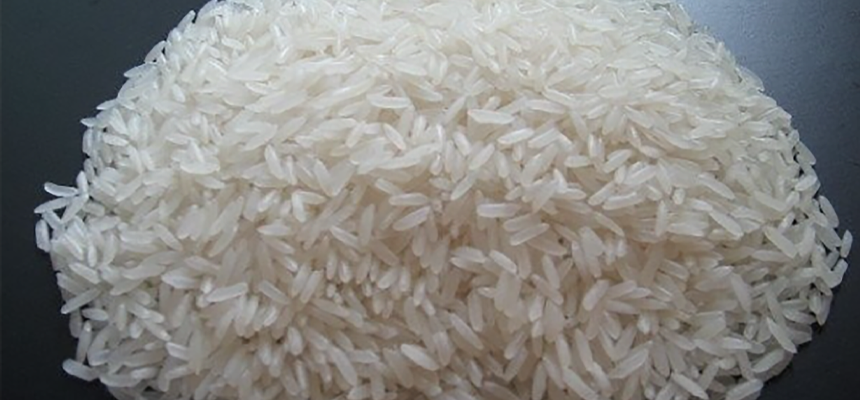
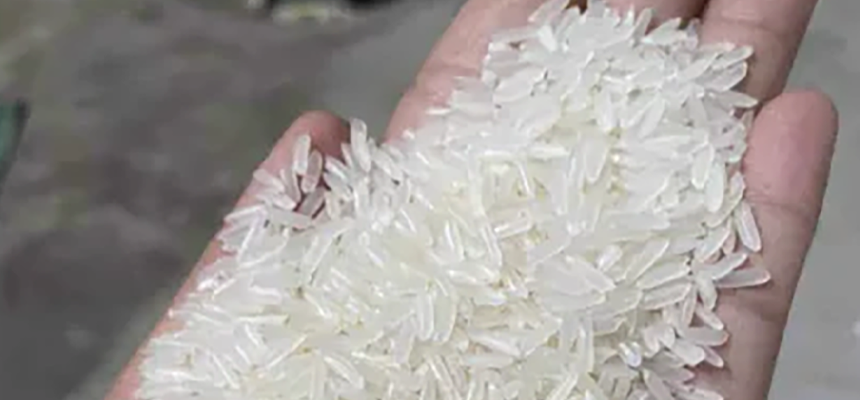
- Long grain, well milled, sortexed
- Moisture: 14% maximum
- Foreign matter: 0.1% maximum
- Chalky grains: 2% maximum on 5% grade
See white rice 5% broken, 10% broken and 25% broken.
Thai Parboiled Rice (5%, 15%, 25% and 100% broken)
- Long grain, golden or white sella, sortexed
- Moisture: 14% maximum
- Popular in Africa and the Middle East
See Thai parboiled rice 5% broken.
Thai Glutinous Rice and Red Cargo Rice
- Glutinous: white sticky rice, 5% or 25% broken, 14% moisture max
- Red cargo: whole grain red rice, unpolished, high fibre
See Thai glutinous rice and Thai red cargo rice.
Every lot is lab tested before loading, and we can arrange SGS or similar inspection at the port. More on that on our quality control page.
How to Buy From Us in 2026
The process is the same as any year, but this year there’s more room to negotiate on volume and timing.
- Send us your grade, quantity, packing and destination port.
- We reply with an offer, usually within a day, FOB or CFR / CIF.
- We send a sample from the actual lot if you need one.
- Sign the contract and open an LC, or agree on other payment terms.
- We book the vessel, load, inspect, and send the full document set.
If you’ve never imported rice before, read how to import rice from Thailand and our rice export documents checklist first. They’ll save you some headaches.
Practical Tips for Importers This Year
From the deals we’ve done so far in 2026, a few things work well for buyers:
- Ask for a fixed price for two or three shipments, not just one. With Thailand rice exports 2026 below target, exporters will often hold a price for a longer period in return for a commitment.
- Be flexible on the crop. Second crop white rice is often cheaper than main crop, and the difference in the pot is small.
- Mix grades in one container if your market allows it. Half Hom Mali, half white rice, for example, can cut your shipping cost per product.
- Look at 10% broken instead of 5%. The saving is real and most customers won’t notice.
- Plan around the main harvest. New crop Hom Mali arrives from December, and prices are often softer in the first months after harvest.
None of this is secret. It’s just what experienced buyers do when the market leans in their favour, and in 2026 it does.
What to Watch for the Rest of 2026
A few things will decide how the year ends for Thai rice exports:
- The main crop harvest from November. If yields are good, Thai prices could ease further.
- El Niño forecasts. A strong signal will push buyers to stock up.
- India’s export policy. Any new restriction would send buyers straight back to Thailand and Vietnam.
- The baht. A weaker baht makes Thai rice more competitive overnight.
- Shipping costs and the situation in the Middle East.
We’ll keep posting updates. If you want our weekly price sheet, send us a message and we’ll add you.
Our View From the Mill
Numbers in reports are one thing. Here’s what 2026 has looked like from our side.
The first quarter was slow. Buyers were waiting, partly for prices to drop further and partly because of the uncertainty in the Middle East. A lot of enquiries, not many contracts. From May onward that changed. Asian buyers came back first, then African buyers, and we’ve been loading steadily since.
Mills have plenty of paddy, so quality has been good and we haven’t had trouble meeting specs. Hom Mali from last season’s crop has kept its aroma well because storage conditions were good. White rice has been clean and bright.
Our honest read: Thailand rice exports 2026 will end the year lower than 2025, but the market is healthy for buyers who want reliable Thai quality at fair prices. If you’ve been holding off, the second half of the year is a good window.
Thailand Rice Exports 2026: Frequently Asked Questions
How much rice will Thailand export in 2026?
The official target is 7 million tonnes. Most forecasts sit between 6.7 and 7.2 million tonnes. That’s lower than 2025, which was close to 8 million tonnes.
Why are Thailand rice exports down in 2026?
Mainly global oversupply, cheaper rice from India, Vietnam and Pakistan, a strong baht, disruption in the Middle East and new US tariffs.
Is Thailand still a top rice exporter?
Yes. India is first by a long way. Thailand and Vietnam compete for second place, and Thailand is still the main source of premium fragrant rice.
What type of rice does Thailand export most?
White rice, about 45 to 46% of the total. Then Hom Mali, parboiled, other fragrant rice and glutinous rice.
Is it a good time to buy Thai rice?
For many buyers, yes. Supply is good, exporters are keen, and prices have more room to move than in tight years.
For extra background on world rice supply and demand, the USDA world grain markets report is updated every month and is worth a look.
Talk to Us About Your 2026 Rice Order
Thailand rice exports 2026 may be down on paper, but for importers that means more choice and better terms. We have stock of Hom Mali, jasmine, white, parboiled, glutinous and red cargo rice, ready to load, with private label and custom packing available.
Tell us what you need: grade, tonnage, packing and port. We’ll come back with a firm offer.
Email info@dethairice.com, WhatsApp +66 81 034 6390, or use our contact page.


5 thoughts on “Thailand Rice Exports: Best Guide and 7 Key Facts”