If you buy white rice by the container, sooner or later you will hold two offers side by side: one Thai, one Indian, both marked 5% broken. The Indian one will usually be cheaper. The question is whether the rice is the same. Thai white rice vs Indian 5% broken rice is a real comparison worth making carefully, because the right answer depends on your customers, your market and how you sell.
We are De Thai Products 1989 Company Limited, a Thai rice miller and exporter. We sell Thai white rice 5% broken and the full range of Thai grades to buyers worldwide, and we also supply basmati rice for customers who want it in the same container. We will be fair about Indian rice. It is a big, important origin and it suits many buyers. This guide on Thai white rice vs Indian 5% broken rice explains where each one wins, with our full Thai spec included.
Table of Contents
Thai White Rice vs Indian 5% Broken Rice: The Short Answer
- Thai white rice 5% broken is long grain, bright white, very consistent in grain length and appearance, and usually priced higher.
- Indian 5% broken rice is usually made from varieties like IR64 and similar, is often slightly shorter and can vary more between mills and lots, and is usually priced lower.
- Both are food grade, both cook into good everyday rice, and both sell in huge volumes around the world.
So in Thai white rice vs Indian 5% broken rice, you are mostly trading consistency and look against price.
Thai White Rice vs Indian 5% Broken Rice Side by Side
These are general trade patterns, not a rule for every lot. Individual mills in both countries vary.
| Point | Thai white rice 5% broken | Indian 5% broken rice |
|---|---|---|
| Typical varieties | Thai long grain non-fragrant | IR64 and similar long grain types |
| Grain length | Long, slim, even | Long to medium long, can vary |
| Color | Bright, glassy white | White, sometimes slightly duller |
| Chalky grains | Usually low | Can be higher depending on lot |
| Cooked texture | Fluffy, separate, soft | Firmer, separate, can be drier |
| Consistency between lots | High | Varies more by mill |
| Price | Usually higher | Usually lower |
| Main ports | Bangkok, Laem Chabang | Kakinada, Visakhapatnam, Kandla, Mundra and others |
The Product We Sell: Thai White Rice 5% Broken
Here is our standard spec. It is the Thai side of the Thai white rice vs Indian 5% broken rice comparison, and you can hold any Indian offer against it.
| Spec | Value |
|---|---|
| Origin | Thailand |
| Grain | Long grain, milled white |
| Broken grains | 5% max |
| Moisture | 12 to 14% max |
| Purity | 95% min |
| Foreign matter | 0.1% max |
| Damaged grains | 1% max |
| Milling | Well milled, polished |
| Crop | Current season |
| Packing | 1kg, 2kg, 5kg, 10kg, 25kg, 50kg, jumbo bags |
| Private label | Yes |
Full details are on our white rice 5% broken page and in our Thai white rice 5% broken specification post. We also sell 100% sortexed white rice for buyers who want the cleanest possible look.
Grain and Appearance
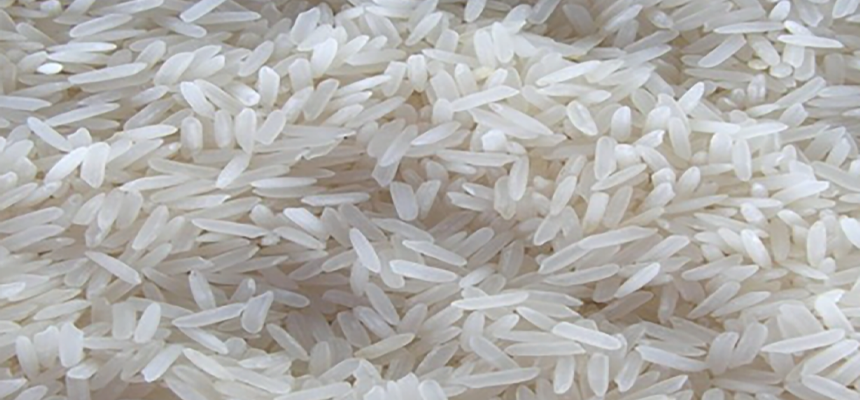
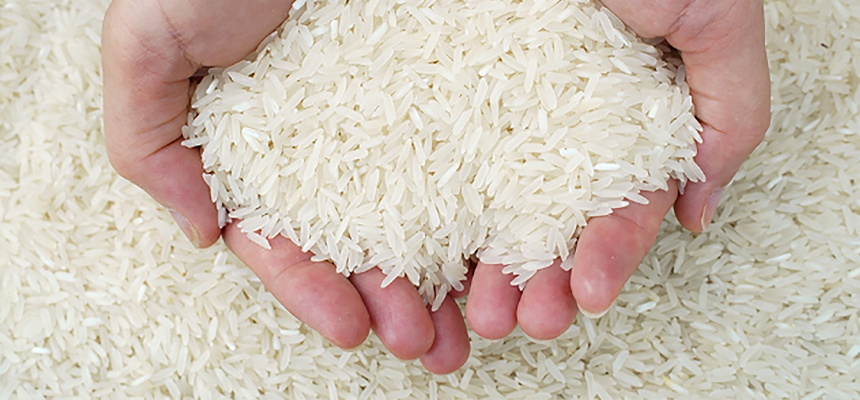
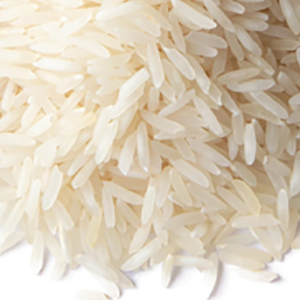
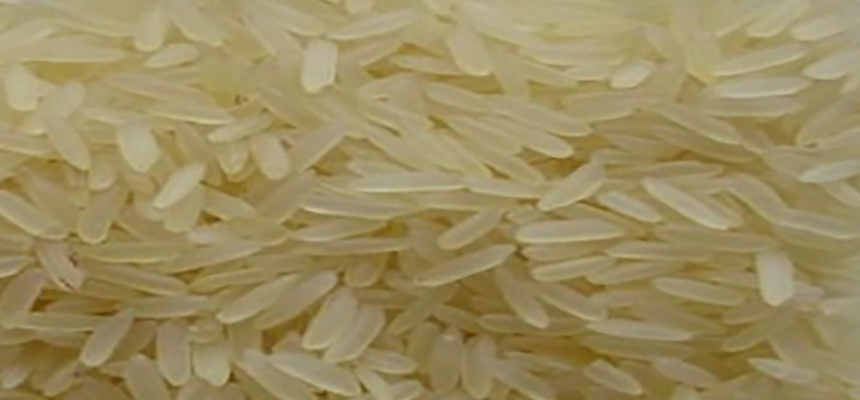
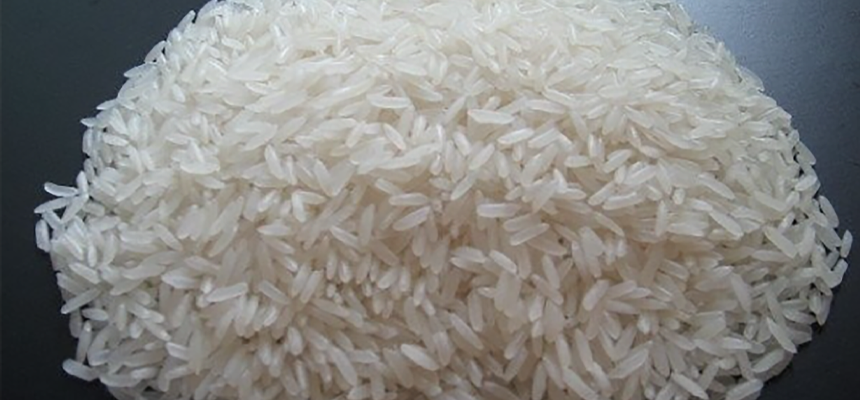
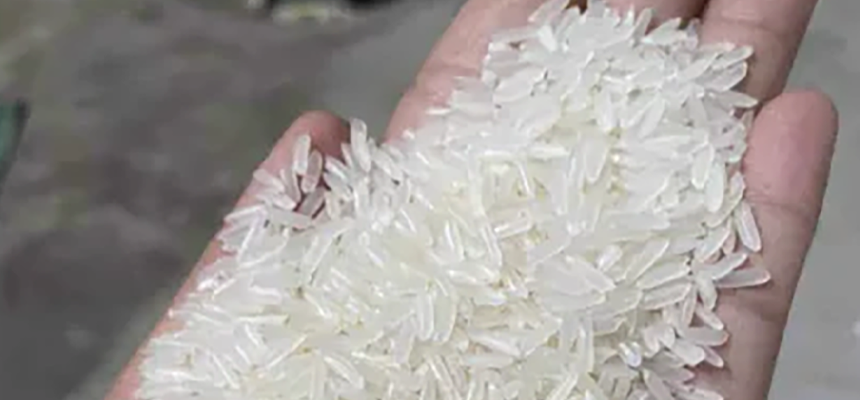
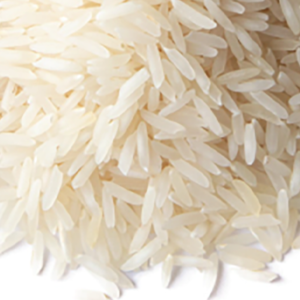
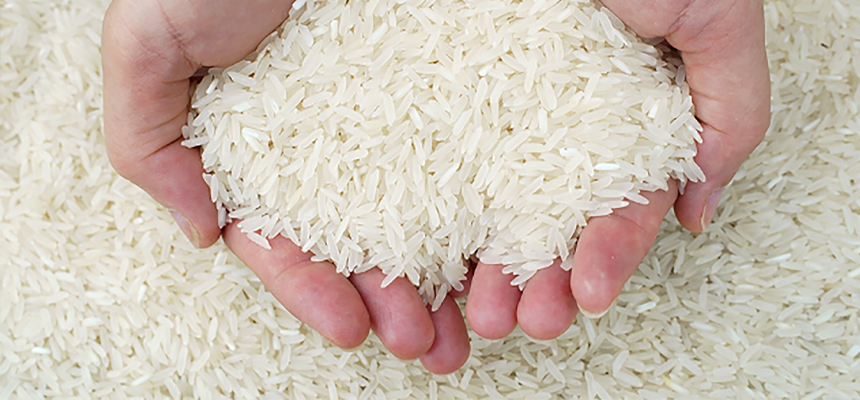
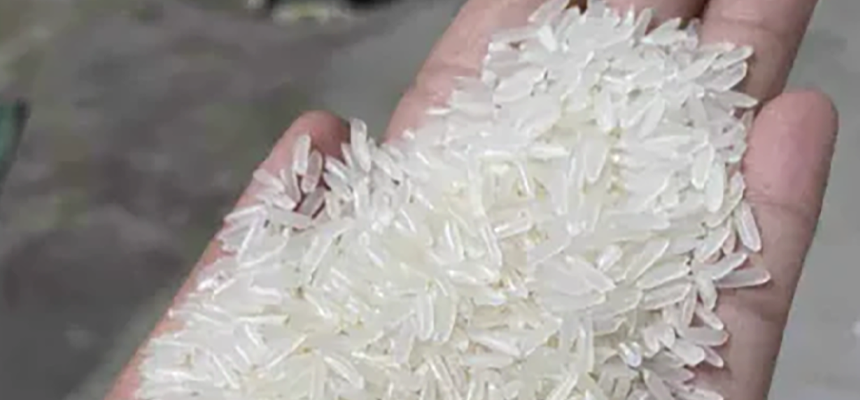
Look at the two samples on a dark tray and the difference in Thai white rice vs Indian 5% broken rice usually shows quickly. Thai long grain tends to be slimmer and more uniform, with a glassy, translucent white. Indian 5% often has a slightly wider spread of grain lengths and can show more chalky, opaque grains.
That does not make Indian rice bad. In a 50kg sack sold by the cup in an open market, few customers will notice. In a clear 5kg retail bag next to other brands, they might.
Cooking and Taste
Both cook in roughly 15 to 18 minutes. Thai white rice 5% broken generally cooks soft and fluffy with separate grains and a clean, mild smell. Indian 5% broken, especially IR64 type rice, often cooks a little firmer and drier, and holds its shape well in mixed dishes.
Some markets actually prefer that firmer bite. Cooks in parts of West Africa and the Middle East who make rice with lots of sauce or stock sometimes like Indian rice because it does not go soft. Others prefer the softer Thai texture for plain steamed rice. Taste in Thai white rice vs Indian 5% broken rice is honestly a matter of local habit.
Consistency Between Shipments
This is where we think Thai rice earns most of its premium. Thailand’s export trade is built on a long standing national standard, a smaller number of large export mills, and buyers who expect the same rice every month. Lot to lot variation in Thai white rice 5% broken is usually small.
India produces far more rice, from many states, many varieties and a very large number of mills. Excellent Indian exporters exist, and the best of them ship very consistent rice. But across the market, the spread is wider. Two Indian 5% offers at the same price can be quite different rice. In the Thai white rice vs Indian 5% broken rice decision, that matters most for brand owners whose customers expect the same bag every time.
Price
Indian 5% broken has usually been priced below Thai 5% broken, sometimes by a wide margin. That price difference is the main reason Indian rice sells so strongly in Africa and parts of Asia.
The gap moves. Indian export policy has a big effect. India restricted non-basmati white rice exports in 2023 and lifted those restrictions in 2024, and every change like that pushes world prices. Crop size, the rupee, the baht and freight all play a part too. Vietnam, Pakistan and Myanmar compete in the same space.
For current Thai numbers, see our Thai white rice 5% broken price per ton and Thai white rice 5% broken FOB price posts. For world price trends across origins, the FAO rice price monitor compares Thai and Indian quotes regularly. On the Indian side, APEDA publishes export information.
Freight and Landed Cost
FOB price is only part of the story in Thai white rice vs Indian 5% broken rice. Indian ports on the west coast can be closer to East Africa and the Middle East. Thai ports can be closer to East Asia and the Pacific. West Africa is served from both, with freight that changes with the season and shipping lines.
So always compare CFR or CIF at your port, not just FOB. The ICC Incoterms rules define the terms, and our FOB vs CIF rice price guide shows how to compare offers properly. Sometimes the Thai and Indian landed prices end up closer than the FOB numbers suggest.
Quality Checks and Documents
Whichever origin you buy, insist on proper inspection at loading. For our Thai rice, every lot is tested for broken content, moisture, purity, foreign matter and defects before packing, and you can appoint SGS or another surveyor. See our quality control page.
Documents for a Thai shipment include commercial invoice, packing list, bill of lading, certificate of origin, phytosanitary and fumigation certificates, and certificates of quality and weight. Our rice export documents post lists them. Indian shipments carry similar papers. Check what your own customs needs for each origin, because some countries treat them differently on duty or import permits.
Who Should Buy Which
Across our buyers, the Thai white rice vs Indian 5% broken rice choice usually breaks down like this.
Thai white rice 5% broken makes sense when
- You sell in retail packs where customers see and compare the rice.
- Your brand depends on the same look and cooking every month.
- Your customers prefer soft, fluffy rice for plain steamed meals.
- You serve restaurants, hotels or premium shops.
- You want fragrant rice like Thai jasmine or Hom Mali in the same container.
Indian 5% broken rice makes sense when
- Price per ton is the deciding factor.
- Rice is sold loose by the cup or in plain sacks.
- Customers like a firmer grain for sauces and stews.
- You are buying very large tender volumes on price.
Using both
Plenty of importers do. Indian rice covers the low price end, Thai rice covers retail packs and premium customers. If that is your plan, buy the Thai side from a mill that can match your packing and branding. Our post on Thai rice mill direct supply explains how that works.
Cheaper Thai Options to Compare
If Indian 5% is winning on price, it is worth asking whether you need Thai 5% at all. Thai white rice 10% broken or white rice 25% broken can come much closer to Indian 5% on price while keeping the Thai grain look. For some buyers, Thai 10% against Indian 5% is the fairer comparison. Our guides on Thai white rice grades explained and 5% vs 25% broken rice go into the differences.
Parboiled rice is another angle. Thai parboiled rice 5% broken competes directly with Indian parboiled in many African and Middle Eastern markets.
Thai White Rice vs Indian 5% Broken Rice for Retail Brands
If you own a rice brand, the bag is your promise. A shopper who likes your rice this month expects the same rice next month. That is the strongest argument for Thai in the Thai white rice vs Indian 5% broken rice decision. Grain look, color and cooking stay very close from lot to lot, so your brand stays the same.
We pack Thai white rice 5% broken under private label in 1kg, 2kg and 5kg retail bags and in printed 10kg and 25kg bags. You send the artwork, or we help prepare it, and the bags are printed and filled at our mill. Vacuum packs and cartons are available for supermarkets that want them.
Thai White Rice vs Indian 5% Broken Rice for Wholesale Markets
In open markets where rice is sold by the cup or by the kilo from a 50kg sack, price usually decides. Here Indian 5% often wins on the first offer. But wholesalers tell us a few things change that picture.
- Customers in many cities now ask by name for “Thai rice” and will pay a little more.
- Thai rice tends to cook with more volume and softness, which some households prefer for daily meals.
- A wholesaler who sells both can serve every customer instead of losing the ones who want better rice.
So for wholesale, Thai white rice vs Indian 5% broken rice is often less a contest and more a range. Keep the cheaper rice moving and use Thai rice to lift your average margin.
Thai White Rice vs Indian 5% Broken Rice for Tenders
Tenders are mostly won on price, and Indian rice often competes hard there. But tenders also have strict specs. Some set tight limits on chalky grains, moisture or grain length that Thai long grain meets comfortably. Some agencies prefer origins with a long record of consistent lots. When a tender specifies Thai origin, the Thai white rice vs Indian 5% broken rice question is already answered.
We quote tenders for Thai white rice 5%, 10%, 15% and 25% broken and parboiled grades. Read our notes on government tender supply and food aid programs.
Storage and Shelf Life
Both origins store well when kept dry and cool. Moisture at packing matters more than origin. Our Thai lots usually leave at 12 to 14% moisture, which suits long sea trips and warm warehouses when bags are stored on pallets with airflow.
For very humid destinations, ask about container liners and desiccant bags. That advice applies equally to both sides of Thai white rice vs Indian 5% broken rice. Rice that arrives dry and stays dry is what keeps customers coming back.
Packing and Containers
We pack Thai white rice 5% broken in:
- 1kg, 2kg and 5kg retail bags.
- 10kg, 25kg and 50kg PP and printed BOPP bags.
- Jumbo bags for processors.
Minimum order is one 20ft container, about 25 tons in 50kg bags. You can mix Thai white rice with jasmine, parboiled or broken grades in the same container. For loading numbers see how many tons of rice fit in a 20ft container. New importers may like our guide on how to import rice from Thailand.
How to Compare Two Samples Yourself
When you have a Thai sample and an Indian sample on your desk, try this:
- Spread 100 grams of each on a dark tray. Look at color, chalky grains and length.
- Pick out broken pieces and weigh them. Both should be near 5 grams.
- Cook both with the same water ratio in the same pot type.
- Taste them hot and again after an hour.
- Show both to three or four of your best customers without telling them which is which.
That last step settles Thai white rice vs Indian 5% broken rice faster than any spec sheet. Your customers decide what sells.
7 Proven Tips for the Thai vs Indian Decision
1. Compare landed cost, not FOB
Freight can change the answer.
2. Compare like with like
Check moisture, chalky grains, purity and crop year, not just the broken figure.
3. Test with your customers
A blind cooking test beats any opinion.
4. Look at Thai 10% too
It often lands closer to Indian 5% on price.
5. Inspect at loading
Whichever origin, use a surveyor.
6. Watch policy news
Export rules in India, Thailand and Vietnam can move prices fast.
7. Build a steady supplier
Consistency over a year matters more than the cheapest offer this week.
A Buyer’s Story
A wholesaler in East Africa bought only Indian 5% for years because of price. His retail customers started asking for a nicer rice in small bags for weekends and celebrations. He added one container of Thai white rice 5% broken in printed 5kg bags under his own brand. It sold at a higher shelf price and the margin per bag was better than his Indian sacks. He still buys Indian rice for volume. For him, Thai white rice vs Indian 5% broken rice became two products for two customers.
Common Assumptions to Check
- “5% broken is 5% broken everywhere.” The broken limit is the same, but variety, chalkiness and milling differ.
- “Cheaper always wins.” Not in retail. Appearance and consistency sell bags.
- “Thai rice is always expensive.” Lower Thai grades can be very competitive.
- “Indian rice is lower quality.” Not fair as a rule. Good Indian exporters ship good rice. The spread is wider, so pick suppliers carefully.
Market Background
India is the largest rice exporter in the world by volume, and Thailand is one of the top exporters, alongside Vietnam and Pakistan. Thai rice has long carried a quality reputation, while Indian rice has won share on price and huge supply. The Thai Rice Exporters Association publishes weekly Thai quotes, and our post on Thailand rice exports in 2026 covers this year’s trade. If you are comparing more origins, see Thai rice vs Vietnamese rice.
Our Honest Verdict on Thai White Rice vs Indian 5% Broken Rice
We sell Thai rice, so read this knowing that. Still, we would rather you buy the right rice than the wrong rice from us.
If your customers buy on price alone and cook rice into sauces and stews, Indian 5% will often be the sensible choice, and there is no shame in that. If your customers see the rice before they buy, care about softness, or expect a brand to stay the same month after month, Thai white rice 5% broken is usually worth the extra money. If you sit in the middle, compare Thai 10% broken against Indian 5% before deciding.
The most useful thing you can do with Thai white rice vs Indian 5% broken rice is test it in your own market. Cook both, show both, sell a little of both. A single split container answers the Thai white rice vs Indian 5% broken rice question better than any article, including this one.
Frequently Asked Questions
Why is Indian 5% broken usually cheaper than Thai?
Large supply, lower production costs and strong competition among Indian exporters. Policy changes in India can widen or narrow the gap.
Does Thai white rice taste different from Indian 5%?
Thai rice usually cooks softer and fluffier. Indian 5% is often firmer and drier. Preferences vary by market.
Can you supply Indian rice?
We specialise in Thai rice. We also supply basmati for buyers who want it in the same order.
What is your minimum order for Thai white rice 5% broken?
One 20ft container, about 25 tons in 50kg bags. See our minimum order post.
Can you pack under my brand?
Yes, from 1kg to 50kg bags.
Can I get a sample to compare?
Yes. We send samples with full specs. More answers on our FAQ page.
Get a Thai Offer to Compare
If you are weighing Thai white rice vs Indian 5% broken rice right now, send us your Indian offer terms, quantity, bag size and destination port. We will send a dated Thai offer on the same basis, plus samples of 5% and 10% broken, so you can compare properly.
De Thai Products 1989 Company Limited. Email info@dethairice.com, WhatsApp +66 81 034 6390, or use our contact page. Read more about us or browse our products.