


How to identify genuine Thai Hom Mali rice is a fair question, because a lot of rice sold as “Thai jasmine” around the world isn’t. Some is blended with cheaper fragrant rice. Some is jasmine-type rice grown in other countries. Some is old stock that lost its aroma long ago. The good news is that you don’t need a lab to spot most fakes. A few simple checks will tell you a lot, and a couple of lab tests will settle the rest.
We mill and export Thai Hom Mali rice, so we have a stake in this. Every bag of fake Hom Mali on a shelf makes real Hom Mali look bad. Below are the checks we use ourselves and teach our buyers: the official mark, the label, the look, the smell, the cooking test, the lab tests, and the warning signs on price and paperwork. At the end you’ll find the specs of the genuine Thai Hom Mali rice we sell.
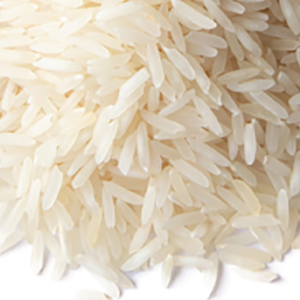
Table of Contents
What Counts as Genuine Thai Hom Mali Rice?
Before checking anything, you need to know what you’re checking for. Under the Thai government standard, genuine Thai Hom Mali rice must:
- Come from the KDML 105 or RD15 varieties, the official Hom Mali rice varieties.
- Be grown in Thailand.
- Contain at least 92% Hom Mali grains. The rest can only be other Thai rice.
- Meet limits on amylose (roughly 13 to 18%), brokens, chalky grains and defects for its grade.
Most Hom Mali comes from the northeast, in provinces like Surin, Roi Et, Si Sa Ket, Yasothon and Ubon Ratchathani. Rice from the Thung Kula Rong Hai plain has a name of its own, and we’ll come to that below.
Rice from other varieties, like Pathum Thani 1, is good fragrant rice, but it isn’t Thai Hom Mali. We explain the difference in Pathumthani fragrant rice vs Hom Mali rice.
The Thung Kula Rong Hai Name
Some packs go one step further and name the area where the rice was grown. Thung Kula Rong Hai is a large plain spread across Roi Et, Surin, Si Sa Ket, Yasothon and Maha Sarakham. Its sandy, slightly salty soil and dry, cool harvest season give Hom Mali with very strong aroma.
The name “Khao Hom Mali Thung Kula Rong Hai” is protected as a geographical indication, including in the European Union. So rice sold under that name has to come from that area and meet its rules. If you see it on a pack, it’s a strong sign of genuine Thai Hom Mali rice from the heart of the growing region. If you see it on a suspiciously cheap pack, be more careful.
Check 1: Look for the Thai Hom Mali Certification Mark
The simplest first step in how to identify genuine Thai Hom Mali rice is to look for the official mark. Thailand’s Department of Foreign Trade, part of the Ministry of Commerce, runs a certification mark for Thai Hom Mali rice. Exporters and packers who meet the standard, and whose rice passes inspection, can print the mark on the bag.
What to look for:
- The official Thai Hom Mali Rice mark printed clearly on the pack.
- The words “Thai Hom Mali Rice” and “Product of Thailand”.
- Details of the packer or exporter.
The mark isn’t a guarantee on its own. Logos can be copied. But real exporters who use it are inspected, and you can check with the Department of Foreign Trade whether a company is authorised. If a brand claims to be Thai Hom Mali and doesn’t carry the mark, ask why.
Check 2: Read the Label Carefully
Labels tell you a lot if you read them closely. Genuine Thai Hom Mali rice is usually labelled exactly that: “Thai Hom Mali Rice”. Watch for words that sound similar but mean something else.
| Label says | What it usually means |
|---|---|
| Thai Hom Mali Rice | Should be 92%+ Hom Mali from Thailand |
| Thai Hom Mali 100% Grade A | Top grade Hom Mali, low brokens |
| Thai Jasmine Rice | Often Hom Mali, but sometimes Pathumthani or a blend |
| Thai Fragrant Rice / Pathumthani | Thai fragrant rice, not Hom Mali |
| Jasmine Rice (no country) | Could be from anywhere |
| Fragrant Rice / Aromatic Rice | Could be anything with some aroma |
| Premium Jasmine Blend | A blend, not pure Hom Mali |
Also check the crop year or milling date, the country of origin, and who packed it. A bag that says “packed in” a country other than Thailand isn’t automatically fake, but it does mean someone handled the rice after it left Thailand. That’s where blending sometimes happens.
Check 3: Look at the Grains
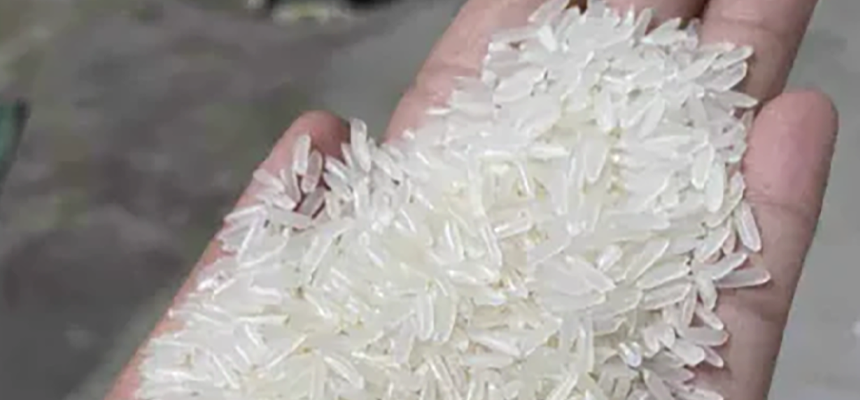
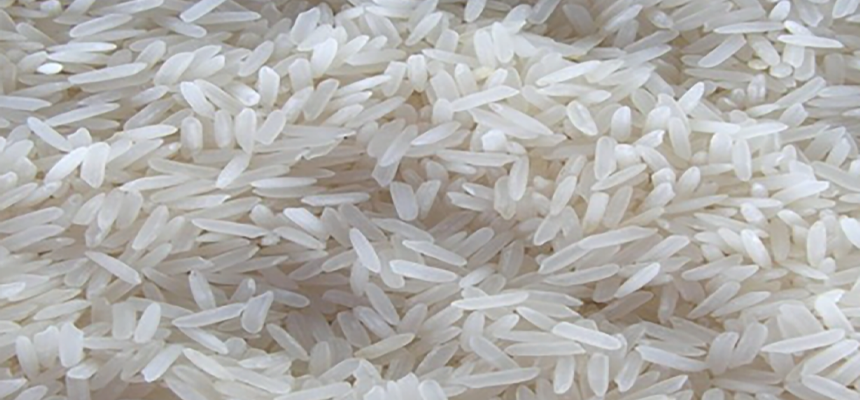
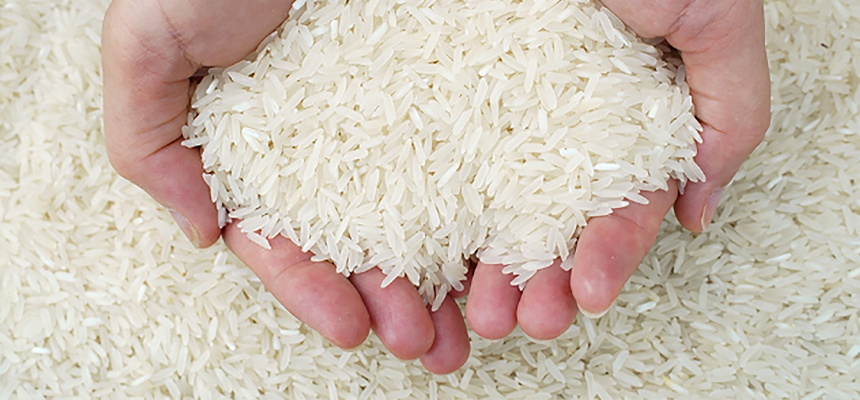
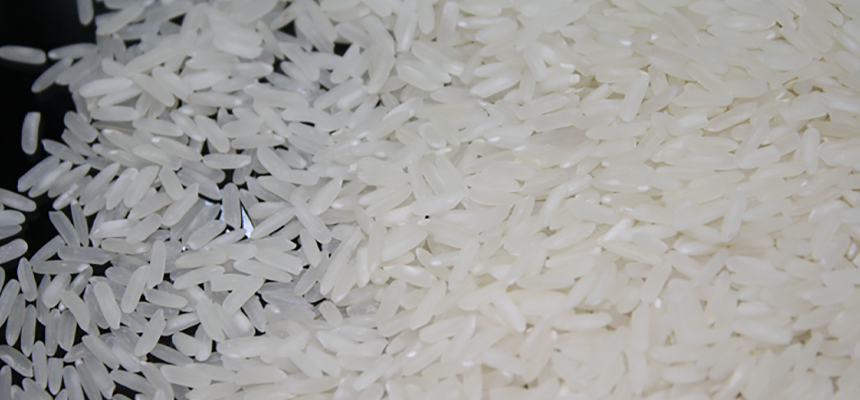
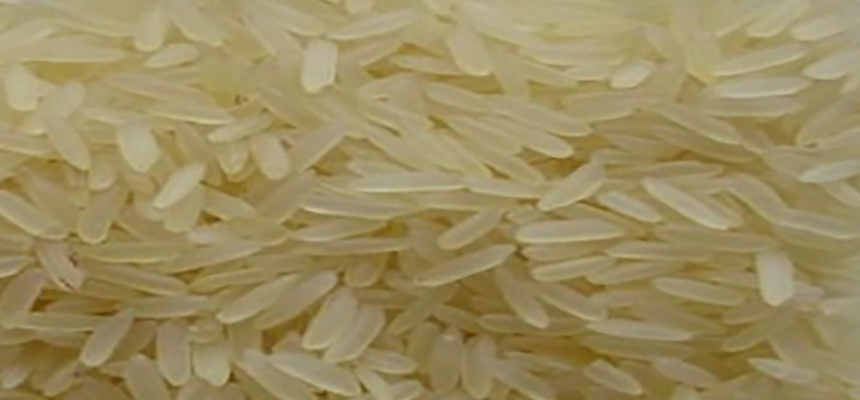
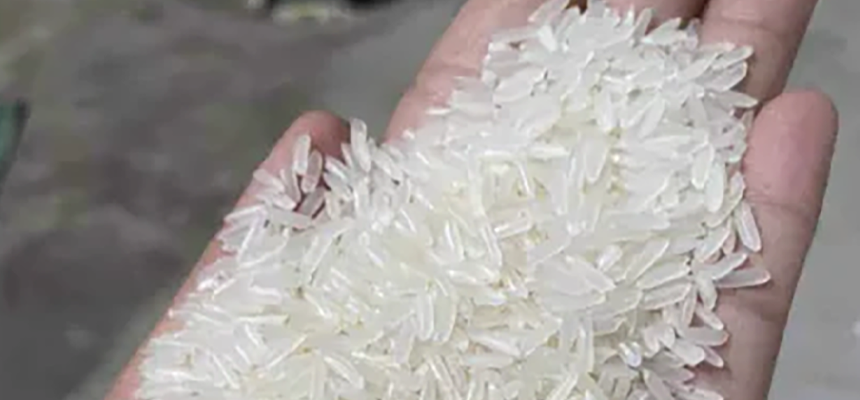
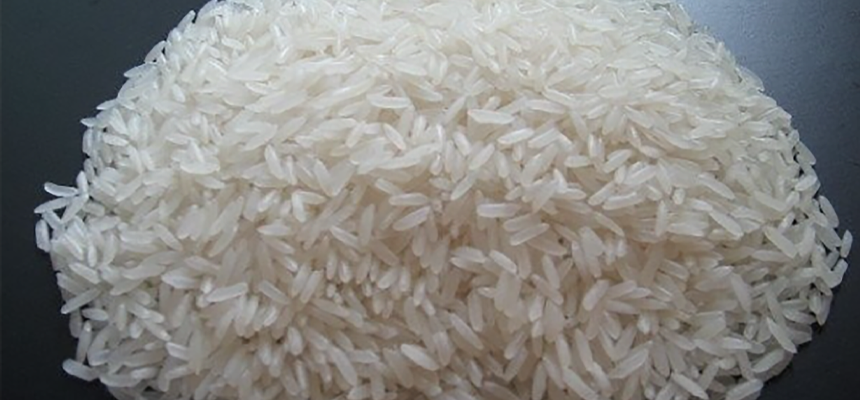
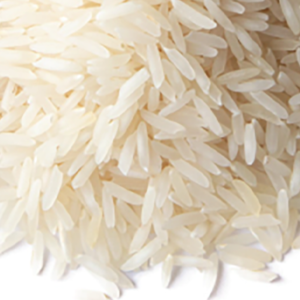
Spread a handful of raw rice on a dark plate in good light. Genuine Thai Hom Mali rice looks like this:
- Long and slender. Average whole grain length around 7 mm or more, roughly three times as long as it is wide.
- Clear and glassy, almost translucent white.
- Very few chalky (milky white, opaque) grains.
- Even in size and shape.
- Clean, with very few yellow, red or damaged grains if it’s a good grade.
Warning signs:
- A mix of long and noticeably shorter or fatter grains, which can mean blending.
- Lots of chalky grains, which is common in some cheaper rice.
- A dull, grey or yellowish tone, which points to old or badly stored rice.
Pathumthani grains look very similar to Hom Mali, though. So the eye test catches crude fakes but not clever blends. That’s why you need the next checks too.
Check 4: Smell the Raw Rice
Open the bag and breathe in. Fresh genuine Thai Hom Mali rice has a gentle sweet, pandan-like, popcorn smell even before cooking. You can usually smell it in a warehouse full of bags.
The smell comes from a compound called 2-acetyl-1-pyrroline. It’s strongest in new crop Hom Mali and fades over time and with heat. So weak smell can mean the rice isn’t Hom Mali, or it can mean it’s old. Either way, it’s worth asking questions. Our post on old crop vs new crop jasmine rice explains how aroma changes with age.
Watch for rice that smells too strong or “perfumed”. Some low quality rice has been sprayed with artificial fragrance. Real Hom Mali smells natural and soft, not like a scented candle. If the smell disappears after one wash, be suspicious.
Check 5: The Cooking Test
This is the one we trust most outside a lab. Cook the rice properly:
- Rinse once or twice.
- Use about 1 cup rice to 1 to 1.2 cups water in a rice cooker.
- Let it rest 10 minutes after cooking.
Genuine Thai Hom Mali rice should:
- Fill the room with aroma when you lift the lid.
- Cook soft, moist and slightly sticky, with grains that are tender but whole.
- Look glossy and white.
- Stay fairly soft after cooling for an hour.
- Taste a little sweet.
If the rice is firmer, drier and less fragrant, it could be Pathumthani, a blend, white rice, or very old Hom Mali. The best way to judge is side by side with a sample you know is genuine. Ask us for a reference sample if you want one.
Check 6: The KOH Smell Test
This is a simple test labs and buyers use to check aroma without cooking.
- Put about 2 grams of rice (or a few grains) in a small glass or test tube.
- Add enough weak potassium hydroxide solution (about 1.7% KOH) to cover the rice.
- Cover and leave for about 10 to 15 minutes at room temperature.
- Open and smell.
Fragrant rice gives off a clear aroma. Non-fragrant rice smells of nothing much. It won’t tell you Hom Mali from Pathumthani, because both are fragrant, but it quickly catches plain white rice mixed in. Handle KOH with care, as it’s a caustic chemical. Gloves and eye protection, please.
Check 7: Lab Tests
If you’re buying containers, or building a brand, lab tests are worth the money. These are the main ones.
DNA testing
DNA testing can tell Hom Mali varieties apart from other rice, including other Thai fragrant rice like Pathum Thani 1, and from non-fragrant rice. It’s the most reliable way to check purity and catch blends. Thai government labs and private labs offer it.
Amylose content
Genuine Thai Hom Mali rice has low to medium amylose, roughly 13 to 18%. Rice with much higher amylose cooks firmer and is unlikely to be Hom Mali.
Alkali spreading test
This checks how the starch behaves, linked to gelatinisation temperature. Hom Mali has a typical profile, and lots of grains behaving differently can point to mixing.
Aroma measurement
Some labs measure 2-acetyl-1-pyrroline directly. Useful for premium contracts, though it also falls with age.
Standard grading
Brokens, chalky grains, moisture, yellow and damaged grains, foreign matter. Independent inspectors like SGS, Intertek or Bureau Veritas do this at loading, and many also take samples for DNA testing on request.
Check 8: Watch the Price
This is a blunt one, but it works. Genuine Thai Hom Mali rice is the most expensive Thai rice there is. If an offer for “Thai Hom Mali” is close to the price of Thai white rice or Pathumthani, something is wrong. Either it’s not Hom Mali, it’s a blend, it’s very old, or the grade is far lower than described.
For a feel for real prices, see our post on Thai Hom Mali rice price per ton.
Check 9: Check the Paperwork
For importers, the documents tell their own story. Genuine Thai Hom Mali rice exports usually come with:
- A certificate of origin from Thailand.
- A Thai Hom Mali certificate or inspection certificate showing the grade.
- A phytosanitary certificate and fumigation certificate.
- A certificate of analysis from the exporter or an independent lab.
- An inspection report from SGS or similar, if you requested it.
If a supplier can’t or won’t give you these, think twice. Our rice export documents checklist explains what each one is.
Red Flags at a Glance
When working out how to identify genuine Thai Hom Mali rice, these are the warning signs to keep in mind:
- Price far below other Hom Mali offers.
- “Jasmine rice” or “fragrant rice” on the label with no mention of Thai Hom Mali.
- No crop year or milling date.
- Strong artificial smell that fades after washing.
- Mixed grain sizes or lots of chalky grains.
- Rice that cooks firm and dry.
- No certification mark on a product sold as premium Thai Hom Mali.
- Supplier won’t allow independent inspection or DNA testing.
- Rice repacked outside Thailand with no clear chain of custody.
Why Fakes and Blends Happen
It comes down to money. Hom Mali costs a lot more than other rice. Blending in even 20 or 30% Pathumthani or white rice cuts cost a lot, and most shoppers can’t tell from the bag. Some blending is done honestly and labelled as a blend, and that’s fine. The problem is when a blend is sold as 100% Thai Hom Mali.
Thailand takes this seriously because Hom Mali is a national product. That’s why there’s a standard, a mark, and inspection at export. Problems more often happen after the rice leaves Thailand, when it’s repacked, mixed or relabelled. So buying direct from a Thai exporter, with your own label printed in Thailand, cuts out most of the risk.
How to Identify Genuine Thai Hom Mali Rice as a Shopper
If you’re buying a bag in a shop rather than a container, keep it simple:
- Look for “Thai Hom Mali Rice” and the official mark on the pack.
- Check “Product of Thailand” and, if shown, the crop year.
- Look through the window: long, slender, clear grains.
- Smell the bag if you can.
- Cook it and see if the aroma fills the kitchen.
- Stick with brands that have been consistent for you.
How to Identify Genuine Thai Hom Mali Rice as an Importer
If you’re importing, go further:
- Buy from a Thai exporter who mills or controls the milling.
- Get the variety, grade, purity and crop year in the contract.
- Ask for a sample from the actual lot, and keep part of it.
- Book independent inspection at loading, with DNA testing on the first orders.
- Print your bags in Thailand, so the rice is packed at origin.
- Do a cooking test on every new shipment against your reference sample.
Keep a Reference Sample
One habit that helps a lot: keep a reference sample. When you find a lot of genuine Thai Hom Mali rice you’re happy with, put a kilo or two in a sealed jar in a cool, dark place and label it with the supplier, crop year and date.
Every time a new shipment arrives, cook the new rice and the reference sample side by side, with the same water and the same cooker. Differences in smell, softness and taste jump out much more clearly than when you taste one rice alone. It costs nothing and it’s the best everyday answer we know to how to identify genuine Thai Hom Mali rice in your own warehouse.
What We Do to Protect Our Hom Mali
We have a simple rule: if the contract says Thai Hom Mali, the bag holds Thai Hom Mali. To keep it that way:
- We buy Hom Mali paddy from known areas in the northeast and keep it apart from other rice at every step.
- Hom Mali gets its own milling run. We clean the line before and after.
- Every lot is tested for brokens, chalky grains, moisture and purity, with DNA testing on request.
- We keep a retained sample of every lot we ship, so if a buyer ever has a question, we can test the same rice again.
- We pack in Thailand, under your label if you like, so the rice isn’t repacked somewhere along the way.
If we ever sell a blend, it’s because a buyer asked for one, and the blend ratio is written on the contract.
How to Identify Genuine Thai Hom Mali Rice in Restaurants
Restaurant owners ask us this too, usually after a supplier switch. Cook a pot and leave it in the warmer for two hours. Genuine Hom Mali stays soft and still smells good. Cheaper rice firms up and the aroma drops off quickly. Ask your kitchen staff, too. Cooks who handle rice every day often notice a change before anyone else does.
Our Genuine Thai Hom Mali Rice Specifications
Here’s what we supply. This is real Thai Hom Mali, from KDML 105 and RD15, milled and packed in Thailand.
| Parameter | Specification |
|---|---|
| Product | Thai Hom Mali rice, 100% Grade A |
| Variety | KDML 105 and RD15 |
| Origin | Northeast Thailand |
| Hom Mali purity | 92% minimum |
| Broken grains | 4.5% maximum (lower on request) |
| Moisture | 14% maximum |
| Chalky kernels | 6% maximum |
| Yellow kernels | 0.2% maximum |
| Admixture | 2% maximum |
| Milling | Double polished, 100% sortexed |
| Crop | Current season, confirmed at booking |
| Packing | 1kg to 50kg bags, vacuum packs, private label |
| Shelf life | 12 to 24 months from milling under proper storage |
Full details on our Thai Hom Mali rice for sale page. We welcome independent inspection and DNA testing on any lot. See how we test on our quality control page and our rice standard page.
For more background, read Thai Hom Mali vs jasmine rice, Thai Hom Mali rice 100% Grade A and private label Thai Hom Mali rice.
Frequently Asked Questions
What is the fastest way to tell if Thai Hom Mali rice is genuine?
Check for the official mark and “Product of Thailand”, then cook it. Real Hom Mali has a strong natural aroma and cooks soft and moist.
How to identify genuine Thai Hom Mali rice without a lab?
Use the mark and the label, look at the grains, smell the raw rice, and cook it side by side with a reference sample you trust. That catches most fakes. For big orders, add DNA testing.
Where is genuine Thai Hom Mali rice grown?
Mainly in the northeast of Thailand, in provinces like Surin, Roi Et, Si Sa Ket, Yasothon, Ubon Ratchathani and across the Thung Kula Rong Hai plain. Some is also grown in the north.
Is all jasmine rice Thai Hom Mali?
No. Thai Hom Mali is the original Thai jasmine rice, but “jasmine rice” on a label can mean other Thai fragrant rice, blends, or jasmine-type rice from other countries.
Can you tell Hom Mali from Pathumthani by looking?
Not reliably. The grains look very similar. Cooking side by side helps, and DNA testing settles it.
Does genuine Hom Mali always smell strong?
New crop does. Older Hom Mali smells milder, especially if stored warm. So weak aroma alone doesn’t prove it’s fake.
Is blended jasmine rice bad?
Not if it’s labelled as a blend. It’s only a problem when a blend is sold as 100% Thai Hom Mali.
Do you allow DNA testing on your rice?
Yes. We’re happy for buyers to test any lot, at loading or on arrival.
The jasmine rice article on Wikipedia gives more general background if you want to read further.
Buy Genuine Thai Hom Mali Rice Direct From Thailand
Once you know how to identify genuine Thai Hom Mali rice, you’ll see the easiest way to be sure is to buy it at the source. We export genuine Thai Hom Mali rice 100% Grade A worldwide, milled and packed in Thailand, with the variety, grade and crop year on every contract and inspection welcome on every lot. We also supply Thai Pathumthani fragrant rice and organic jasmine rice, honestly labelled.
Tell us your quantity, packing and port, and we’ll send an offer and a reference sample you can test against anything else on the market.
Email info@dethairice.com, WhatsApp +66 81 034 6390, or use our contact page.
6 thoughts on “How to Identify Genuine Thai Hom Mali Rice: 9 Best Tests”