


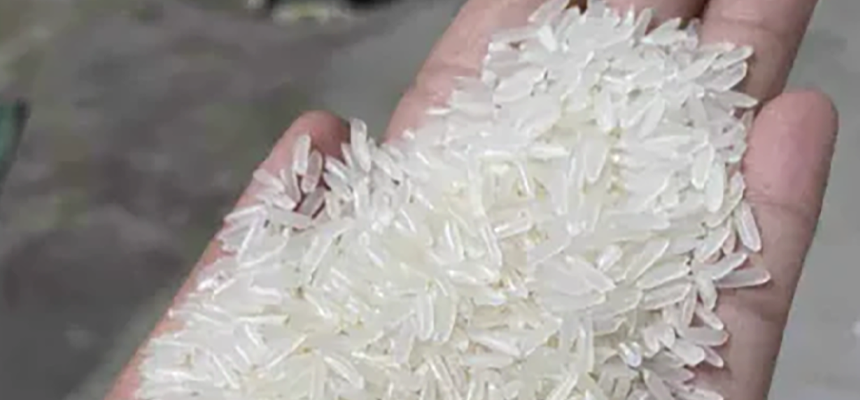
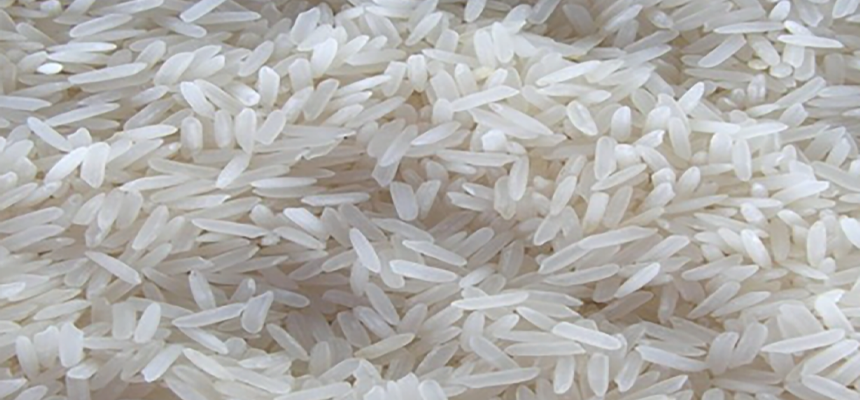
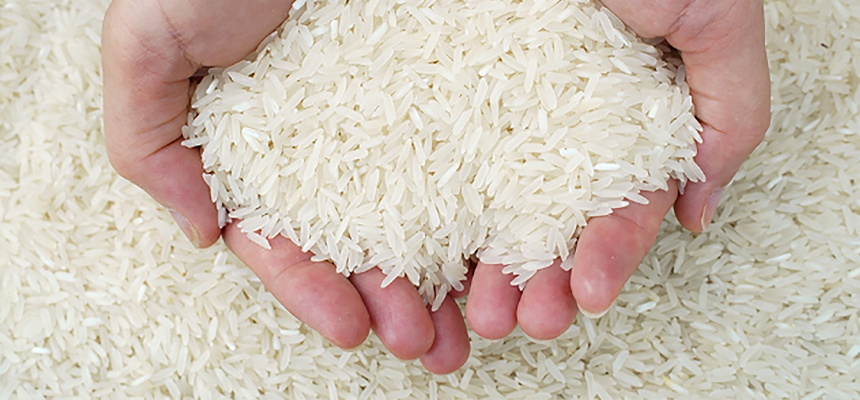
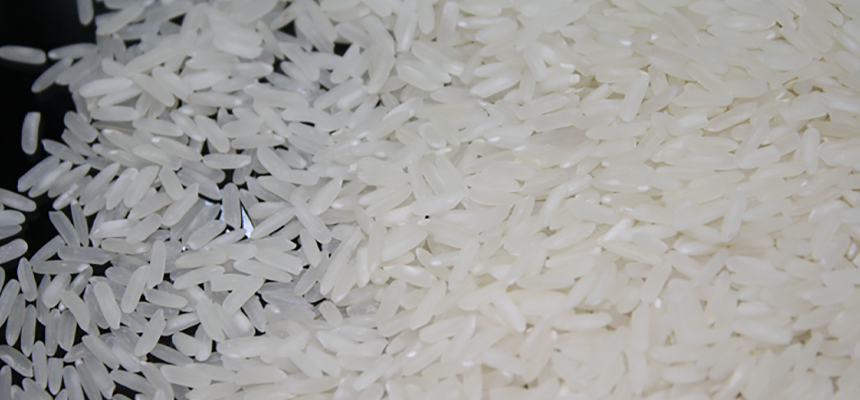
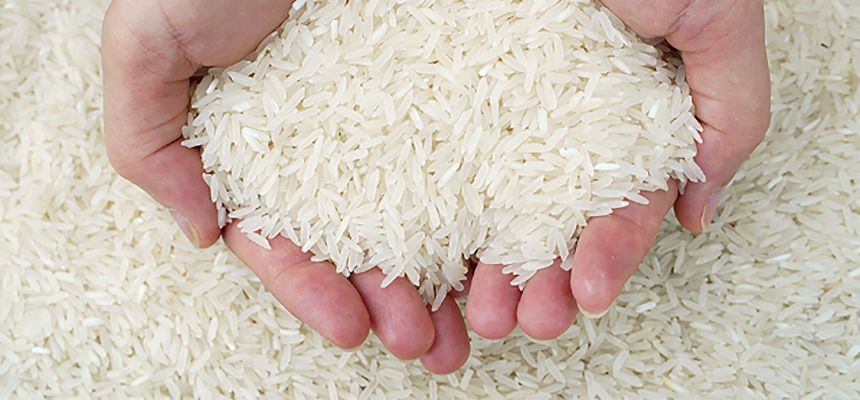
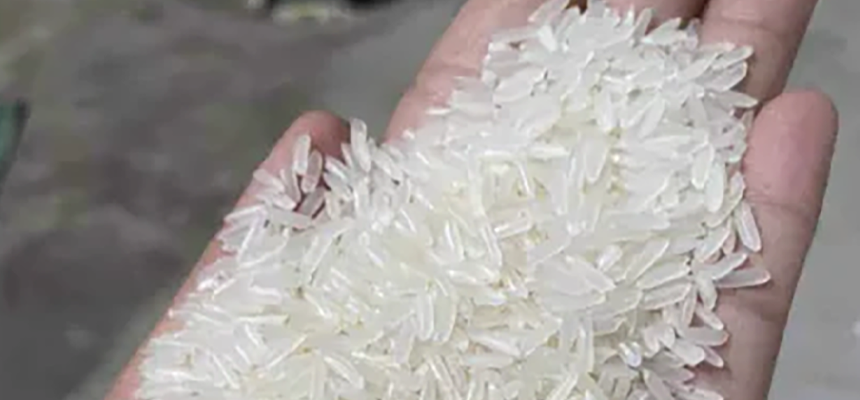
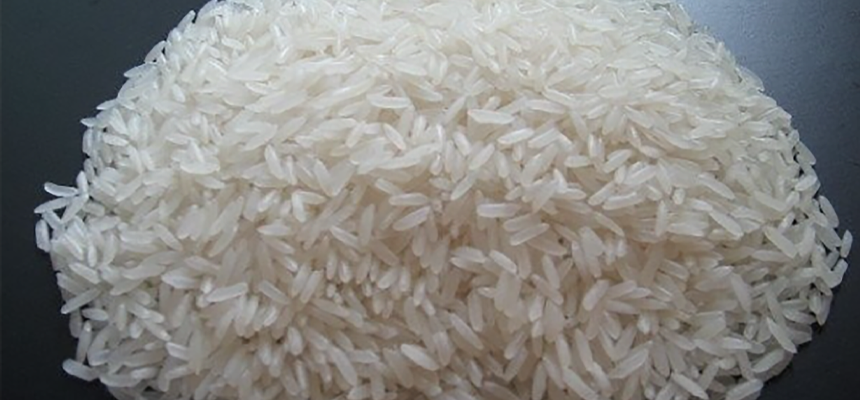
What does 5% broken rice mean? It means that in every 100 kilos of milled rice, no more than 5 kilos are broken pieces. The other 95 kilos or more are whole grains, or grains that are at least close to whole. That’s it. It is a grade, not a variety, and it tells you how clean and intact the rice is after milling.
We mill and export Thai white rice, and 5% broken is the grade we ship more than any other. So we get this question a lot, mostly from new importers, supermarket buyers and people who just saw “5% broken” on a price list and weren’t sure if it was good or bad. This guide covers what the number means, how it is measured, how it compares with 10%, 25% and 100% broken, and what specs you should expect when you buy 5% broken rice from us.

Table of Contents
What Does 5% Broken Rice Mean in Simple Words?
Paddy rice goes through a mill to remove the husk and then the bran. Rice grains are fragile, and some of them crack along the way. You can’t avoid it. Even the best mill in Thailand will break a few percent of the grains.
After milling, the rice is graded. The broken pieces are separated out with sieves and indent cylinders, and then a set amount is blended back in to hit a target grade. When a seller says 5% broken rice, they are promising that broken kernels make up 5% or less of the weight in the bag.
So when someone asks what does 5% broken rice mean, the honest answer is: it is the premium end of normal white rice. Not perfect, not zero, but very close to whole grain.
How Rice Mills Decide What Counts as “Broken”
This is the part most people never get told. A grain is not counted as broken just because it has a small chip. Under the Thai rice standard, grain parts are sorted by length compared with a whole grain:
- Whole kernel: a full grain with no break at all.
- Head rice: a piece that is 8/10 of a whole grain or longer. These are counted with the good grains, not the brokens.
- Big brokens: pieces shorter than head rice but longer than about 2.5/10 of a whole grain.
- Small brokens (C1 / brewers): very small pieces that pass through a sieve with 1.75 mm holes.
So 5% broken rice is mostly whole kernels and head rice, with a small allowance of brokens. The tiny C1 pieces are kept to a very low level, usually under 0.1% in our lots.
If you want the full grading rules, the Thai Ministry of Commerce publishes them, and we have a short version on our Thai rice standard page. For a general background on how rice is processed, the FAO rice page is a decent starting point.
Our 5% Broken Rice Specifications
Here is what our Thai long grain white rice 5% broken looks like on a typical contract. Every lot is checked against this before it is bagged, and you can ask for a certificate of analysis with your shipping papers.
| Parameter | Specification |
|---|---|
| Product | Thai long grain white rice, 5% broken |
| Origin | Thailand |
| Broken grains | 5% maximum |
| Moisture | 14% maximum |
| Purity | 95% minimum |
| Foreign matter | 0.1% maximum |
| Damaged grains | 1% maximum |
| Yellow / discolored grains | 1% maximum |
| Chalky grains | 2% maximum |
| Red and undermilled kernels | 1% maximum |
| Average grain length | 7.0 mm minimum |
| Milling degree | Well milled, double polished |
| Sortexed | Yes, available as standard on request |
| Crop | Current season |
You can see the product page, packing photos and more detail on our White Rice 5% Broken for sale page.
Why Buyers Pay More for 5% Broken Rice
A buyer looking at a price list will see 5% broken priced above 10%, 15% and 25% broken. The difference comes from the mill. To get down to 5% brokens, the mill has to take more brokens out of the stream, so less of each tonne of paddy ends up in the top grade. Those removed brokens get sold as cheaper grades or as 100% broken rice.
What you get for that extra money:
- Better looking rice. Long, even grains in the bag and on the plate.
- Fluffier cooking. Broken pieces release more starch and can make the pot a bit sticky or mushy. Fewer brokens means the grains stay separate.
- Easier retail sales. Supermarket shoppers judge rice by eye. A bag of 5% broken rice simply looks better than a bag of 25% broken. The USDA rice market reports track the 5% grade for exactly this reason: it’s what most of the world eats.
- Fewer complaints. Restaurants and hotels notice when rice turns soft and pasty. This grade holds up well.
In the first half of 2026, Thai white rice 5% broken was trading at roughly 440 to 450 US dollars per tonne FOB Bangkok, a bit above Vietnamese and Pakistani 5% and well above Indian 5%. Prices move every week, so treat that as a rough guide only. For live numbers, see our post on Thai white rice 5% broken price per ton.
5% Broken vs 10%, 25% and 100% Broken Rice
People often ask what does 5% broken rice mean compared with the other grades on the same price list. Here is a side by side. The figures are typical for Thai white rice.
| Grade | Max brokens | Looks | Cooking | Who usually buys it |
|---|---|---|---|---|
| 5% broken | 5% | Long, even, clean | Fluffy, separate grains | Supermarkets, retail brands, hotels, restaurants |
| 10% broken | 10% | Good, a few short grains | Very close to 5% | Wholesalers, mid-range retail, catering |
| 15% broken | 15% | Fair | Slightly softer | Price-sensitive markets, institutions |
| 25% broken | 25% | Visible short pieces | Softer, a bit sticky | Mass market, food aid, budget catering |
| 100% broken | All broken | Small pieces only | Soft, used in recipes | Rice flour, noodles, brewing, pet food, feed |
We sell all of these. If 5% feels over budget, the 10% broken white rice is the closest step down and most home cooks can’t tell the difference. If you are feeding a lot of people at a low cost, look at 25% broken white rice. For processing, 100% broken white rice is the cheap and sensible choice.
Is 5% Broken Rice Good Quality?
Yes. In the export trade, 5% broken rice is treated as the benchmark for good quality white rice. When news agencies quote “the Thai rice price” or “the Vietnamese rice price”, they almost always mean the 5% broken grade. It is the standard grade everyone compares against.
That doesn’t mean every 5% broken rice is the same. Two lots can both meet the 5% limit and still be very different. One might be fresh, well polished and sortexed. Another might be older stock, a bit yellow, with more chalky grains. So check the rest of the spec, not just the broken number:
- Moisture. Above 14% and the rice can go mouldy in a container.
- Chalky grains. Too many and the rice looks dull and cooks unevenly.
- Yellow grains. These usually point to old or badly stored paddy.
- Crop year. Fresh crop rice smells and cooks better.
- Sortexing. A colour sorter removes discoloured grains and stones.
We run every lot through a colour sorter and lab test before loading. You can read about how we check each lot on our quality control page.
Does 5% Broken Rice Taste Different?
Not really. Broken grains are the same rice as whole grains. Same variety, same paddy field, same nutrition. A broken kernel doesn’t taste worse.
What changes is texture. Broken pieces cook faster than whole grains and release more surface starch. In a pot of 25% broken rice, the small pieces turn soft before the long grains are done, and you get a stickier result. With 5% broken rice that effect is tiny. The pot cooks evenly, the grains stay separate, and leftovers reheat better.
For fried rice, pilaf, jollof, biryani-style dishes or anything where you want separate grains, 5% broken is the safer pick.
How Brokens Are Measured in the Lab
If you are buying in bulk, it helps to know how the number is checked. Here is how our lab and most independent surveyors do it:
- A sample is drawn from many bags across the lot, mixed, and split down to around 1 kilo.
- A smaller working sample, usually 25 grams, is weighed out.
- A grader separates whole kernels, head rice and broken pieces by hand on a black board, or with a rice grader machine and sieve set.
- Each group is weighed. Brokens weight divided by total weight, times 100, gives the broken percentage.
- The test is repeated, and results are written on the certificate.
Independent inspectors like SGS, Intertek or Bureau Veritas can do this at loading, and many buyers ask for that. We are fine with it. If a buyer wants a pre-shipment inspection, we book it and share the report.
What Does 5% Broken Rice Mean for Your Costs?
Here’s a question buyers don’t ask enough. What does 5% broken rice mean for the money side of the business, not just the quality side?
Say you run a catering company and cook 500 kilos of rice a week. The price gap between 5% and 25% broken might be 30 to 50 dollars a tonne, depending on the month. Over a year that is maybe 1,000 dollars. Not nothing, but not huge either. If the 25% grade gives you a softer pot that customers complain about, or you throw out more leftovers because the rice goes pasty, the saving disappears fast.
For a retail brand the maths is even clearer. Shoppers pick up the bag, look through the window and decide. Long, clean, even grains sell. A bag full of short pieces sits on the shelf. So for retail, 5% broken rice usually pays for itself.
For a food factory making rice flour, crackers or noodles, it’s the opposite. Nobody sees the grain. Paying for 5% broken rice would be throwing money away, and broken rice is the right buy.
How Storage and Shipping Affect Broken Grains
One thing people don’t expect: the broken percentage can creep up between the mill and your warehouse. Rice that is too dry gets brittle. Bags that get dropped, thrown or stacked badly crack more grains. Long trips with big temperature swings inside a container make it worse.
What we do about it:
- Mill to a moisture level that is safe but not bone dry, usually 13 to 14%.
- Use strong woven bags with a proper inner liner for long voyages.
- Line the container with kraft paper and add desiccant bags to catch condensation.
- Load by hand or conveyor, not by throwing bags.
At your end, keep bags off the floor on pallets, out of direct sun, and don’t stack them higher than the bag strength allows. Rice is a tough product, but it’s not indestructible. Handle it well and the 5% you paid for stays 5% when it reaches your customer.
Common Questions We Get From Buyers
What does 5% broken rice mean on a Thai export contract?
On a Thai contract it means the lot must meet the Thai standard for 5% white rice: brokens at 5% or less, plus the moisture, purity and defect limits listed with it. If the lot fails at inspection, the buyer can reject it or renegotiate.
Is 5% broken rice the same as 95% whole grain?
Roughly, yes. A lot that is 5% broken will be 95% or more whole kernels and head rice, by weight. Some sellers write it as “95% whole, 5% broken”. It is the same thing.
Can I get lower than 5% broken?
Yes. We can offer 2% or 3% broken on request, or 100% whole grain for premium retail packs. It costs more because the mill has to pull out more brokens. For most markets, 5% broken rice is the sweet spot between price and looks.
Is 5% broken rice the same as parboiled 5% broken?
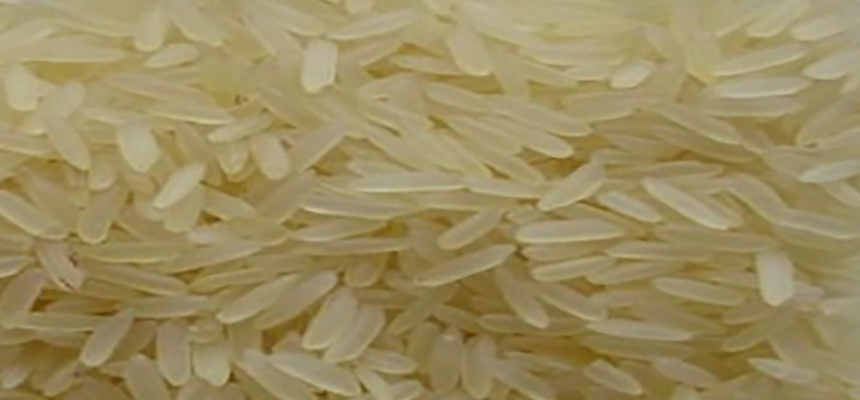
No. The broken number works the same way, but parboiled rice is soaked, steamed and dried in the husk before milling. The grains are harder and golden in colour. If that’s what you’re after, see our Thai parboiled rice 5% broken page. Our guide on parboiled rice vs white rice explains the difference properly.
Does jasmine rice come in 5% broken too?
Yes. Thai Hom Mali and Thai jasmine rice are graded the same way. Our Thai Hom Mali rice and Thai jasmine rice usually ship at 5% broken or better for retail.
Where 5% Broken Rice Goes in the World
We ship 5% broken white rice to buyers in Africa, the Middle East, Asia, Europe, North America and the Pacific. Each market has its own habits:
- West and Southern Africa: big demand for long grain white and parboiled rice, often in 25kg and 50kg bags.
- Middle East and Gulf: prefers long, well polished grains in retail 5kg and 10kg packs as well as bulk.
- Asia (Malaysia, Philippines, Hong Kong, Singapore): steady buyers of Thai white rice for retail and catering.
- Europe and North America: mostly retail brands and Asian grocery importers who want clean, sortexed 5% broken rice.
Thailand shipped close to 8 million tonnes of rice in 2025, and white rice made up almost half of that. A big share of that white rice was the 5% broken grade.
Packing Options for 5% Broken Rice
We pack to suit your market. Standard options:
- 1kg, 2kg, 5kg retail bags (PE, BOPP or vacuum packs)
- 10kg and 25kg BOPP or PP woven bags with your print
- 50kg PP woven bags for wholesale and food service
- Jumbo bags (1 tonne) on request
- Private label: your brand, your design, your language
A 20ft container usually takes about 25 to 26 tonnes of 5% broken rice in 25kg or 50kg bags. If you want the full loading breakdown, see how many tons of rice fit in a 20ft container.
How to Check a Sample of 5% Broken Rice Yourself
You don’t need a lab to get a rough idea. When a sample arrives, try this at your desk:
- Pour about 100 grams onto a dark plate or a black sheet of paper.
- Pick out anything clearly shorter than three quarters of a normal grain.
- Weigh the pile of short pieces. If it is under 5 grams, you are in the 5% range.
- Look for yellow, red or chalky grains, and any stones or husk.
- Smell it. Fresh rice smells clean. Old or damp rice smells flat or musty.
- Cook a small pot and see if the grains stay separate.
It is not a lab result, but it will tell you very quickly if a supplier is sending real 5% broken rice or something closer to 10% or 15%.
Things to Put in Your Contract
From experience, these are the points that save buyers trouble later. Make sure your contract or proforma has:
- The exact grade: “Thai long grain white rice, 5% broken, sortexed”
- Moisture, purity, chalky, yellow and damaged limits written out in numbers
- Crop year
- Packing type, weight per bag and the print or label
- Inspection: who does it, where, and who pays
- Price basis: FOB, CFR or CIF, and the port
- Shipment date window and payment terms (LC at sight, CAD or TT)
- What happens if a lot fails inspection
We also have a full list of the papers you’ll get with each shipment in our rice export documents checklist. If you have never imported before, start with how to import rice from Thailand.
Mistakes We See New Buyers Make
A few things come up over and over:
- Buying on the broken number alone. A cheap offer of “5% broken” with 16% moisture and no sortexing is not a good deal.
- Not asking for crop year. Old crop can still pass the broken test but will look duller and won’t keep as long.
- Skipping a sample. Always ask for a sample from the actual lot, not a stock sample from last month.
- No inspection clause. If anything goes wrong, you have nothing to stand on.
- Ignoring packing. Thin bags tear in transit, and broken bags in a container cost real money.
None of this is hard to fix. Ask for the full spec, a sample and an inspection report, and most problems go away.
Why Buy 5% Broken Rice From Us
We are a Thai rice miller and exporter, so the rice comes from our own processing and the mills we work with every season, not from a chain of traders. That means we can control the grade, the sortexing and the packing, and we can tell you exactly what is in the bag.
- Thai white rice 5% broken, sortexed, current crop
- Lab tested every lot, COA with documents
- Third party inspection on request (SGS or similar)
- Private label and custom packing
- FOB Bangkok or CFR / CIF to your port
- Steady supply for repeat orders
We also supply Thai white rice 100% sortexed, Thai glutinous rice, Thai red cargo rice and a full parboiled range. See everything on our products page.
Final Word on What 5% Broken Rice Means
So, what does 5% broken rice mean? It means a bag of white rice where at least 95% of the weight is whole or nearly whole grain, and only 5% or less is broken. It is the standard grade for good quality white rice in world trade, it cooks fluffy and even, and it looks right on a shop shelf. Just remember to check moisture, chalky grains, crop year and sortexing too, because the broken figure is only one line of the spec.
If you want a price for 5% broken rice, a sample, or a full spec sheet, get in touch. Tell us the quantity, packing and your port, and we will come back with an offer.
Email info@dethairice.com, WhatsApp +66 81 034 6390, or use our contact page.
8 thoughts on “What Does 5% Broken Rice Mean? Best Buyer’s Guide”
Comments are closed.