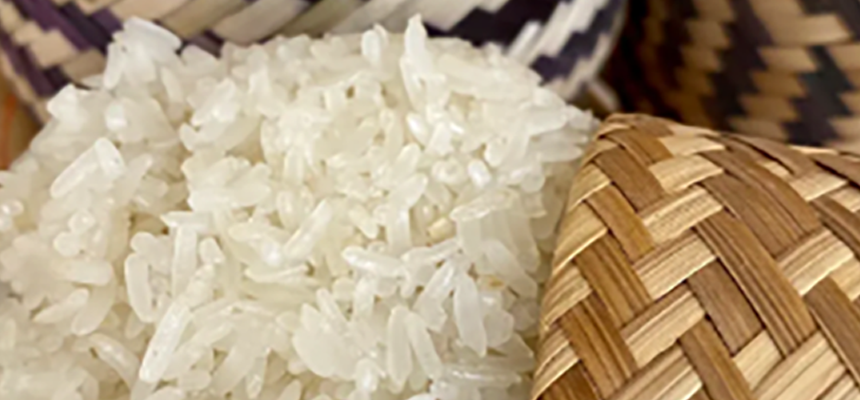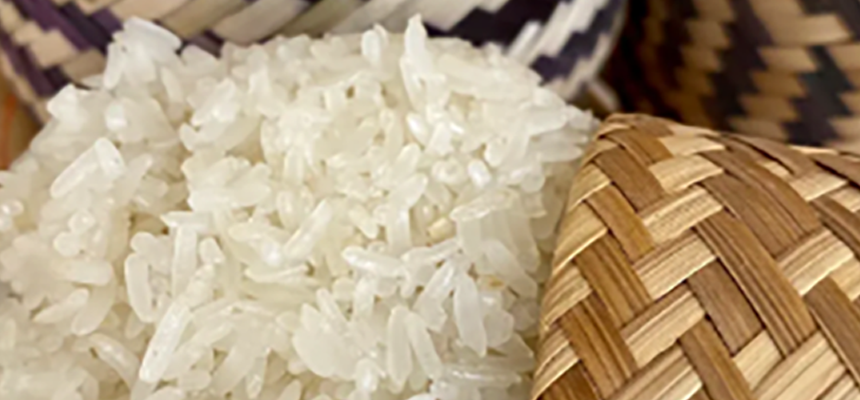


Sweet rice wholesale is what we do every week. We’re a Thai mill-direct exporter, and we sell Thai sweet rice (also called glutinous or sticky rice) by the container in 5%, 10% and 25% broken grades. We pack it in 25 kg and 50 kg bags, smaller 5 kg and 10 kg bags, or 1 kg retail packs under your own brand. If you’re an importer, distributor, Asian grocery chain or food factory, this page tells you exactly what we sell, the specs, how it’s packed and shipped, and how to get a price.
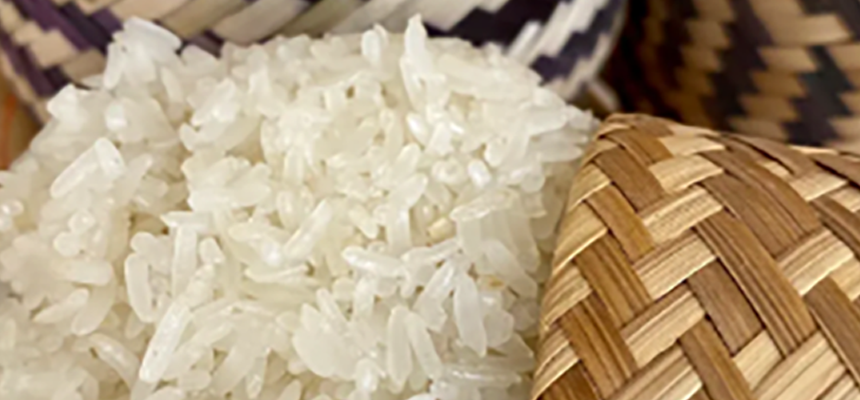
A lot of buyers call it sweet rice even though it isn’t sweet at all. The name comes from its use in desserts. In the trade you’ll hear sweet rice, sticky rice, glutinous rice, mochi rice and khao niao, and they all mean roughly the same grain. When someone asks us for sweet rice wholesale, we know they want the opaque white Thai glutinous rice that cooks up soft and sticky, and that’s what goes in the bag.
Table of Contents
Who We Are
We’re De Thai Products 1989 Company Limited. We’ve been exporting Thai rice since 1989, and sticky rice has been part of that from the start. We work with mills in the north and northeast of Thailand, where people eat glutinous rice at almost every meal and farmers know the crop inside out.
We also ship Hom Mali, jasmine, white and parboiled rice, so if sweet rice wholesale is only one line in your business, we can cover the rest too. You deal with us directly. There’s no broker passing your order to someone else and adding a margin on top.
What Sweet Rice Actually Is
Sweet rice is a type of rice whose starch is almost all amylopectin, with very little amylose. That’s the whole reason it sticks. Ordinary long grain rice has more amylose, so it cooks up loose and separate. Sweet rice doesn’t, so it clumps into a soft, chewy mass. If you want the botany in more depth, the glutinous rice article on Wikipedia is a decent summary.
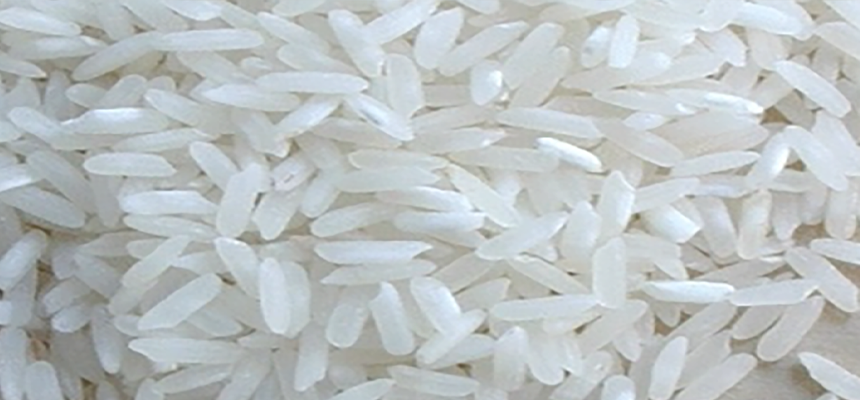
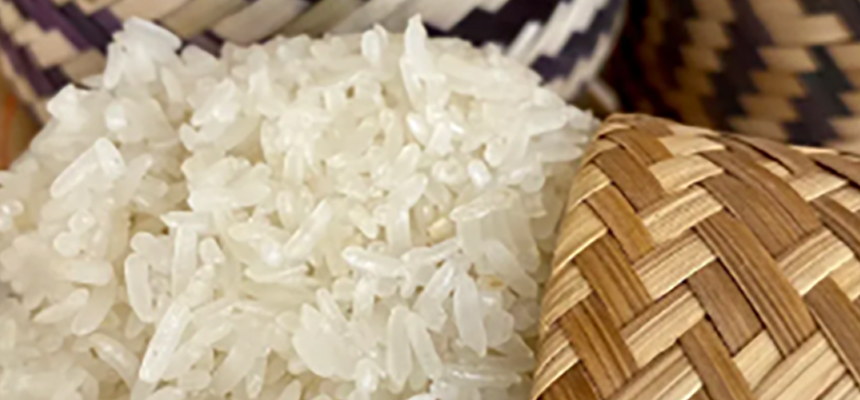
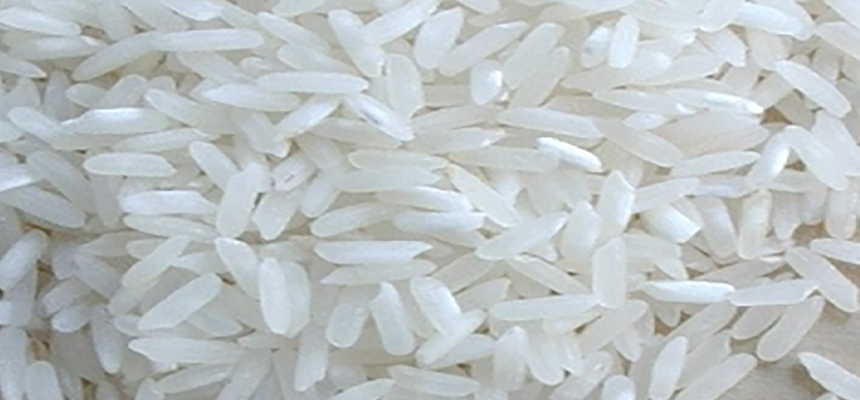
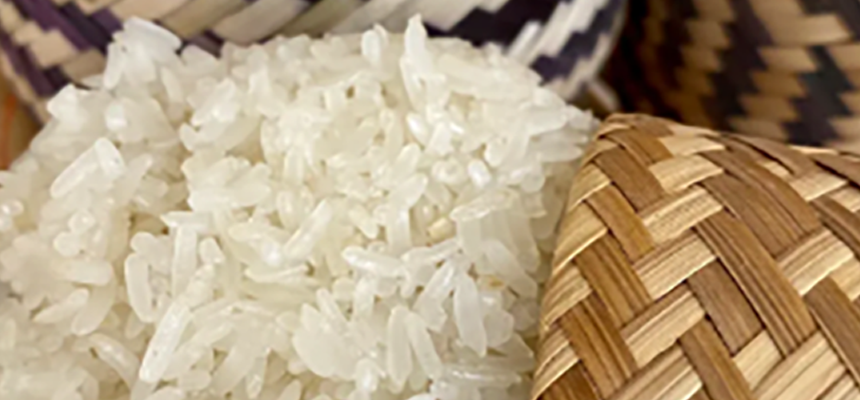
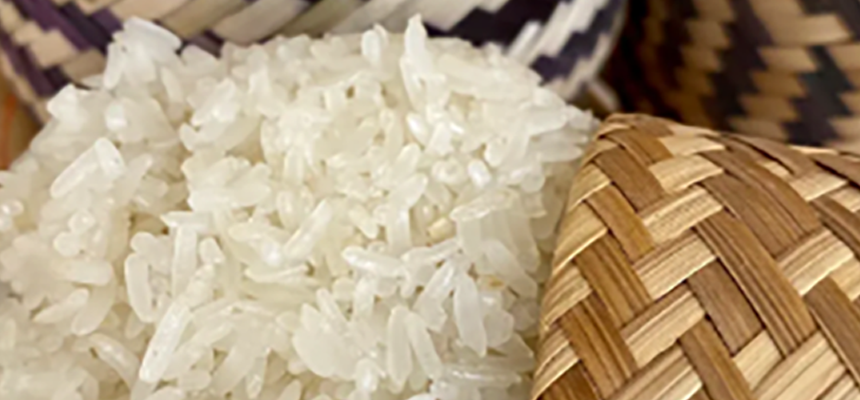
Two things trip up new buyers. First, there’s no gluten in it. “Glutinous” means glue-like, nothing to do with wheat. Second, raw sweet rice should be milky white and opaque. If a seller offering sweet rice wholesale shows you clear, glassy grains, that’s not glutinous rice, or it’s been mixed with something else.
Thai sweet rice is usually short to medium grain. Some Thai varieties, like RD6, carry a light aroma, which buyers in Laos, Thailand and the Thai restaurant trade really like. Our post on glutinous rice vs jasmine rice goes through the differences side by side.
Sweet Rice Wholesale Grades We Sell
Here’s the range we offer for sweet rice wholesale. All of it is Thai white glutinous rice from the current crop unless you ask for something else.
| Grade | Broken grains | Who buys it |
|---|---|---|
| Thai sweet rice 5% broken | Max 5% | Supermarkets, retail packs, Thai restaurants, dessert shops |
| Thai sweet rice 10% broken | Max 10% | Wholesalers, cash and carry, food service |
| Thai sweet rice 25% broken | Max 25% | Food factories, flour mills, snack makers |
| Sweet rice brokens (A1 type) | Mostly broken | Rice flour, rice wine, fermented products |
You can see the main product pages for Thai glutinous rice and Thai glutinous rice 25% broken. If you’re comparing grades for the first time, start with the 5% for anything sold as plain cooked rice, and the 25% for anything that gets ground or processed.
Specifications
These are the specs we load to. If your market has its own standard, send it to us and we’ll check before we quote.
Thai sweet rice 5% broken
| Parameter | Specification |
|---|---|
| Product | Thai white glutinous (sweet) rice |
| Origin | Thailand |
| Grain | Short to medium, opaque milky white |
| Crop | Current crop |
| Broken grains | Max 5% |
| Moisture | Max 14% |
| Glutinous purity | Min 95% |
| Non-glutinous grains | Max 5% |
| Damaged grains | Max 0.5% |
| Yellow grains | Max 0.2% |
| Red and red-streaked grains | Max 0.5% |
| Foreign matter | Max 0.1% |
| Milling | Well milled, double polished, 100% sortexed |
| Cooked texture | Soft, glossy, sticky, slightly chewy |
| Shelf life | 12 to 24 months in good storage |
Thai sweet rice 10% broken
| Parameter | Specification |
|---|---|
| Broken grains | Max 10% |
| Moisture | Max 14% |
| Glutinous purity | Min 95% |
| Damaged grains | Max 1% |
| Foreign matter | Max 0.2% |
| Milling | Well milled, sortexed |
Thai sweet rice 25% broken
| Parameter | Specification |
|---|---|
| Broken grains | Max 25% |
| Moisture | Max 14% |
| Glutinous purity | Min 92% |
| Damaged grains | Max 1.5% |
| Foreign matter | Max 0.5% |
| Milling | Well milled |
You won’t find a chalky grain limit here. Sweet rice is chalky by nature, that’s what makes it opaque. The number that matters is purity, because if regular rice gets mixed in, the batch cooks unevenly and some grains stay hard. On every sweet rice wholesale lot we test purity before anything else.
We grade to the Thai rice standard and follow the Codex Alimentarius rice standard for food safety limits. More on how we grade is on our rice standard page.
Packing for Sweet Rice Wholesale
Packing is where a lot of sweet rice wholesale deals are won or lost. Get it wrong and you end up repacking at your end, which costs money and time. Here’s what we offer:
| Pack size | Bag type | Best for |
|---|---|---|
| 50 kg | PP woven, with or without inner liner | Food factories, big wholesalers |
| 25 kg | PP woven or BOPP printed | Wholesale, restaurants, cash and carry |
| 10 kg and 5 kg | BOPP or PE printed | Restaurants, Asian grocers |
| 1 kg and 2 kg | PE or vacuum pack in cartons | Supermarkets and retail shelves |
| Jumbo bags | 1 MT bulk bags | Flour mills and large processors |
Retail packs can carry English, Chinese, Japanese, Korean, Arabic, French or Spanish text. We print your brand, net weight, origin, milling date and best before, plus anything your import rules call for. We send a print proof before a single bag gets made. For a lot of importers, buying sweet rice wholesale already packed under their own label is cheaper than shipping bulk and repacking.
Who Buys Sweet Rice Wholesale
Sweet rice goes a long way from the paddy fields of Isan. Here’s where most of ours ends up:
- Asian supermarkets and grocers in North America, Europe, Australia and the Middle East
- Thai, Lao, Chinese, Japanese and Korean restaurants that serve sticky rice or desserts
- Dessert and bakery chains making mango sticky rice, mochi, rice cakes and sweet buns
- Food factories producing glutinous rice flour, frozen dumplings, snacks and ready meals
- Rice wine and vinegar makers who need steady, high-purity lots
- Importers and distributors who resell to all of the above
Each of these buyers wants something a little different from sweet rice wholesale. A supermarket cares about how clean the grain looks through a clear bag. A dumpling factory cares about purity and moisture, and couldn’t care less about a few broken grains. Tell us who your end customer is and we’ll point you to the right grade.
How Sweet Rice Is Used Around the World
It helps to know where your rice is going, because the dish decides the grade.
| Region | Common dishes |
|---|---|
| Thailand and Laos | Khao niao with grilled meat, mango sticky rice, khao lam in bamboo |
| China | Zongzi, tang yuan, eight-treasure rice, lotus leaf rice |
| Japan | Mochi, sekihan, okowa, dango |
| Korea | Tteok, yaksik, makgeolli |
| Philippines | Suman, biko, champorado, bibingka |
| Malaysia and Indonesia | Kuih, lemang, ketan, tapai |
If you supply a mochi maker, they’ll want a very pure 5% grade, ideally new crop. A rice wine brewer might be happy with 25% broken. That’s why we ask questions before we quote for sweet rice wholesale. It’s not to slow you down, it’s to stop you buying the wrong rice.
Shipping and Container Loading
We load at Bangkok port and Laem Chabang. A 20ft container takes around 25 to 26 MT of rice in 25 kg or 50 kg bags. Retail packs in cartons fit a bit less, usually 20 to 23 MT depending on carton size. A 40ft container doesn’t take double the weight because of road and port weight limits, so most sweet rice wholesale buyers stick with 20ft.
| Destination | Typical transit from Thailand |
|---|---|
| East and Southeast Asia | 5 to 15 days |
| Middle East and Gulf | 16 to 28 days |
| Europe | 28 to 40 days |
| US West Coast | 20 to 30 days |
| US East Coast and Canada | 30 to 45 days |
| Australia and New Zealand | 15 to 30 days |
| Africa | 20 to 50 days |
Every container is cleaned, checked and lined with kraft paper. We add desiccant on longer routes. You get the booking, vessel name and ETA before you pay the balance. For loading details see our guide on how many tons of rice fit in a 20ft container.
Export Documents
With each sweet rice wholesale shipment you get:
- Commercial invoice and packing list
- Bill of lading
- Certificate of origin (Form E, Form AK, Form AJ or others where a trade deal applies)
- Phytosanitary certificate
- Fumigation certificate
- Quality and weight certificate from an independent surveyor such as SGS or Intertek
- Certificate of analysis
- Health certificate or non-GMO statement if your country needs one
Every country has its own rules for rice, so check with your customs broker first. Our list of rice export documents explains what each paper is for, and our step-by-step guide on how to import rice from Thailand covers the rest.
Sweet Rice Wholesale Prices
We don’t publish a fixed price list, because it wouldn’t be true for long. Sweet rice prices move with the harvest in the north and northeast, the baht against the dollar, and freight rates. We quote on the day and hold the price for an agreed period.
What changes your sweet rice wholesale price:
- Grade. 5% costs more than 10%, and 10% more than 25%.
- Crop. New crop usually carries a small premium right after harvest.
- Packing. Retail packs and vacuum packs cost more than 50 kg bags.
- Terms. FOB Thailand, CFR or CIF your port.
- Volume. Regular container orders get better rates than one-off buys.
The Thai Rice Exporters Association publishes weekly reference prices for Thai glutinous rice if you want a rough benchmark. For more detail on how the numbers add up, read our post on the Thai glutinous rice wholesale price and our explainer on FOB vs CIF rice price.
Payment terms are normally 30% deposit by T/T and the balance against a copy of the B/L, or an irrevocable L/C at sight. Every contract uses Incoterms rules so there’s no argument later about who pays for what.
How We Check Quality
This is the part we’re fussy about. Before sweet rice wholesale stock leaves Thailand:
- We check incoming paddy for variety, because a mixed load ruins purity
- Milled rice goes through colour sorters to pull out yellow, red, chalky-damaged and black grains
- Every lot is tested for moisture, brokens and glutinous purity
- We soak and steam a sample to check how it cooks and how sticky it gets
- An independent surveyor samples, tests and seals at loading
- You get photos and video of the bags and the loaded container
The cooking test matters. We’ve seen rice pass every lab number and still cook badly because the purity was borderline. So we cook it. You can read more on our quality control page.
New Crop or Old Crop
Sweet rice changes as it ages. New crop is softer, a bit more fragrant and stickier. After six months or so it firms up and needs a longer soak. Retailers and dessert shops usually want new crop. Some factories prefer slightly aged rice because it’s steadier on the production line and absorbs water more predictably.
When you order sweet rice wholesale from us, tell us which you prefer and we’ll pick the lot to match. We always give you the milling date. The same ageing effect shows up in fragrant rice, and our post on old crop vs new crop jasmine rice explains it well.
When to Buy
Thai sweet rice is mostly a wet season crop. Harvest runs from about October to December in the north and northeast, and new crop reaches the mills from late November. Prices tend to ease once the new crop is in.
Demand peaks before Lunar New Year, when rice cake and dumpling makers stock up, and again before the Dragon Boat Festival in May or June for zongzi. If you’re doing sweet rice wholesale into Asian markets, book a couple of months ahead of both. Our post on the Thai rice harvest season has a full calendar.
Storage Advice for Your Warehouse
Sweet rice keeps well if you look after it:
- Stack bags on pallets, not on the floor
- Keep the store cool, dry and well ventilated
- Keep it away from fish, spices, fertiliser or anything with a strong smell
- Rotate stock, first in, first out
- Check for weevils every couple of weeks in hot weather
Stored this way, our sweet rice wholesale stock lasts 12 to 24 months from milling. Vacuum packs last longer on a shop shelf.
Private Label Sweet Rice
If you sell under your own brand, we can pack sweet rice in your bags from 1 kg up to 50 kg. Send us your artwork or we’ll help you lay it out. Minimum for private label is usually one 20ft container per design, and printed bags take about two to three weeks. Our brands page shows the labels we already pack, and our post on rice supply for supermarkets has more on retail packing.
Mixed Containers
Most Asian grocery importers don’t need 25 tons of one thing. We can load sweet rice wholesale together with Thai Hom Mali rice, jasmine rice, sushi rice and red cargo rice in the same container. One booking, one set of documents, several lines on your shelf. The full range is on our products page.
Sweet Rice Wholesale for Online and Specialty Sellers
More of our sweet rice wholesale now ends up with online grocery sellers and specialty shops. They usually want 1 kg or 2 kg packs that look good in photos, travel well by courier and carry clear cooking instructions. For them we use the 5% grade, new crop, in vacuum packs or zip-top bags packed into strong export cartons. If that’s your business, tell us your carton size and pallet pattern and we’ll plan the load around it, so the packs arrive square and undamaged.
Common Problems in Sweet Rice Wholesale
We’ve been doing this long enough to see what goes wrong. Here’s the short list:
- Purity drops. Regular rice mixed in. We test every lot.
- Moisture too high. Rice goes musty in the container. We keep it under 14% and line every box.
- Old crop sold as new. We put the milling date on every lot and every bag.
- Bad print. Wrong weight or spelling on retail bags. We send a proof first.
- Smell taint. Rice absorbs odours. We never load next to strong-smelling cargo.
None of this is rocket science. It just needs someone who checks every single time.
What to Ask Any Sweet Rice Supplier
Before you pay a deposit to anyone selling sweet rice wholesale, us included, ask for:
- A spec sheet that shows glutinous purity, not just brokens
- A sample sent by courier, which you cook yourself
- Photos and video of the actual stock and bags
- A real company name and registration you can check
- An independent surveyor at loading
- A written contract with clear Incoterms and payment terms
If a seller won’t give you these, walk away. Honest suppliers expect to be checked.
Why Buyers Stay With Us
- Exporting Thai rice since 1989
- Direct links to sticky rice mills in the north and northeast
- Purity and cooking tested on every lot
- 1 kg to 50 kg packs, plus jumbo bags
- Private label in most languages
- Mixed containers with other Thai rice
- Fast replies and straight answers
More about the company is on our about us page and our achievements page.
7 Proven Tips for Sweet Rice Wholesale Buyers
- Check purity first. It decides how the rice cooks, more than brokens do.
- Cook the sample properly. Soak it at least four hours and steam it. Don’t boil it.
- Pick the grade for the job. 5% for plain sticky rice and retail, 25% for flour and processing.
- Decide on new or old crop. Desserts and retail like new crop, factories often like aged.
- Book ahead of festival peaks. Lunar New Year and Dragon Boat Festival push prices up.
- Get the label right early. Fix the artwork before printing, not after the container lands.
- Stick with one steady supplier. Your customers notice when the rice changes.
How to Order
- Send us grade, packing, quantity and destination port
- We reply with a price, spec sheet and loading date
- We agree terms and sign the contract
- You pay the deposit or open the L/C
- We mill, sort, pack and book the vessel
- The surveyor inspects and seals, and we load
- We send documents and tracking
- You clear customs and collect
Frequently Asked Questions
What is the minimum order for sweet rice wholesale?
One 20ft container, about 25 MT. You can mix it with other Thai rice. Our page on Thai rice minimum order quantity explains more.
Is sweet rice the same as glutinous rice?
Yes. Sweet rice, sticky rice and glutinous rice are different names for the same type of rice.
Does sweet rice contain gluten?
No. It’s naturally gluten free. The name refers to its sticky texture.
Can you send samples?
Yes, 1 to 2 kg of any grade by courier.
Can you supply sweet rice wholesale in 1 kg retail packs?
Yes, in plain or printed packs, including private label.
How long does it keep?
12 to 24 months from milling in good storage.
Get a Sweet Rice Wholesale Quote
Tell us the grade, bag size, quantity and port. We’ll send a firm price, a spec sheet and a loading window, usually within one working day. If you’d rather see the rice first, ask for samples and we’ll get them out quickly.
Email info@dethairice.com, WhatsApp +66 81 034 6390, or use our contact page. You might also like our pages on glutinous rice for sale, bulk sticky rice supply and our work as a Thai glutinous rice exporter.