


Government rice tenders are a different game from ordinary trade. The volumes are bigger, the specs are tighter, the paperwork is heavier and the penalties for getting it wrong are real. If you’re a ministry, a state trading company, a food reserve agency, or a contractor bidding on their behalf, you need a rice supplier for government tenders who can deliver exactly what’s written in the tender documents, on the date written, with every certificate in order.
We’re De Thai Products 1989 Company Limited, a rice miller and exporter in Chachoengsao, Thailand. We mill, grade and pack our own rice and ship it worldwide. This page explains how we work as a rice supplier for government tenders: the grades we offer, the specs, packing and marking, delivery, bonds and documents, and how we help bidders put together a clean offer.
Table of Contents
What a Rice Supplier for Government Tenders Has to Get Right
In a normal deal, if the rice is a little off spec, buyer and seller talk and agree a discount. In a tender, that rarely happens. The contract is the contract. If the moisture is over the limit or the bag marking is wrong, the cargo can be rejected, the performance bond can be called, and the supplier can be barred from the next tender.
So a good rice supplier for government tenders needs to be strong in four things:
- Hitting the specification every time, lot after lot
- Delivering on the date in the contract, not roughly near it
- Producing complete, correct documents with no gaps
- Being financially solid enough to put up bid and performance bonds
That’s the standard we work to. Because we mill the rice ourselves, we control the grade from paddy to bag, which is the part brokers can’t do.
Rice Grades We Supply for Tenders
| Grade | Typical tender use |
|---|---|
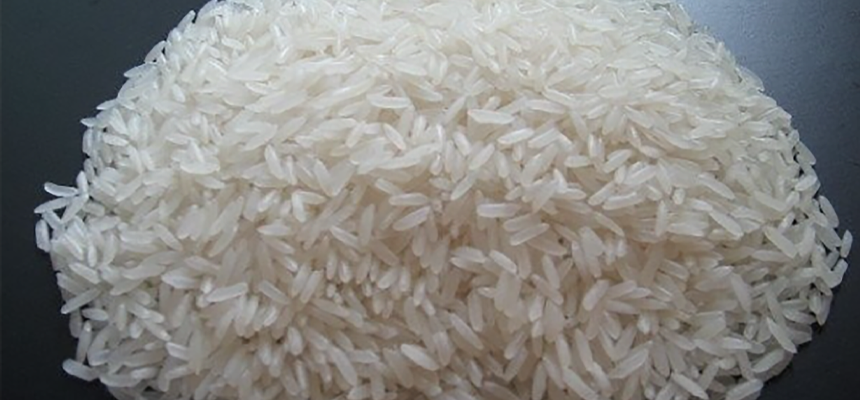
| White rice 5% broken | Strategic reserves, public distribution, armed forces |
| White rice 10% broken | Public distribution, institutional feeding |
| White rice 15% broken | Subsidised retail programmes |
| White rice 25% broken | Budget programmes, school feeding, relief |
| Parboiled rice 5% broken | Markets that prefer parboiled, long storage reserves |
| Parboiled rice 25% broken | Relief and institutional programmes |
| Thai jasmine rice | Occasional premium or diplomatic supply |
If the tender names a grade we haven’t listed, or a spec that’s tighter than standard, we’ll check it against our milling and tell you plainly whether we can meet it. A rice supplier for government tenders that says yes to everything without looking is a risk to the bidder.
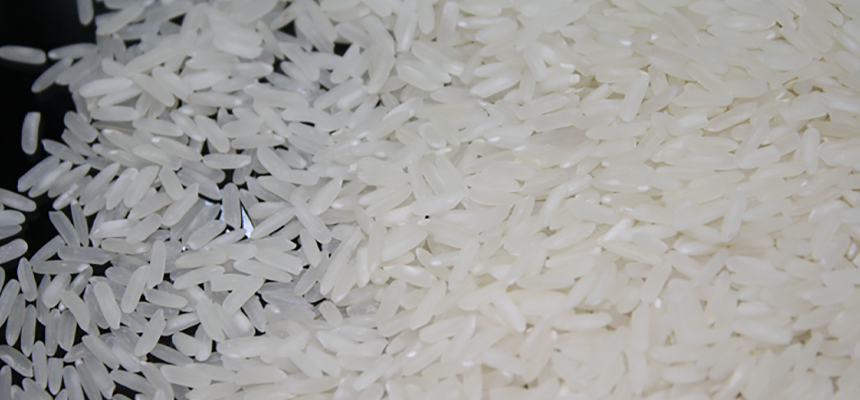
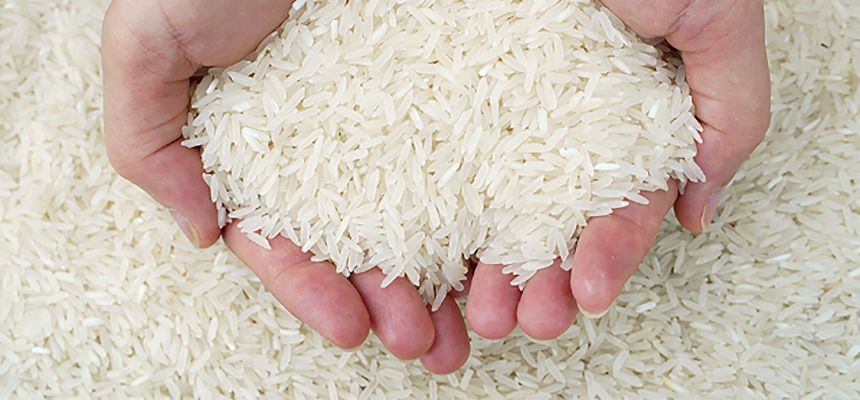
Standard Specification: White Rice 5% Broken
| Item | Standard |
|---|---|
| Origin | Thailand, current crop |
| Grain | Long grain, well milled, double polished |
| Broken grains | 5% maximum |
| Moisture | 14% maximum |
| Purity | 95% minimum |
| Foreign matter | 0.1% maximum |
| Damaged grains | 1% maximum |
| Discoloured grains | 1% maximum |
| Chalky grains | 2% maximum |
| Red and striped grains | As per Thai standard |
| Live insects | Nil |
| Packing | 25kg or 50kg new PP woven bags, as tender requires |
| Shelf life | Up to 24 months stored properly |
Most tenders write their own spec, often based on the Thai standard, the Codex standard for rice, or a national standard. We’ll quote against whatever spec the tender uses. You can read about grading on our rice standard page and the Codex Alimentarius site has the international food standards many tenders refer to.
Packing and Marking for Tenders
Tender packing rules are strict, and marking mistakes are one of the most common reasons cargo gets held. As a rice supplier for government tenders we follow the tender’s packing clause line by line.
- New PP woven bags, 25kg or 50kg, with or without inner liner
- Bag weight, thread strength and stitching to tender spec
- Printing in the language and colours the tender requires
- Ministry or programme logo, tender number, lot number, crop year, production and expiry dates
- “Not for sale” or similar wording when required
- Spare empty bags, usually a set percentage, for repacking at destination
We send a printed bag proof to the bidder before production. Once it’s approved, nothing on the bag changes.
Delivery: Containers or Break Bulk
As a rice supplier for government tenders, most of what we ship goes in 20ft containers. Each takes about 25 tons, or 500 bags of 50kg or 1,000 bags of 25kg. That suits tenders delivered to several ports or in staggered shipments. For very large single-port tenders, break bulk vessels can be cheaper per ton, and we can discuss that for the right volume. See how many tons of rice fit in a 20ft container for the numbers.
We load from Laem Chabang and Bangkok. Typical transit is one to three weeks within Asia, three to five weeks to the Middle East and East Africa, four to six weeks to West Africa and Europe, and five to seven weeks to the Americas. Delivery terms in tenders are usually FOB, CFR or CIF under the ICC Incoterms rules, sometimes with delivery to a named warehouse.
How a Government Rice Tender Usually Runs
Every country does it a bit differently, but any rice supplier for government tenders will tell you the shape is usually the same:
- The tender notice is published, with quantity, grade, spec, packing, delivery port and dates.
- Bidders register or pre-qualify, often with company documents and past performance.
- Bidders submit offers, usually with a bid bond or bid security.
- Offers are opened and compared, mostly on price, sometimes with technical scoring.
- The winner signs a contract and posts a performance bond.
- Rice is milled, packed, inspected and shipped within the delivery window.
- The cargo is inspected again at destination before final payment.
A rice supplier for government tenders has a part to play at almost every step, not just step six. The earlier we’re involved, the better the bid tends to be.
Some buyers also publish tenders through international platforms. United Nations agencies, for example, list procurement notices on the UN Global Marketplace, and many national tender rules follow principles similar to the WTO government procurement framework.
How We Support Bidders
A lot of the companies that win rice tenders aren’t millers. They’re local trading houses, contractors or agents who know the buyer and the rules. They need a rice supplier for government tenders behind them who can do the technical side properly. Here’s what we do:
- Read the tender spec and tell you honestly if we can meet it
- Give you a firm FOB or CFR price valid for the bid period
- Provide product specs, sample analysis, company profile and export licence for the bid file
- Send samples for tender evaluation, with a sealed matching sample kept at the mill
- Supply a letter of supply or commitment where the tender asks for one
- Plan milling and bag printing around the delivery schedule
- Arrange pre-shipment inspection with the surveyor named in the tender
We keep the price structure clear so you can add your own costs and margin without surprises.
Bid Bonds, Performance Bonds and Payment
Most tenders ask for a bid bond with the offer and a performance bond once the contract is awarded, usually as a bank guarantee for a percentage of the contract value. Payment is often by letter of credit, sometimes with part paid on shipment and the rest after inspection at destination.
This is where a lot of smaller suppliers fall over, because bonds tie up credit lines. We’ll talk through the bond and payment structure with the bidder before the offer goes in, so everyone knows who carries which guarantee. A rice supplier for government tenders who goes quiet when bonds come up is not one to rely on.
Inspection and Quality Control
Tenders nearly always tell the rice supplier for government tenders which independent inspection company to use, such as SGS, Bureau Veritas, Intertek or Cotecna. Inspection usually covers:
- Quality analysis against the tender spec
- Weight and bag count
- Bag condition and marking
- Container condition and cleanliness
- Fumigation
- Sealing of containers
On our side, every lot is tested in our own lab for moisture, brokens, chalky, damaged and discoloured grains and foreign matter before packing. The rice is cleaned, de-stoned, polished and colour sorted. We keep retained samples from every lot, which matters a lot in tenders, because if a dispute comes up after arrival, there’s a sealed sample from the same rice to test again. Read more on our quality control page.
Documents for Government Tenders
- Commercial invoice and packing list
- Bill of lading
- Certificate of origin, including preferential forms where they apply
- Phytosanitary certificate
- Fumigation certificate
- Certificate of quality, weight and packing from the named surveyor
- Health certificate, fit for human consumption
- Halal certificate where required
- Non-GMO and non-radiation declarations where required
- Any country-specific conformity or import certificate
The tender usually lists exactly which documents it wants and how many originals. As a rice supplier for government tenders we work from that list, and we send document drafts to the bidder for checking before the originals are issued.
Lead Times and Capacity Planning
Tender delivery windows are often tight, and a rice supplier for government tenders has to plan for that. From contract to loading, a plain-bag order can usually start loading within two to four weeks. Printed bags with ministry marking need extra time for bag production. Large tenders are usually loaded in several shipments over weeks or months.
If you’re bidding on a big lot, tell us the volume and schedule early, ideally before you submit. That way we can plan paddy buying and milling, and you’re not promising the buyer something that can’t be loaded on time. A rice supplier for government tenders that over-promises on volume is a much bigger risk than one that quotes a slightly higher price.
Pricing a Tender Offer
There’s no list price for tender rice. Every offer is priced for that tender, on that day. What goes into it:
- The grade and spec, and any tighter limits than standard
- Bag type, liner, printing and spare bags
- Inspection costs named in the tender
- FOB, CFR or CIF, and the freight market at the time
- Bond and finance costs
- The delivery window and number of shipments
- Market direction over the bid validity period
Rice prices move with paddy supply, currency and export policy in other origins. If the bid validity is long, say 60 or 90 days, that risk has to be priced in somewhere. We’ll talk to you openly about it. For background, see Thai white rice 5% broken price per ton, 25% broken price per ton and FOB vs CIF rice price. The Thai Rice Exporters Association also publishes weekly reference prices for Thai grades.
8 Proven Tips When Choosing a Rice Supplier for Government Tenders
1. Pick a miller, not just a trader
In a tender, you need someone who controls the rice. A miller can guarantee the grade. A broker can only hope the mill he buys from that week does.
2. Check the spec line by line together
Sit down with your supplier and go through every number in the tender. Moisture, brokens, chalky, damaged, foreign matter, insects, packing. Agree in writing which ones are standard and which need special handling.
3. Lock in the price for the bid validity
Agree how long your supplier holds the price, and what happens if the tender is extended.
4. Agree who carries the bonds
Bid bond, performance bond, any advance payment guarantee. Decide before you bid.
5. Send tender samples from the real lot
The sample that wins the evaluation should be the rice that ships. Keep a sealed counter-sample at the mill.
6. Approve the bag before printing
Get a printed proof, check every word against the tender, then sign it off.
7. Use the tender’s surveyor at loading
Don’t swap inspectors. Use exactly the one the tender names.
8. Plan shipments with slack
Shipping lines miss sailings. Build a few days of margin into every shipment in the delivery window.
Mistakes We See in Rice Tenders
The most painful one is bidding before checking the spec with the mill. A bidder wins on price, then finds out the moisture or chalky limit is tighter than the rice he priced. Another is bag marking. A wrong date format, a missing tender number or the wrong logo colour can hold a whole shipment. A third is underestimating bond costs and finance, which can wipe out the margin on a thin tender. And some bidders pick a rice supplier for government tenders who has never done a tender before. The first government contract is a hard place to learn.
Who We Work With
As a rice supplier for government tenders we work with:
- Ministries of trade, agriculture and food
- State trading companies and grain boards
- Strategic food reserve agencies
- Armed forces and police supply departments
- Public school feeding programmes
- Hospital and prison supply contracts
- Local contractors and agents bidding on tenders
- International agencies and NGOs, see our page on being a rice supplier for food aid programs
Thai Rice in Government Tenders
Thai rice is a regular in tenders worldwide, and that helps any rice supplier for government tenders based here. Buyers like it because the grain is consistent, the grading system is well understood, and the Thai export chain, from surveyors to fumigators to shipping lines, handles tender cargo every day. Thai rice usually prices a little above some other origins, but in a tender, a few dollars more per ton can be much cheaper than a rejected cargo.
Some tenders are open to any origin. Others name origins or ask for a specific standard. Either way, if Thai rice is allowed, we’re happy to quote.
Storage for Strategic Reserves
Government buyers often store rice for months, so a rice supplier for government tenders should give storage advice too. Storage matters as much as the original quality.
- Keep bags on pallets, off the floor and away from walls
- Ventilate stores and keep roofs sound
- Fumigate on a schedule
- Rotate stock, first in first out
- Keep rice away from anything with a strong smell
- Check moisture and insects regularly
For long-term reserves, parboiled rice often keeps better than white rice. Ask us about it if storage periods are long.
What to Send Us When You Find a Tender
The faster we see the details, the better your offer. When you find a tender, send us:
- The tender document, or at least the spec, packing and delivery clauses
- Quantity and number of lots
- Delivery port or warehouse and the delivery window
- Bid deadline and bid validity period
- Bond requirements and payment terms
- Named inspection company
- Any origin or standard rules
With that, a rice supplier for government tenders can tell you within a day or two whether the spec is workable and roughly where the price will land. We’d much rather tell you early that something is a stretch than find out after you’ve won.
Reading Between the Lines of a Tender Spec
Tender specs are written by committees, and sometimes they don’t quite add up. We’ve seen tenders ask for 25% broken with a chalky limit you’d expect on 5% broken, or a moisture limit that’s hard to hit after a long humid voyage. We’ve seen bag weights that don’t match the stated net weight. An experienced rice supplier for government tenders reads the spec as a whole, flags anything that looks inconsistent, and helps the bidder ask the buyer for clarification during the question period. Most tenders allow written questions before the deadline. Use them.
Why Consistency Beats Price in Tenders
In private trade, a buyer can switch suppliers whenever a better price shows up. In tenders, past performance follows you. A bidder that delivers clean cargo on time builds a record that helps win the next one. A bidder whose cargo is rejected may not get a second chance. That’s why the lowest-priced rice supplier for government tenders is not always the cheapest choice. The real cost includes the risk of rejection, delay penalties and lost future tenders.
That’s the way we think about it too. We’d rather price correctly and deliver every lot than win on price and struggle to load. For a rice supplier for government tenders, reputation is built one clean shipment at a time.
A Tender Example
A local contractor came to us about a public distribution tender for several thousand tons of 25% broken white rice in 50kg bags with ministry marking. Before bidding, we went through the spec together and found the chalky limit was tighter than standard 25% broken. We priced the tighter grade properly instead of guessing. The contractor won, we printed the ministry bags after a proof was approved, and the rice shipped in four lots over two months with the named surveyor at every loading. All four lots passed destination inspection. Nothing dramatic happened, and that’s the point. With the right rice supplier for government tenders, a tender should be boring.
Frequently Asked Questions
Do you bid on tenders directly?
Sometimes, where the rules allow foreign suppliers. More often we support a local bidder.
Can you provide a supply commitment letter?
Yes, where the tender asks for one.
Can you print ministry marking on bags?
Yes, to the tender’s packing clause, after proof approval.
Which surveyors do you work with?
SGS, Bureau Veritas, Intertek, Cotecna and others named in tenders.
What’s the minimum?
For tenders, one 20ft container is the practical minimum, but most tenders are much larger.
Can you split delivery into several shipments?
Yes. Most tenders ship in several lots.
Work With a Rice Supplier for Government Tenders That Mills Its Own Rice
Send us the tender document or a summary: grade, spec, quantity, packing, port and dates. We’ll go through it and come back with an honest view and a price. You can also read about us, see our products, check the minimum order page, or look at white rice 5% broken 50kg bag supplier and white rice wholesale Iraq.
De Thai Products 1989 Company Limited. Email info@dethairice.com, WhatsApp +66 81 034 6390, or use our contact page.



3 thoughts on “Rice Supplier for Government Tenders: Honest Mill Guide and 8 Proven Tips”