


Ask ten rice traders for a Thai white rice 5% broken specification and you’ll get ten sheets that look almost the same. Same headings. Same “5% max”. Then the containers arrive and they’re not the same at all. One lot is bright and even. Another has chalky grains, a yellow tint, and a little too much dust in the bottom of every bag.
The difference is in the lines people skip. We’re De Thai Products 1989 Company Limited, a miller and exporter in Chachoengsao, Thailand, and white rice 5% broken is one of our main export grades. This page lays out the full Thai white rice 5% broken specification we sell against, what each line means, how we check it, and what to put in your contract so the rice you get matches the paper.
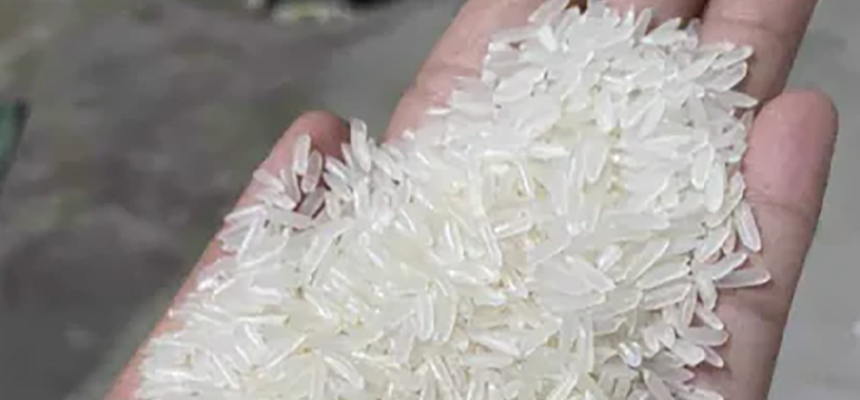
Table of Contents
What “5% Broken” Means
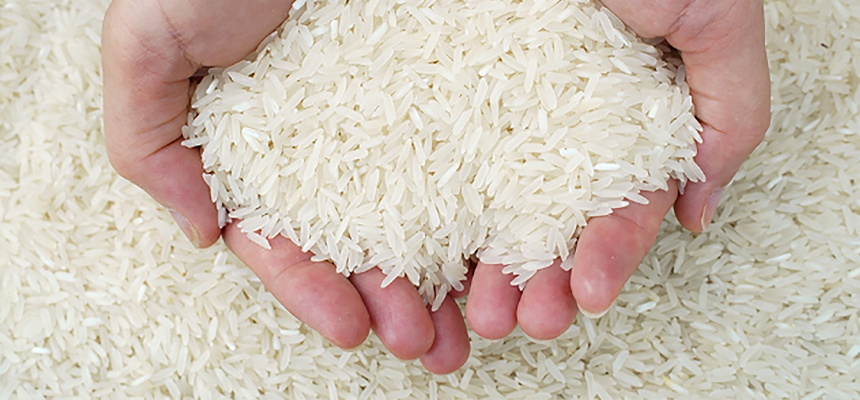
During milling, the husk and bran come off the paddy. Some grains crack in the process, however careful the mill is. A broken grain is any piece shorter than a set fraction of a whole grain. A Thai white rice 5% broken specification caps those pieces at 5% of the lot by weight.
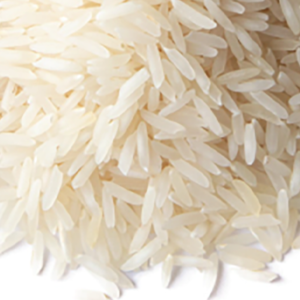
So 95% or more of what’s in the bag is whole or near whole long grain rice. That’s why 5% broken is the top everyday grade for retail and food service. Our longer explainer, what does 5% broken rice mean, goes deeper.
Our Full Thai White Rice 5% Broken Specification
Here’s the sheet we load against. Every line is something we test before bagging.
| Item | Our standard |
|---|---|
| Product | Thai long grain white rice, 5% broken |
| Origin | Thailand |
| Crop | Current season, stated at booking |
| Broken grains | 5% maximum |
| Moisture | 14% maximum |
| Purity | 95% minimum |
| Foreign matter | 0.1% maximum |
| Damaged grains | 1% maximum |
| Discolored grains | 1% maximum |
| Chalky grains | 2% maximum |
| Red and undermilled grains | Very low, on request |
| Glutinous admixture | None as standard |
| Milling degree | Well milled, double polished |
| Sorting | Color sortexed |
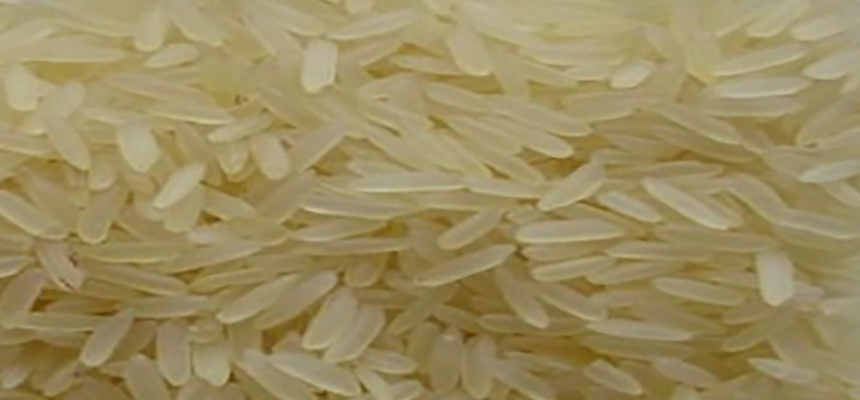
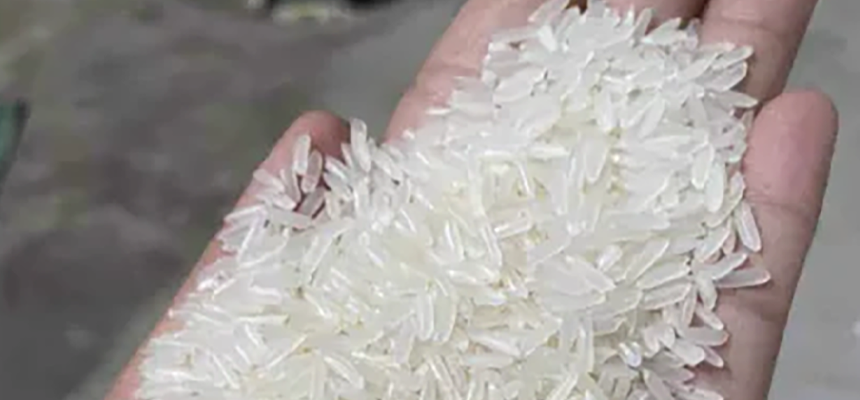
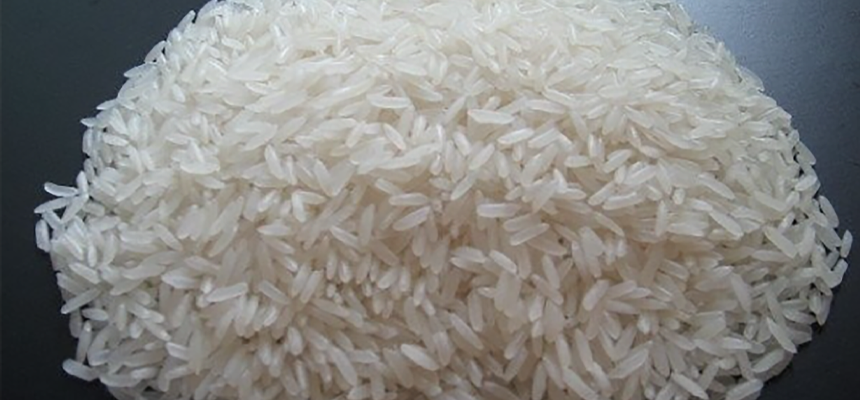
| Color | Natural white |
| Shelf life | Up to 24 months stored properly |
If your buyer or your government tender uses a different format, send it. We’ll fill it in line by line.
You can see the product page here: white rice 5% broken for sale.
Reading the Thai White Rice 5% Broken Specification Line by Line
Broken grains, 5% max
The headline number. Brokens cook faster than whole grains and can make the pot a little mushy. Keeping them at 5% gives you separate, even grains.
Moisture, 14% max
This one matters more than most people think. Rice above 14% moisture can heat up in a container on a long voyage, grow mold and attract insects. Rice that’s too dry gets brittle and breaks more during loading. Any Thai white rice 5% broken specification worth signing caps moisture at 14%.
Purity, 95% min
This means the lot is at least 95% the stated type of long grain white rice, not mixed with other varieties. Low purity shows up as grains that cook at different speeds.
Chalky grains, 2% max
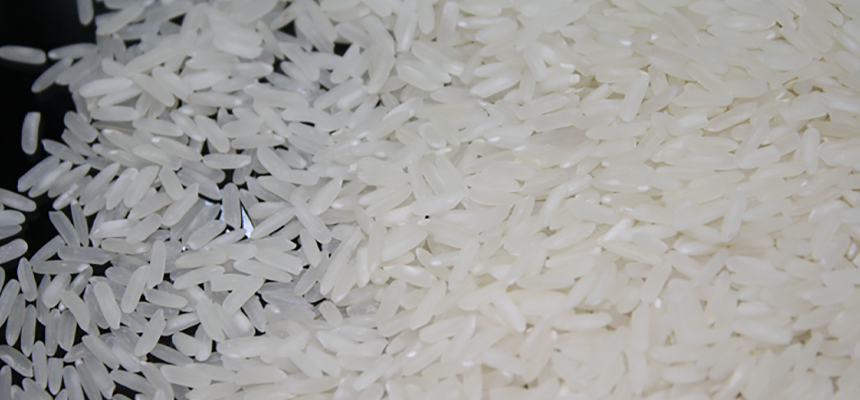
Chalky grains look opaque and white instead of glassy. They break easily and cook soft. A low chalky number gives you a cleaner looking bag. A lot of cheap offers quietly allow 6% or more here.
Damaged and discolored grains, 1% max each
Heat damage, insects and bad storage leave yellow or spotted grains. Shoppers notice them straight away. Sortexing removes most of them.
Foreign matter, 0.1% max
Stones, husk, straw, dust. At 0.1% max you shouldn’t find any of it in a household bag.
Milling degree
“Well milled, double polished” means the bran has been fully removed and the grain is polished twice for a bright finish. Undermilled rice has a dull, creamy look and goes rancid sooner.
Plenty of sellers send a Thai white rice 5% broken specification with only the first three lines on it. Ask for the rest. That’s where the quality is.
Grain Length
Thai long grain white rice is usually around 7mm and longer for whole kernels, with a slim shape. Some buyers ask us to fix a minimum average length or a percentage of whole kernels in their Thai white rice 5% broken specification. We can do that. It costs a little more because it means tighter sorting. For background on how Thai grades work, see our rice standard page.
How We Test Before Bagging
- Moisture meter on every lot, plus oven checks on samples.
- Broken count by sieving and weighing a sample.
- Visual grading for chalky, damaged, yellow and red grains.
- Color sorting on every lot.
- Cooking test to check texture and smell.
- Independent survey at loading, by SGS, Intertek or another surveyor you name.
Our quality control page shows the process, and what is sortexed rice explains color sorting. If you want a surveyor you already trust, SGS and others work at Thai ports every day.
How It Cooks
Thai white rice to this spec cooks in about 15 to 18 minutes. A 1 to 1.5 or 1 to 2 rice to water ratio works for most kitchens. The grains come out soft, white, fluffy and separate, with a mild clean smell. It’s not fragrant like jasmine. It’s an everyday rice that suits almost any cuisine.
That’s why the Thai white rice 5% broken specification is the one most supermarkets, restaurants, caterers and food aid programs ask for first.
Packing Options
- 5kg and 10kg retail bags
- 25kg bags
- 50kg PP woven bags, the standard for wholesale
- Jumbo bags for repackers and processors
- Private label printing in your design
Bag quality matters. A weak bag splits on the quay and you lose rice. We use new bags with proper stitching and can add an inner liner. See white rice 5% broken 50kg bag supplier for bag details.
Containers and Minimum Order
A 20ft container holds about 25 tons in 50kg bags. Our minimum is usually one container, and we can mix grades like 5% and 25% broken, or white rice with Hom Mali. See how many tons of rice fit in a 20ft container and Thai rice minimum order quantity.
Price and What Moves It
Thai white rice to a 5% broken spec costs more than 10%, 15% or 25% broken grades, and less than fragrant rice. The price moves with:
- Paddy prices in Thailand
- Crop timing (second crop often softens prices in spring)
- Exchange rates
- Tighter extras in your spec, like low chalky or minimum length
- Bag type and private label printing
- Freight to your port
For current numbers, see Thai white rice 5% broken price per ton. For quote terms, FOB vs CIF rice price.
How 5% Compares With Other Thai Grades
| Grade | Broken max | Typical use | Price level |
|---|---|---|---|
| White rice 5% broken | 5% | Retail, restaurants, premium wholesale | Higher |
| White rice 10% broken | 10% | Wholesale, food service | Middle |
| White rice 15% broken | 15% | Mass market, institutions | Middle |
| White rice 25% broken | 25% | Budget markets, food aid | Lower |
| White rice 100% broken | All broken | Flour, beer, feed, local dishes | Lowest |
If you need the 15% sheet, we’ve written a separate guide: Thai white rice 15% broken specification. For a fully sortexed lot, see Thai white rice 100% sortexed.
7 Proven Tips for Using a Thai White Rice 5% Broken Specification
1. Put every line in the contract
Not just “5% broken”. Moisture, chalky, damaged, discolored, foreign matter, milling degree. All of it.
2. Name the surveyor and the sampling point
Inspection at loading, by a named company, with the result final. It stops arguments.
3. State the crop year
New and old crop cook differently. Your Thai white rice 5% broken specification should say which.
4. Ask for a pre-shipment sample
Cook it. Look at it next to your current stock.
5. Watch the chalky number
It’s the line cheap offers stretch most. Keep it low.
6. Fix the bag spec too
Bag material, weight, printing, liner and stitching. A great rice in a weak bag is a problem.
7. Buy from a mill when you can
A mill can tell you exactly how your lot was milled and tested. Our page on Thai white rice 5% broken exporter explains how we work.
Mistakes We See
Signing a two line spec. If all it says is “5% broken, 14% moisture”, anything else goes.
Comparing price without comparing spec. A cheaper lot with 6% chalky and 3% damaged is not the same product as ours.
Ignoring storage at destination. Rice that left Thailand perfect can still spoil in a hot, damp warehouse. Keep it on pallets, away from walls, in a dry place.
Who Buys It From Us
- Importers and wholesalers in Asia, the Middle East, Africa, Europe and the Americas
- Supermarket chains with their own label
- Restaurant and catering groups
- Government and food aid buyers. See rice supplier for government tenders
- Food manufacturers
We ship the Thai white rice 5% broken specification worldwide, to any port with regular container service.
A Short Buyer Example
A wholesaler in the Middle East had been buying “Thai 5%” from a broker for two years. The paper always said 5% broken. But chalky grains crept up, bags arrived dusty, and shops started asking for a cheaper price. When they switched to us, we wrote the full Thai white rice 5% broken specification into the contract, with chalky at 2% max and a named surveyor. The first container looked noticeably whiter on the shelf. They didn’t pay much more. They just stopped paying for what they weren’t getting.
Documents We Provide
- Commercial invoice and packing list
- Bill of lading
- Certificate of origin
- Phytosanitary certificate
- Fumigation certificate
- Quality and weight certificate
- Certificate of analysis
Details: rice export documents. For general global rice market background, the FAO rice page is useful.
The Official Standard vs Your Contract
Thailand has an official rice standard set by the Ministry of Commerce. It defines grades like 100%, 5%, 10%, 15% and 25% and sets out how broken grains are measured, what counts as a whole kernel, and limits for things like red, yellow and damaged grains.
Here’s the thing most buyers don’t realize. The official standard is a floor and a common language. Your contract can, and usually should, go further. Our Thai white rice 5% broken specification is tighter than the minimum on several lines, especially chalky grains and sorting. That’s normal for exporters who want repeat buyers.
So if a seller says “Thai standard 5%” and stops there, ask which lines they’re going to tighten, and get them on paper. A Thai white rice 5% broken specification that just repeats the government minimum leaves a lot of room.
Sampling and Inspection in Practice
A spec is only as good as how it’s checked. Here’s how inspection usually works at loading.
- The surveyor takes samples from a set share of bags across the whole lot, not just the top layer.
- Samples are mixed and split. One part is tested, one is sealed and kept.
- The surveyor tests moisture, brokens, chalky, damaged, foreign matter and anything else in the contract.
- They check bag weights, bag condition, marks and container cleanliness.
- They watch the loading and seal the container.
- You get a quality and weight certificate.
The sealed sample matters. If there’s a dispute later, it can be tested again. Put the sampling method and the “final at loading” clause into your contract alongside the Thai white rice 5% broken specification itself.
A Simple Contract Clause You Can Copy
Here’s a plain wording many of our buyers use. Change it to suit your lawyer and your market.
“Thai long grain white rice, 5% broken, crop [year]. Broken grains 5% max, moisture 14% max, purity 95% min, chalky 2% max, damaged 1% max, discolored 1% max, foreign matter 0.1% max. Well milled, double polished, color sorted. Packed in new 50kg PP woven bags, net weight 50kg each. Quality and weight to be determined at loading port by [surveyor name], whose certificate shall be final.”
That’s it. Short, but every number is there. If your current supplier’s Thai white rice 5% broken specification is shorter than this, it’s worth a second look.
Moisture on a Long Voyage
Moisture deserves a second mention because it’s where most claims start. Rice is alive in a way. It takes in and gives off water depending on the air around it. In a sealed steel container crossing the equator, the inside heats up during the day and cools at night. Water moves from the rice to the air and condenses on the roof. Then it drips back onto the top bags.
That’s called container rain, and it’s why we bag at 14% or lower, use kraft paper or desiccants on long routes, and make sure containers are dry and clean before loading. If you’re shipping a long way, ask about these when you agree the Thai white rice 5% broken specification. It’s cheap to add and expensive to skip.
Repacking at Your End
Plenty of our buyers take 50kg bags and repack into 1kg, 2kg or 5kg retail packs. If that’s your plan, a few tips:
- Ask for 5% broken rather than 10%, because brokens show in clear retail bags.
- Keep the repacking area dry and clean.
- Repack within a few months of arrival for the best look.
- Keep the original lot number so you can trace any complaint back to the shipment.
Some buyers skip repacking altogether and ask us to pack retail size at the mill under their own label. That often works out cheaper once you count labor. Our rice supplier for supermarkets page explains how.
Who Shouldn’t Buy 5% Broken
It’s not the right grade for everyone, and we’d rather tell you that up front.
If you sell to very price-driven markets where shoppers don’t mind brokens, 15% or 25% will save you real money. If you’re a food processor making rice flour, noodles or snacks, broken rice is cheaper and works just as well. And if your customers want fragrance, white rice won’t satisfy them however good the spec is. They need jasmine or Hom Mali.
The Thai white rice 5% broken specification is for buyers who care about how the rice looks in the bag and on the plate. For them, it’s the right grade.
Comparing Spec Sheets From Different Suppliers
When you’ve got three or four quotes, lay the spec sheets side by side in a table. Line up broken, moisture, purity, chalky, damaged, discolored, foreign matter, milling degree and sorting. You’ll often find one or two lines missing on the cheapest offer. That missing line is usually where the saving came from.
Do this every time you change supplier and the Thai white rice 5% broken specification stops being a piece of paper and starts being a tool.
Thai White Rice 5% Broken Specification for Tenders and Food Aid
Government tenders and relief programs usually publish their own spec. It often looks a lot like a standard Thai white rice 5% broken specification, with a few extra lines: bag marking in a set language, a minimum shelf life on arrival, fortification in some programs, or a strict fumigation and residue clause.
We work to those specs regularly. Send the tender document and we’ll check it line by line, tell you where our standard already meets it, and where we’d need to adjust milling, sorting or packing. If a line can’t be met, we’ll say so before you bid, not after. Our pages on rice supplier for food aid programs and government tenders have more detail.
Fumigation and Residues
Every container is fumigated before shipping to keep insects out during the voyage. We use approved methods and give you the certificate. If your country sets residue limits, include them in the Thai white rice 5% broken specification in your contract and we’ll make sure the fumigation plan fits. It’s one more line, but it saves trouble at customs.
Keeping It the Same Every Month
The hardest part of any Thai white rice 5% broken specification isn’t meeting it once. It’s meeting it every month for years. We keep retained samples from every lot, compare new lots with the last few before bagging, and use the same sorting settings for each repeat buyer. That’s how a container in December looks like the one in June. If you buy regularly, ask us to lock your settings and we’ll keep them on file.
Our Spec Sheet on Request
Every buyer gets our current Thai white rice 5% broken specification as a signed PDF with the offer, plus a recent certificate of analysis from a real lot so you can see actual numbers, not just limits. Actual results usually come in well inside the maximums. Broken grains on a good lot often test around 3 to 4%, chalky under 2%, moisture around 13%. Those are the numbers to compare when you’re weighing offers, because they show how much headroom a mill leaves itself.
If you’d like the sheet in your own template, Excel or Word, just send it over. We’ll fill it in and return it the same day in most cases.
Frequently Asked Questions
What is the standard Thai white rice 5% broken specification?
Broken 5% max, moisture 14% max, purity 95% min, foreign matter 0.1% max, plus limits on chalky, damaged and discolored grains. Our full sheet is above.
Is 5% broken better than 25% broken?
It has more whole grains and looks better. Whether it’s better for you depends on your market and budget.
Can you tighten the spec?
Yes. Lower chalky, minimum length or fully sortexed lots are possible at a slightly higher price.
What bag sizes do you offer?
5kg, 10kg, 25kg, 50kg and jumbo bags, plain or private label.
Do you ship worldwide?
Yes.
Can I get samples?
Yes. Ask and we’ll send them with the spec sheet.
Order Thai White Rice 5% Broken From Our Mill
Send us your tonnage, bag size, any special lines you need in the Thai white rice 5% broken specification, and your destination port. We’ll send a dated offer and arrange samples. See more about us, our products, our FAQ, or read how to import rice from Thailand.
De Thai Products 1989 Company Limited. Email info@dethairice.com, WhatsApp +66 81 034 6390, or use our contact page.
2 thoughts on “Thai White Rice 5% Broken Specification: Full Sheet and 7 Proven Tips for Importers”