
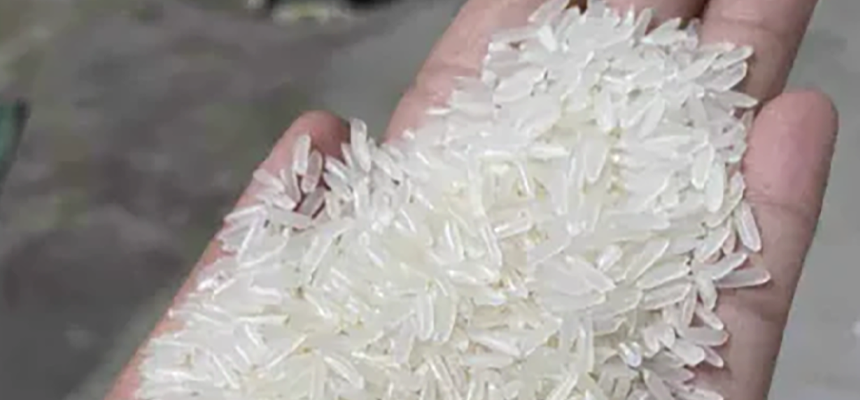
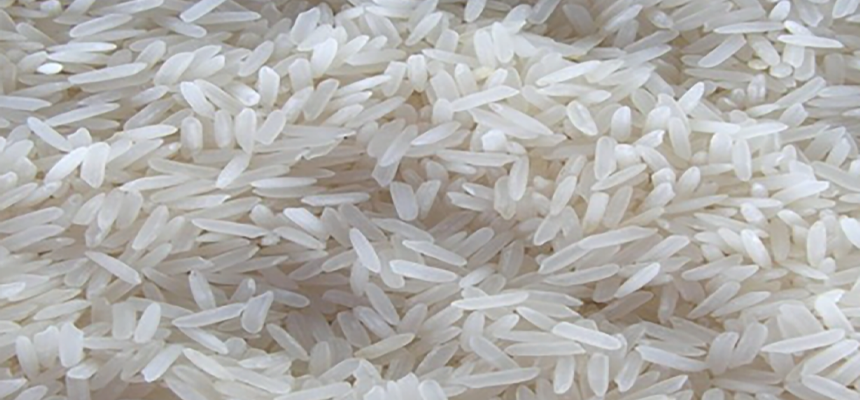
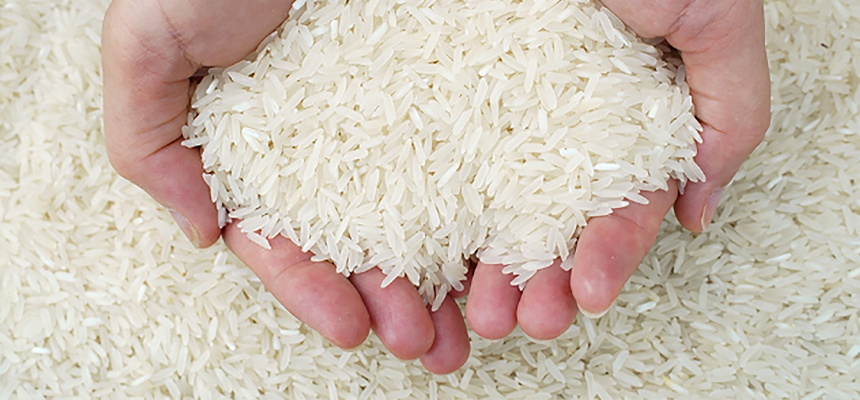
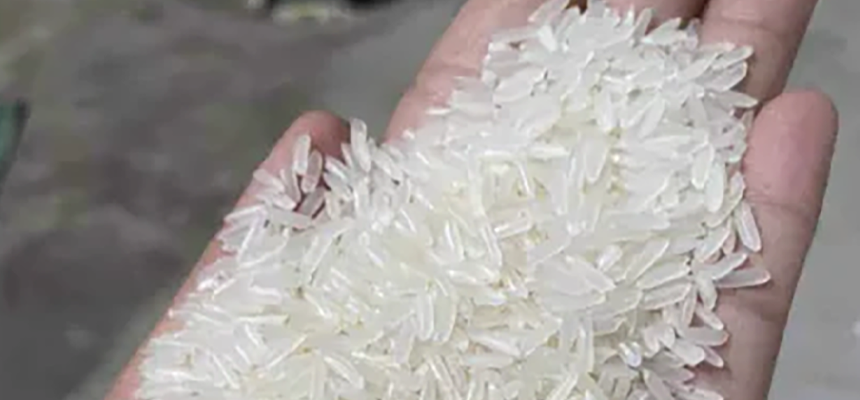
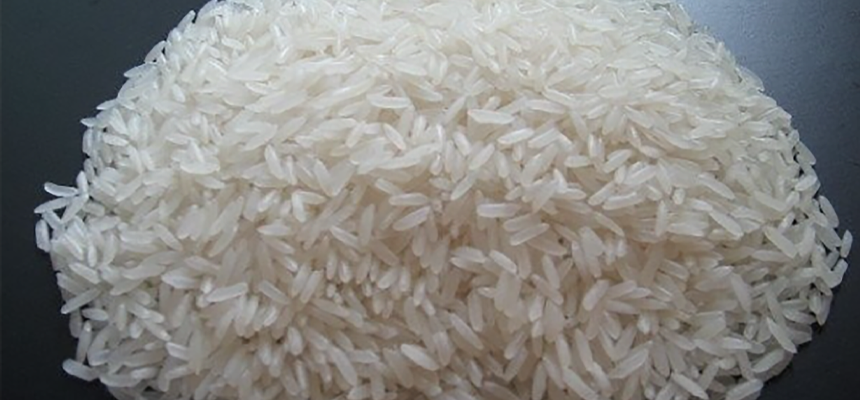
If you’re looking for a non GMO Thai rice supplier, we mill and export Thai rice that is non-GMO by origin and backed by a lab test report for every lot. Thai Hom Mali, jasmine, white, parboiled, glutinous, brown and Riceberry rice, packed in 1kg to 50kg bags or 50 lb bags, shipped worldwide with the GMO test report in your document set.
This page explains why Thai rice is non-GMO in the first place, how we prove it shipment by shipment, the specs of what we sell, and how buying from a non GMO Thai rice supplier works when your customers, retailers or regulators want proof rather than a promise.

Table of Contents
Non GMO Thai Rice Supplier: What We Sell
As a non GMO Thai rice supplier, everything below comes from Thai paddy, milled in our own plant, and is covered by a non-GMO lab report when it ships.
| Product | Broken max | Moisture max | Packing |
|---|---|---|---|
| Thai Hom Mali rice | 4.5% | 14% | 1kg to 50kg, 50 lb |
| Thai jasmine rice (Pathumthani) | 5% | 14% | 1kg to 50kg, 50 lb |
| Organic jasmine rice | 5% | 14% | 1kg to 25kg |
| Thai white rice | 5%, 10%, 15%, 25% | 14% | 25kg, 50kg |
| Thai parboiled rice | 5%, 15%, 25% | 14% | 25kg, 50kg |
| Thai glutinous rice | 10%, 25% | 14% | 1kg to 50kg |
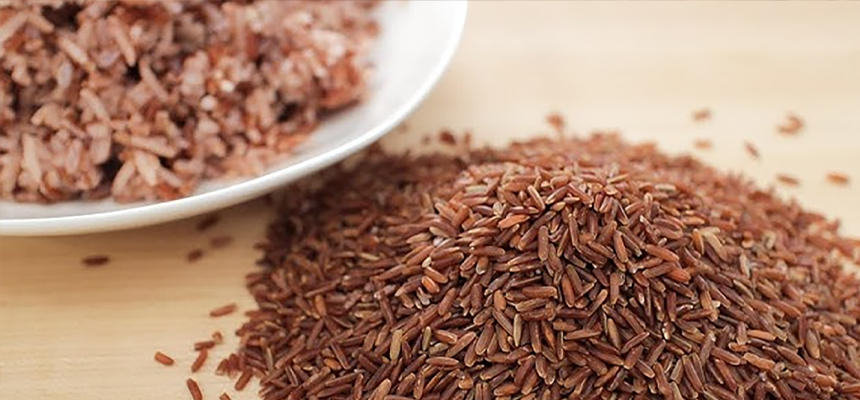
| Thai red cargo rice | Whole grain | 14% | 1kg to 25kg |
| Thai brown jasmine rice | 5% | 14% | 1kg to 25kg |
| Riceberry rice | 5% | 14% | 1kg to 25kg |
All of it is sortexed and lab tested before packing. Tell us the product, the bag and your port, and we’ll quote with the non-GMO report included.
Why Thai Rice Is Non-GMO
This is the question most buyers ask first, so here’s the straight answer. Thailand does not grow genetically modified rice commercially. The rice varieties planted by Thai farmers, from Hom Mali to Pathumthani to the white rice varieties, were developed by conventional breeding: crossing plants and selecting the best seed over many seasons. No genes from other species are involved.
Thailand has also been careful about protecting its rice reputation, especially Hom Mali, because it’s one of the country’s biggest exports. Seed for the main varieties comes through the Thai Rice Department and certified seed centres, which helps keep varieties pure.
If you want background on what GM rice actually is and where it has been developed, the Wikipedia article on genetically modified rice gives a reasonable overview. The short version for buyers is that GM rice is not part of the Thai crop, so a non GMO Thai rice supplier starts from a clean position.
Why Origin Alone Isn’t Enough
You might think that if Thai rice is non-GMO anyway, there’s no need for anything more. In practice, a lot of importers can’t stop there.
- Some countries require a GMO test report or a non-GMO declaration to clear rice at customs
- European and East Asian retailers often need documented proof for their own compliance files
- Brands that print “non-GMO” on the bag have to be able to back the claim up if asked
- Food manufacturers making baby food, health foods or export products may need it for their own audits
- Rice sometimes gets blended or traded through several hands before export, and buyers want to know it’s really Thai
So the job of a good non GMO Thai rice supplier isn’t just to say the rice is non-GMO. It’s to show it, lot by lot, with paperwork that a customs officer, a retailer’s quality team or an auditor will accept.
How We Prove It: A Lab Report Per Lot
Every lot we ship as a non GMO Thai rice supplier comes with a GMO test report from an accredited laboratory. Here’s how it works:
- Sampling. Samples are drawn from the actual lot being packed for your order, not from a general stock sample.
- Testing. The lab runs a PCR screening test, which looks for the common genetic markers used in GM crops. If none are found, the result is “not detected”.
- Report. The lab issues a report showing the sample reference, the lot, the method and the result.
- Documents. The report goes into your shipping document set alongside the certificate of analysis, phytosanitary certificate and certificate of origin.
If you prefer, an independent surveyor such as SGS can draw the samples at loading, seal them and arrange the test, so the sampling is completely out of our hands. Many buyers do this for the first few containers and then rely on our lab arrangement once they’re comfortable.
How to Read a Non-GMO Test Report
If you’ve never looked at one before, a GMO test report can seem technical. Here’s what to check on the reports you get from any non GMO Thai rice supplier:
- Lab name and accreditation. The report should name the lab and its accreditation, usually ISO/IEC 17025.
- Sample reference. There should be a sample number or lot number that matches your shipment.
- Method. You’ll usually see “real-time PCR” and the targets tested, often the 35S promoter and NOS terminator, which are the markers found in most GM crops.
- Limit of detection. This tells you how sensitive the test was. A lower number means a more sensitive test.
- Result. “Not detected” or “negative” is what you want.
- Date. The test date should be close to the packing date of your lot.
If anything on the report doesn’t match your shipment, ask before you accept the documents. A non GMO Thai rice supplier that tests properly will have no problem explaining any line on the report.

Specs: Thai Hom Mali Rice
Hom Mali is our most requested product from buyers who need a non GMO Thai rice supplier, mainly for retail and premium food service.
| Parameter | Spec |
|---|---|
| Variety | KDML 105 / RD15 |
| Purity | 92% minimum Hom Mali |
| Broken grains | 4.5% maximum |
| Moisture | 14% maximum |
| Average grain length | 7.0 mm minimum |
| Chalky grains | 6% maximum |
| Damaged and yellow grains | 0.5% maximum |
| Foreign matter | 0.1% maximum |
| Crop | New crop |
| GMO | Not detected, lab report per lot |
More on this grade in our post on Thai Hom Mali rice 100% Grade A.
Specs: Thai White Rice and Parboiled Rice
For buyers in price-driven markets and for food manufacturing, white and parboiled rice make up most of the volume we ship as a non GMO Thai rice supplier.
| Parameter | Thai white rice 5% | Thai parboiled rice 5% |
|---|---|---|
| Broken grains | 5% maximum | 5% maximum |
| Moisture | 14% maximum | 14% maximum |
| Average grain length | 6.8 mm minimum | 6.8 mm minimum |
| Sorting | 100% sortexed | 100% sortexed |
| Foreign matter | 0.1% maximum | 0.1% maximum |
| GMO | Not detected | Not detected |
We also mill white rice at 10%, 15% and 25% broken. The full Thai white rice 15% broken specification is on its own page, and our post on golden sella vs white sella parboiled rice explains the parboiled options.
Specs: Brown Jasmine and Riceberry Rice
Health food shops and natural brands tend to want whole grain rice from a non GMO Thai rice supplier, and they’re usually the strictest about non-GMO proof.
| Parameter | Thai brown jasmine rice | Riceberry rice |
|---|---|---|
| Type | Whole grain Hom Mali, bran on | Whole grain purple rice, bran on |
| Broken grains | 5% maximum | 5% maximum |
| Moisture | 14% maximum | 14% maximum |
| Paddy grains | 5 per kg maximum | 5 per kg maximum |
| Packing | Vacuum or nitrogen-flushed bags available | Vacuum or nitrogen-flushed bags available |
| GMO | Not detected | Not detected |
Whole grain rice keeps the oily bran layer, so it has a shorter shelf life than white rice. We pack it close to shipment and offer vacuum packing for retail. See our guides to Thai brown jasmine rice wholesale and Riceberry rice wholesale for the full details.
Non-GMO and Organic: Not the Same Thing
Buyers sometimes mix these up, so it’s worth being clear.
Non-GMO means the rice isn’t genetically modified. All of our Thai rice is non-GMO.
Organic means the rice was grown without synthetic fertilisers and pesticides, on certified land, and handled under an organic certification system. Organic rice is always non-GMO, but non-GMO rice isn’t automatically organic.
If you need organic, we sell organic jasmine rice as well, and our post on organic jasmine rice supplier explains what that involves. If you only need non-GMO, conventional Thai rice from a non GMO Thai rice supplier is cheaper and available in far more grades.
Markets That Ask for Non-GMO Proof
We ship worldwide, and the rules vary a lot from one country to the next. As a general guide from the orders we handle as a non GMO Thai rice supplier:
- European Union and the UK. Strict GMO labelling and traceability rules mean importers and retailers often ask for test reports.
- Japan and South Korea. Both have GMO labelling systems, and retailers there tend to want documentation for every lot.
- Australia and New Zealand. Food standards include GMO labelling rules, so supermarkets and brands ask for proof.
- North America. There’s no general ban, but brands making non-GMO claims need evidence to back them up.
- Parts of the Middle East and Africa. Some importing countries ask for a GMO declaration or test report with food imports.
Rules change, so always check the current requirements with your customs broker. What doesn’t change is that a non GMO Thai rice supplier with a report for every lot makes clearance and retail listings easier wherever you are.
Why Thai Rice Is a Safe Choice for Non-GMO Buyers
Some buyers ask us whether rice from other origins would do just as well. Here’s how we see it.
Thai rice has two things going for it. First, Thailand’s main export varieties are well established, conventionally bred and widely known, which makes the non-GMO case simple to explain to anyone. Second, Thai rice is mostly sold under clear grade names like Hom Mali and Pathumthani, with export standards behind them, so there’s less mystery about what’s in the bag.
That doesn’t mean other origins are bad. It means a non GMO Thai rice supplier can usually give you a clearer, simpler story for your customers and your compliance team.
Who Buys From a Non GMO Thai Rice Supplier
The buyers who ask us for non-GMO documents most often are:
- Supermarket chains in Europe, North America, Japan and Korea, especially for private label rice
- Health food and natural food brands that print a non-GMO claim on the pack
- Baby food and cereal manufacturers who need clean raw materials for their own audits
- Food manufacturers making rice flour, crackers, noodles and gluten-free products
- Importers in markets with GMO labelling rules, where customs or retailers ask for proof
If you sell to any of these, having a non GMO Thai rice supplier who can produce the paperwork on demand saves a lot of back and forth. Our post on rice supplier for supermarkets covers what retail chains usually ask for, and rice supplier for food manufacturers covers the factory side.
Keeping the Rice Non-GMO From Paddy to Container
Testing proves the result, but it’s the supply chain that keeps it clean in the first place. Here’s what we do as a non GMO Thai rice supplier:
- Thai paddy only. We buy paddy from Thai farmers and cooperatives. We don’t blend in imported rice.
- Known varieties. Paddy is checked for variety on arrival at the mill, especially Hom Mali.
- Separate lots. Each lot is milled, sorted and bagged as its own batch with its own lot number.
- Clean storage. Rice is stored in our own warehouses, away from other grains and non-food goods.
- Traceability. Every bag is marked with the lot number, so the test report links to the bags in your container.
That chain matters more than the test itself. A test shows one sample was clean. Traceability shows the whole lot came from the same clean source.
Documents With Every Non-GMO Shipment
When you buy from us as your non GMO Thai rice supplier, the document set normally includes:
- GMO test report from an accredited lab (PCR screening, result “not detected”)
- Certificate of analysis for quality: broken, moisture, purity and defects
- Commercial invoice and packing list
- Bill of lading
- Certificate of origin
- Phytosanitary certificate
- Fumigation certificate
- Independent inspection certificate on request
- Halal certificate on request
Some importers also ask for a signed non-GMO declaration from us on company letterhead. We provide that too. Our post on rice export documents explains what each paper is for.
Private Label With a Non-GMO Claim
Many of our buyers want “non-GMO” printed on their own brand bags. We can do that, but there are a few things to check first:
- Your market’s rules. Some countries regulate how “non-GMO” or “GMO-free” can be worded on a label. Your local food authority or customs broker will know.
- Third-party marks. Some non-GMO logos belong to private verification schemes and can only be used if you’re enrolled. Don’t print a scheme’s logo unless you have the right to.
- Keep the paperwork. Retailers may ask to see the test reports behind the claim at any time.
We print bags in English, Arabic, French, Spanish and other languages, with your logo and any wording you need. Our page on private label Thai Hom Mali rice shows the bag options and process.
Non-GMO Rice for Every Grade, Not Just Premium
Some suppliers only offer non-GMO paperwork on their premium rice and leave the cheaper grades undocumented. That doesn’t work for buyers who need the same proof across a whole range.
As a non GMO Thai rice supplier, we test every product we ship, from Hom Mali down to 100% broken rice for flour mills. A supermarket buying jasmine rice and white rice, or a factory buying broken rice and glutinous rice, gets a report for each lot in the container, not just the expensive one.
That matters most for mixed containers. If you’re taking four products in one load, all four should be covered. Ask any non GMO Thai rice supplier you’re considering whether that’s how they work before you sign. With us, it’s standard, and the reports for each product are listed separately in your document set so your quality team can file them against the right SKU.
Price and Minimum Order
Non-GMO testing adds very little to the cost per ton. The test is done per lot, and on a 25 ton container the cost spread across each ton is small. The rice price itself is the same as any Thai rice of the same grade.
Our minimum order is one 20 foot container, about 25 metric tons, and it can be a mix of up to four products. Our post on the Thai rice minimum order quantity explains how mixed containers work. We quote FOB Bangkok or CFR and CIF to your port. If you’re new to the terms, see FOB vs CIF rice price.
How to Check a Non GMO Thai Rice Supplier
Whoever you buy from, these checks will tell you a lot:
- Ask for a sample test report. Look at the lab name, the method, the date and whether it’s linked to a specific lot.
- Ask how often they test. Per lot is best. A single report from two years ago isn’t proof of anything.
- Ask where the paddy comes from. A non GMO Thai rice supplier should be able to say which regions and varieties.
- Check the lab. It should be an accredited lab, ideally one your market already recognises.
- Consider your own test. For the first order, have a surveyor sample at loading and test independently.
A non GMO Thai rice supplier who is confident in their rice won’t mind any of this.
Mistakes We See With Non-GMO Rice Orders
A few things trip buyers up, even with a good non GMO Thai rice supplier:
- Asking for the report too late. If you need a GMO test report for customs, tell us when you order, not after the ship has sailed. It’s much easier to sample a lot before it’s sewn up.
- Accepting a generic certificate. A one-page “non-GMO certificate” with no lab, no lot number and no date doesn’t prove much. Ask for the actual lab report.
- Mixing up non-GMO and organic. Printing “organic” on a bag of conventional rice is a serious problem in most markets. Non-GMO is a different claim.
- Forgetting the other products. If you’re buying a mixed container, make sure every product in it is covered by a report, not just the main one.
Get these right, and buying from a non GMO Thai rice supplier is just like buying any other Thai rice, with one extra page in the document set.
Frequently Asked Questions
Is all Thai rice non-GMO?
Thailand doesn’t grow GM rice commercially, so Thai rice is non-GMO by origin. We back that up with a lab test report for every lot we ship.
What test do you use?
A PCR screening test from an accredited laboratory, which checks for the common genetic markers used in GM crops. The result is reported as “detected” or “not detected”.
Can you send a sample report before I order?
Yes. We send a recent report with our offer so your quality team or customs broker can check it.
Do you test every shipment as a non GMO Thai rice supplier?
Yes. The report covers the lot packed for your order and comes with your shipping documents.
Is non-GMO rice more expensive?
Not really. Thai rice is already non-GMO, so the only added cost is the lab test, which works out to a small amount per ton on a full container.
Can I put “non-GMO” on my private label bags?
Yes, as long as your market’s labelling rules allow the wording you want. We’ll print it with your design.
What if a test ever came back positive?
The lot wouldn’t ship. As a non GMO Thai rice supplier we’d hold it, investigate where the problem came from and replace it with a lot that tests clean. In practice, with Thai paddy and our own milling, we don’t expect that to happen.
Which countries do you ship to?
We ship worldwide: Europe, the Americas, the Middle East, Asia, Africa and Oceania.
Order From a Non GMO Thai Rice Supplier
De Thai Products 1989 Company Limited mills and exports Thai rice from Chachengsao, close to Bangkok’s ports. We buy Thai paddy, mill and sort it ourselves, and ship it worldwide as a non GMO Thai rice supplier with a lab report for every lot.
If you’ve had trouble getting proper paperwork from other suppliers, or you’re starting a non-GMO line and want it done right from the first container, we’d like to help. Send us the rice you need, the packing, the quantity and your destination port. We’ll reply with an offer, a sample non-GMO test report and samples of the rice.
Email info@dethairice.com, WhatsApp +66 81 034 6390, or use our contact page.
6 thoughts on “Non GMO Thai Rice Supplier: Best Lab-Tested Offer”