


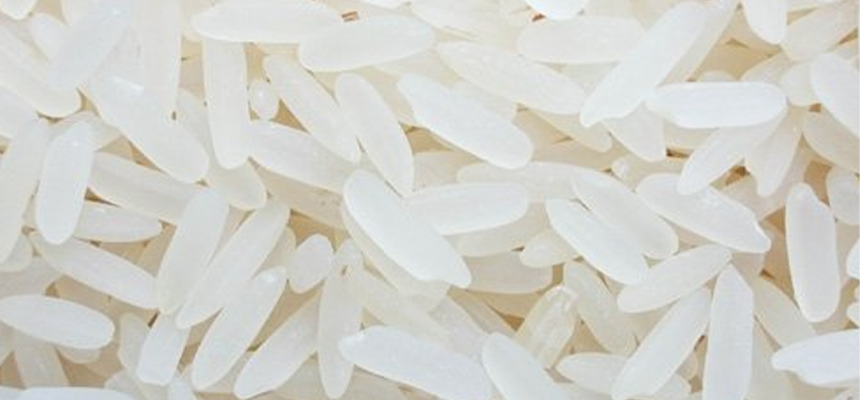
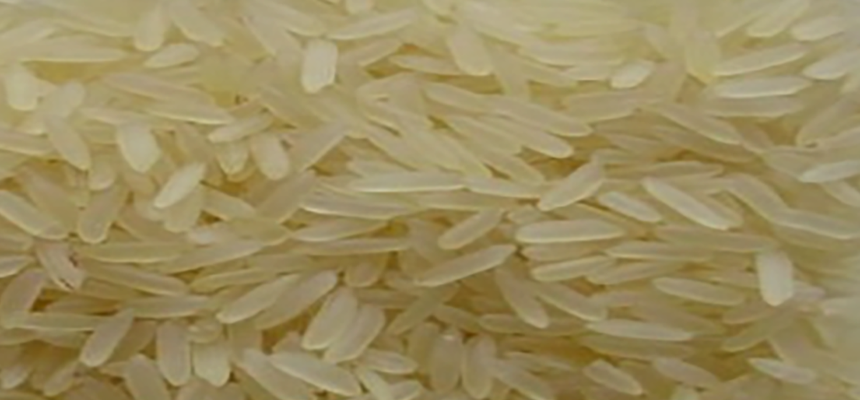
Thai parboiled rice 5% broken is the grade most of our parboiled buyers start with, and the one a lot of them never move away from. It’s long grain, light golden, firm when cooked, and run through colour sorters twice before it goes in the bag. We sell it by the container to importers, wholesalers, supermarket chains and food service companies around the world.
This page is the full picture: what’s in the bag, the spec sheet we work to, how we pack and ship it, and what to send us if you want a price. No fluff. If something here doesn’t match what you need, tell us and we’ll say straight away whether we can do it.
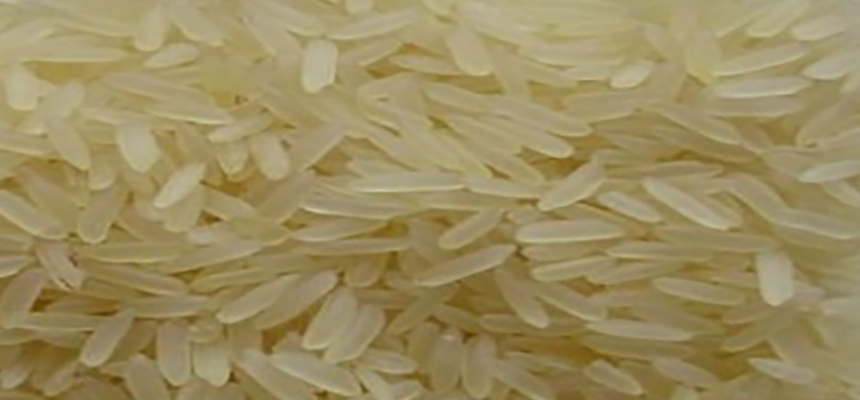
Table of Contents
What Thai Parboiled Rice 5% Broken Actually Is
Parboiled rice is paddy that’s been soaked, steamed and dried while the husk is still on. Only after that does it go to the mill. The steaming sets the starch inside the grain, pushes some of the goodness from the bran into the kernel, and makes the grain harder. That’s why parboiled rice cooks up separate and doesn’t turn to paste when it sits in a pot for an hour.
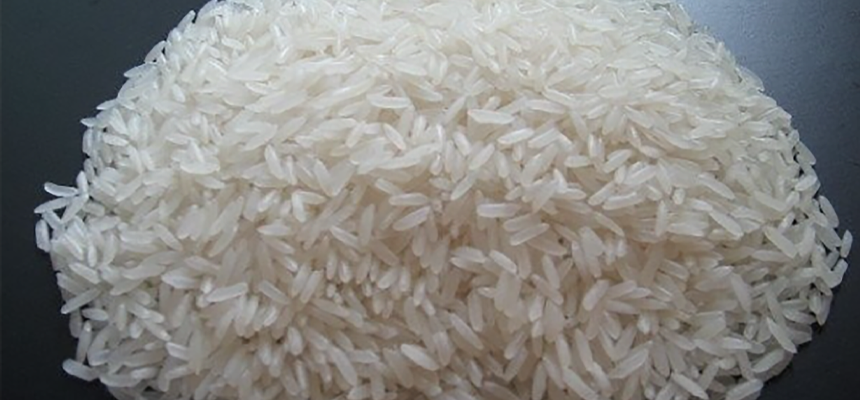
The “5% broken” part is about milling. When rice is milled, some grains snap. A 5% broken grade means no more than 5% of the rice by weight is broken pieces. The rest is whole or near whole grain. In our range, Thai parboiled rice 5% broken is the top grade for appearance. We also sell 15% broken, 25% broken and 100% broken for buyers who care more about price than looks.
“Thai” matters too. Thailand has been parboiling long grain rice for export for decades, and the mills around the Central Plains know the process well. Thai parboiled has a reputation for even colour and clean grain, which is why buyers in markets that know rice will often ask for it by origin. If you want the general background on the process, Wikipedia’s parboiled rice page covers it well enough.
What 100% Sortexed Means
Sortexed is trade shorthand for colour sorted. After milling, the rice passes through optical sorting machines. Cameras look at every grain as it falls, and small jets of air knock out anything that doesn’t match: black tips, dark grains, chalky white grains, stones, bits of husk, and grains that got damaged in the steaming.
“100% sortexed” means the whole lot has gone through the sorter, not just part of it. On our Thai parboiled rice 5% broken we run it through twice. It costs a little more, but it’s the difference between a bag that looks clean when a customer opens it and one that gets complaints. For supermarket shelves and branded packs, it’s worth it.
A few things sorting does and doesn’t do:
- It removes discoloured and damaged grains, so the colour in the bag is even.
- It pulls out most foreign matter, like small stones and seeds.
- It does not change the broken percentage much. That’s controlled at the grading stage, with sieves and length graders.
- It does not change moisture. That’s controlled at drying.
Thai Parboiled Rice 5% Broken Specifications
This is the spec sheet we quote Thai parboiled rice 5% broken against. On a contract we put the agreed numbers in writing and the inspection company checks against them at loading.
| Item | Specification |
|---|---|
| Product | Thai parboiled rice 5% broken, long grain |
| Origin | Thailand |
| Sorting | 100% sortexed, double polished |
| Broken grains | 5% max |
| Moisture | 14% max |
| Purity | 100% |
| Admixture | 0.1% max |
| Damaged and discoloured grains | Minimal after sorting |
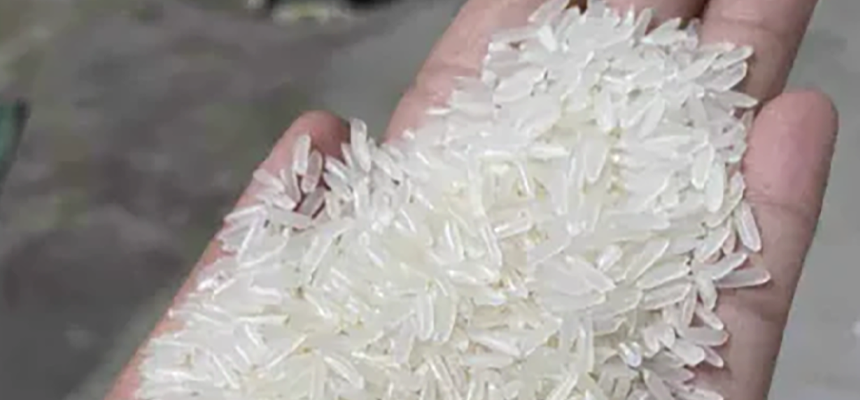
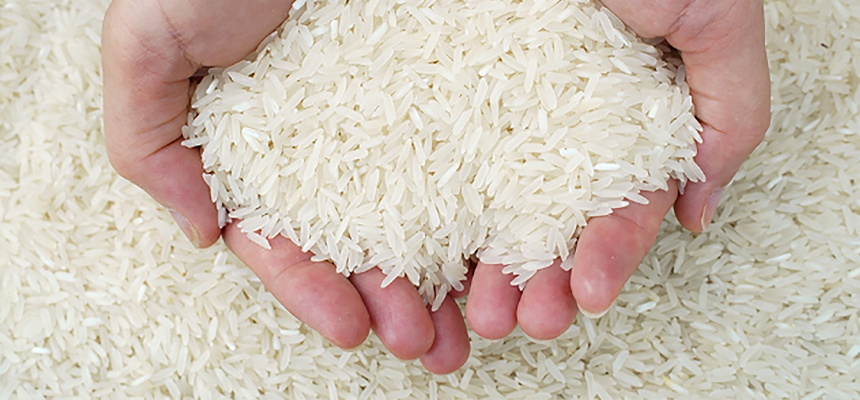
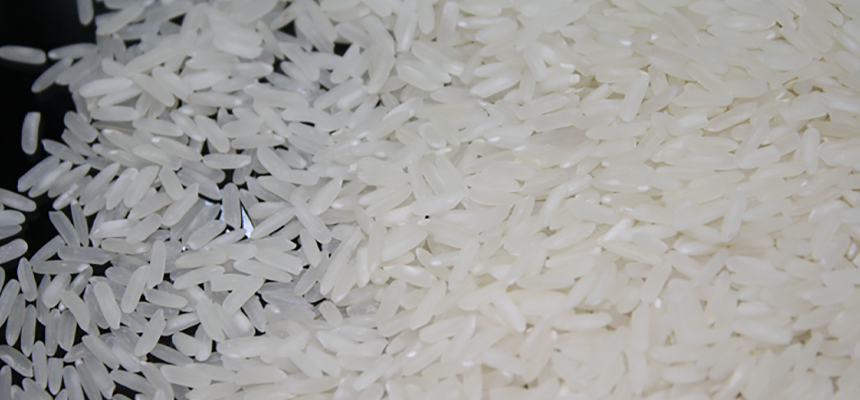
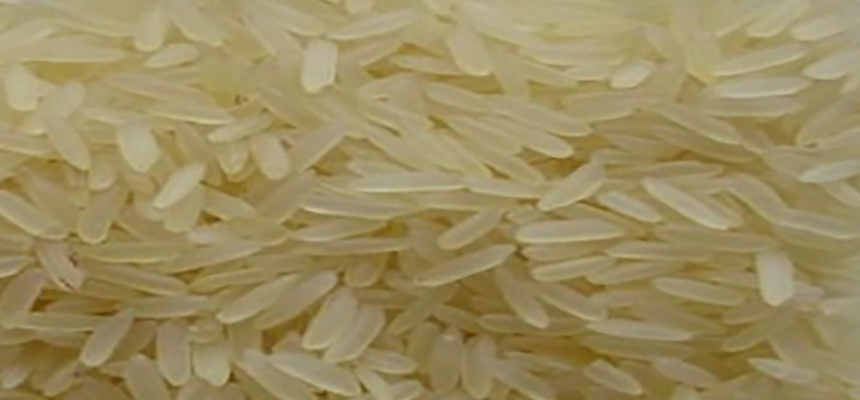
| Colour | Light golden, even |
| Crop | Current crop, mill date on request |
| Shelf life | Up to 24 months in cool, dry storage |
| Packing | 1kg, 5kg, 10kg, 25kg, 50kg |
If your market needs a number that isn’t on this list, say average grain length, chalky grain limit or a pesticide residue test, ask for it at quote stage. We’ll check with the mill and confirm before you commit, not after.
Why moisture matters so much
Moisture at 14% or below is the number we watch most closely on Thai parboiled rice 5% broken going to hot, humid ports. Rice that ships wetter than that can sweat in the container, and that’s how you end up with a smell, mould spots or insects by the time it lands. We check moisture at the mill and again before loading.
About the colour
New buyers sometimes ask if the golden tint means the rice is old. It doesn’t. The colour comes from steaming the paddy with the husk on, and it’s there from day one. If you’re selling to shoppers who haven’t seen parboiled rice before, a short line on the bag explaining the colour saves a lot of questions.
How We Produce It
Every lot of Thai parboiled rice 5% broken goes through the same steps. Nothing clever, just done carefully.
- Paddy selection. Long grain paddy suited to parboiling. Not every variety parboils evenly, and the mill picks lots that do.
- Soaking. The paddy sits in warm water until the grain takes on enough moisture.
- Steaming. Steam sets the starch. This is where the colour and the hard grain come from.
- Drying. The paddy is dried back down slowly. Rush this and grains crack later in the mill.
- Husking and milling. Husk and bran come off. Parboiled grains are tough, so fewer break.
- Polishing. Two passes to give a clean, even surface.
- Grading. Sieves and length graders take the broken level down to 5%.
- Colour sorting. Two passes through the sorters.
- Bagging. Weighed, sewn and marked, ready for inspection.
You can read how we check each stage on our quality control page, and the grading rules we follow on our rice standard page.
How It Cooks
Thai parboiled rice 5% broken takes a bit more water and a bit more time than plain white rice. Roughly one cup of rice to two cups of water, 20 to 25 minutes. What you get for that extra time is rice that stays in separate grains, doesn’t stick to the pot, and holds up when it’s reheated.
That’s the reason caterers, restaurants, hotels, schools and airlines buy it. A tray of parboiled rice can sit under a heat lamp for a whole service and still look fine at the end. Plain white rice would be a sticky block by then.
It also takes on sauce well without falling apart, which is why it’s the rice people use for jollof, biryani-style dishes, pilafs, rice and beans, fried rice and stews.
Packing Options
We pack Thai parboiled rice 5% broken in whatever bag suits your market.
| Bag size | Common bag type | Who usually buys it |
|---|---|---|
| 1kg | Printed plastic or vacuum pack | Supermarkets, retail brands |
| 5kg | Printed PP woven or laminated | Supermarkets, shops |
| 10kg | PP woven or laminated | Shops, small caterers |
| 25kg | PP woven, plain or printed | Wholesalers, food service |
| 50kg | PP woven, plain or printed | Importers, distributors, markets |
Private label is available. You send the artwork, we print the bags, and your brand goes on the shelf. Printing has its own minimum, so plan for that on your first order. Inner poly liners are available for long sea routes if you want extra protection.
Container Loads and Minimum Order
Most orders for Thai parboiled rice 5% broken go by 20 foot container. A 20 foot box typically takes around 25 metric tons in 50kg or 25kg bags, depending on the bag and how it’s stowed. Smaller retail packs take a bit less because of cartons and pallets.
Our usual minimum is one full container. If you want to test the market first, we can talk about a smaller trial or a mixed container with other grades, for example Thai parboiled rice 5% broken with some Thai white rice 5% broken or jasmine rice. Ask us what’s possible for your port.
What a Typical Order Looks Like
Here’s how a first order of Thai parboiled rice 5% broken usually runs with us, start to finish.
- Day 1 to 3. You send quantity, bag size, port and terms. We send a quote and spec sheet.
- Week 1. Samples go out by courier. You cook them and check them.
- Week 2. We agree the contract: price, spec, bags, payment and shipping date.
- Week 3 to 4. Deposit or letter of credit arrives. The mill processes and bags your lot.
- Loading. An inspection company samples the rice and watches it go into the container.
- After loading. We send the document set and the bill of lading so you can clear the rice.
Sea time depends on your port. Europe and the Middle East are usually quicker than West Africa or South America. We’ll give you an estimate with the quote.
Price: What Moves It
We don’t print a fixed price for Thai parboiled rice 5% broken on this page because it would be out of date within a week. The price depends on:
- The paddy price in Thailand at the time you order.
- The Thai baht against the US dollar.
- Bag type and printing.
- Whether you buy FOB (you arrange shipping) or CFR/CIF (we arrange it to your port).
- Freight rates to your port that month.
- Volume. More containers and repeat orders get better pricing.
If you’re comparing offers, compare like for like. A cheap quote for “parboiled 5%” that isn’t sortexed, or is old crop, or has no moisture limit in writing, isn’t the same rice. For more on how rice pricing works per ton, see our guides on Thai 100% broken rice price per ton and Thai white rice 25% broken price per ton.
If you’re new to trade terms like FOB and CIF, the ICC’s Incoterms page explains who pays for what.
Documents That Come With Your Shipment
Every export of Thai parboiled rice 5% broken ships with the standard set:
- Commercial invoice
- Packing list
- Bill of lading
- Certificate of origin
- Phytosanitary certificate
- Fumigation certificate
- Quality and weight certificate from an independent inspection company
Some countries want more, like a health certificate, a non-GMO statement, a lab test for residues, or a specific form of certificate of origin. Tell us your destination before you sign and we’ll confirm what we can provide. Rules on plant health papers are set country by country under the IPPC, so it pays to check with your clearing agent too.
Who Buys Thai Parboiled Rice 5% Broken
Our buyers for this grade are a mixed bunch. Some examples:
- Importers who sell on to wholesalers in their country and want one grade they can rely on every shipment.
- Wholesalers and market traders who move 50kg bags and need rice that doesn’t break in handling.
- Supermarket chains who want clean, even rice for their own brand.
- Food service and catering companies feeding hotels, hospitals, schools, camps and airlines.
- Food manufacturers making ready meals, frozen meals and canned rice dishes, where firm grains matter.
We ship Thai parboiled rice 5% broken worldwide. Demand is strong in West Africa, the Middle East, Europe and parts of the Americas, where parboiled rice is often the everyday rice rather than a specialty. If your market is new to us, that’s fine. We’ll work out the paperwork with you.
5% Broken or a Cheaper Grade?
We’d rather sell you the right grade than the most expensive one. Here’s how we’d think about it.
| Grade | Best for | Trade off |
|---|---|---|
| Thai parboiled rice 5% broken | Retail, branded packs, restaurants | Highest price |
| 15% broken | Wholesale, food service | Some visible broken |
| 25% broken | Price-driven markets, institutions | More broken, lower price |
| 100% broken | Flour, brewing, feed, processing | No whole grains |
If shoppers see the rice before they buy it, go with Thai parboiled rice 5% broken. If it’s cooked in a kitchen and nobody sees it raw, 15% or 25% often does the same job for less money. Our products page lists every grade we export.
Storing It at Your End
Parboiled rice keeps better than plain white rice, but it still needs looking after once it lands.
- Keep bags off the floor, on pallets.
- Keep them away from walls so air can move.
- Store in a dry, covered, shaded warehouse.
- First in, first out. Don’t let old stock sit behind new stock.
- Once a bag is open, move the rice to a sealed container.
Stored like that, Thai parboiled rice 5% broken keeps its quality for up to 24 months.
How to Check What You Receive
When your container of Thai parboiled rice 5% broken arrives, it’s worth doing a quick check before it goes into the market.
- Open a few bags from the front, middle and back of the container, not just the door.
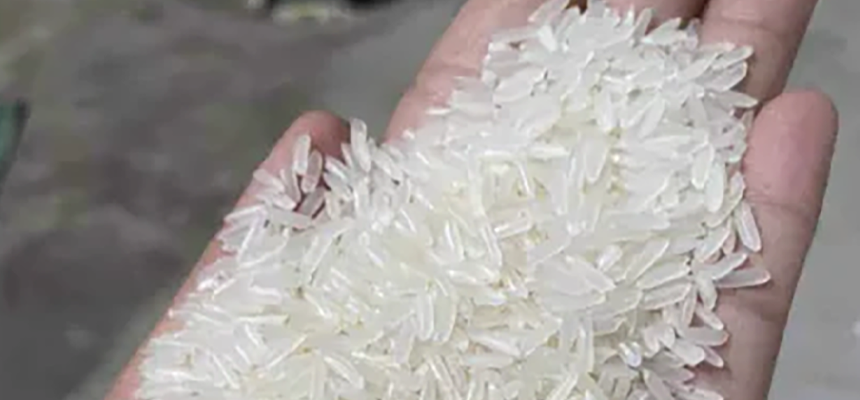
- Look at colour. It should be even light gold, no dark patches.
- Pour a handful on a dark plate and eyeball the broken pieces.
- Smell it. It should smell clean, not musty.
- Cook a small pot. Grains should stay separate.
If something looks wrong, take photos and tell us straight away, with the container number. The inspection report from loading gives both sides a starting point.
Harvest Timing and Supply Through the Year
Thailand grows rice more than once a year in the irrigated areas, so paddy for parboiling is available most months. The main crop comes in towards the end of the year and a second crop follows in the first half of the next. Prices and grain quality shift a little between the two, and new crop paddy usually needs some rest before it parboils well.
What this means for you: Thai parboiled rice 5% broken is available year round, but if you’re planning big volumes, talk to us a month or two ahead. We can book paddy at the mill and hold a price for a set period, which is easier on your budget than buying spot every time.
Mistakes We See First-Time Buyers Make
We’ve seen the same few problems come up again and again with new buyers of Thai parboiled rice 5% broken. None of them are hard to avoid.
- Buying on price alone. The cheapest offer usually cuts something: old crop, no sorting, loose moisture limit, thin bags. You find out at the port.
- No written spec. “Parboiled 5%” on an invoice means nothing unless the contract says broken, moisture, sorting and crop year.
- Skipping the sample. Cook it. Show it to two or three of your customers. It costs very little and tells you a lot.
- Forgetting the import papers. Some markets need product registration or a specific certificate before the rice arrives. Sort that out before loading, not while the container sits at the port paying storage.
- Wrong bag for the route. Thin bags on a long, hot voyage tear and let moisture in. Pay a little more for good bags.
- Ordering too much, too soon. Start with one or two containers, see how the rice sells, then scale up.
Selling Thai Parboiled Rice 5% Broken in Your Market
Most of our importers resell to wholesalers, shops and caterers. A few practical things that help the rice move:
Tell people it’s Thai. In a lot of markets, Thai origin is a selling point on its own. Put it on the bag.
Explain the colour. Shoppers who only know white rice may think golden rice is stale. One line on the pack fixes that.
Talk about the cooking. Caterers and restaurant owners buy parboiled because it doesn’t stick and holds up for hours. That’s the pitch.
Keep supply steady. Wholesalers switch brands when they run out. Regular monthly or bi-monthly containers of Thai parboiled rice 5% broken keep your customers from trying someone else.
Offer two sizes. A 50kg bag for the trade and a 5kg or 10kg bag for families covers most of the market without a big range to manage.
Why Buy From Us
We’re a Thai rice exporter, and parboiled rice is one of our core lines, not an add-on. A few things buyers tell us they value:
- We give you the spec in writing and stick to it.
- We send samples from current stock, not a special batch.
- We tell you honestly if a spec or a date isn’t possible.
- We answer on WhatsApp and email, usually the same day.
- We’re happy to start small and grow with you.
You can read more about us and see our brands, or check common questions on our FAQ page.
Frequently Asked Questions
Can I get a sample of Thai parboiled rice 5% broken?
Yes. We send samples from the stock we’d actually load for you. You pay the courier, and we’ll often credit it against your first order.
Is 100% sortexed the same as double polished?
No. Polishing is about the surface of the grain. Sorting is about removing bad grains. Our Thai parboiled rice 5% broken gets both.
Can you do a lower broken level than 5%?
Sometimes. Ask us with your target number and we’ll check with the mill.
How long from order to loading?
For standard bags, usually two to three weeks after the contract and payment terms are settled. Printed bags for private label take longer.
What payment terms do you accept?
Usually a deposit by bank transfer and the balance against documents, or a letter of credit from a bank we both accept. We’ll agree it in the contract.
Do you ship to my country?
Very likely. We ship Thai parboiled rice 5% broken worldwide. Send your port name and we’ll quote.
Related Guides
- Parboiled rice vs white rice: what’s really different
- Parboiled rice import to West Africa
- Golden sella vs white sella parboiled rice
- Parboiled rice health benefits
Order Thai Parboiled Rice 5% Broken
To get a price, send us four things: how many tons, bag size and type, your destination port, and whether you want FOB or CIF. We’ll come back with a quote for Thai parboiled rice 5% broken, the spec sheet, and a sample offer.
You can also look at the full Thai parboiled rice 5% broken product page for photos and the spec table.
Email info@dethairice.com, WhatsApp +66 81 034 6390, or use our contact page. We ship worldwide.
10 thoughts on “Thai Parboiled Rice 5% Broken: Best 100% Sortexed Export Grade”