


Thai Hom Mali vs jasmine rice is one of the most common questions we get from new buyers. Are they the same thing? Is one better? Why does one cost so much more? We export Thai Hom Mali from Thailand, and we also sell cheaper fragrant rice, so we don’t have a reason to pretend they’re identical or that one is always the right choice. This guide explains the real difference and then shows you exactly what we sell.
The short answer: all Thai Hom Mali is jasmine rice, but most rice sold as jasmine is not Thai Hom Mali.
Table of Contents
Thai Hom Mali vs Jasmine Rice: The Short Version
“Jasmine rice” is a loose trade name. It covers almost any long grain fragrant rice that cooks soft and a little sticky. It can come from Thailand, Cambodia, Vietnam, Myanmar, the United States or elsewhere, and from a range of different varieties.
“Thai Hom Mali” is much narrower. It means rice:
- grown in Thailand
- from the KDML 105 or RD15 varieties
- with at least 92% Hom Mali grains in the lot, under the Thai export standard
So in the Thai Hom Mali vs jasmine rice comparison, one is a protected, defined product, and the other is a general description. You can read more about the wider family on the jasmine rice Wikipedia page.
Where the Name Jasmine Comes From
In Thai, Hom Mali means “fragrant jasmine.” The rice doesn’t smell of jasmine flowers. The name refers to the grain’s bright white color, which Thai people compare to jasmine petals, and to its pleasant smell.
When Thai Hom Mali started selling abroad, importers translated the name as jasmine rice. Over the years, other countries began growing fragrant rice and selling it under the same English name. That’s how the confusion started, and it’s why the Thai Hom Mali vs jasmine rice question matters when you’re buying by the container.
Side by Side Comparison
Here’s how Thai Hom Mali usually compares with the other rice sold as jasmine.
| Feature | Thai Hom Mali | Other jasmine rice |
|---|---|---|
| Origin | Thailand only | Thailand, Cambodia, Vietnam, Myanmar, USA and others |
| Varieties | KDML 105, RD15 | Many, including Pathumthani 1 and local fragrant types |
| Purity rule | 92% Hom Mali minimum | Usually no fixed standard |
| Crops per year | One, wet season | Often two or more |
| Aroma | Strong, pandan and popcorn | Mild to strong, depends on variety |
| Texture | Soft, slightly sticky, glossy | Soft, can be firmer or stickier |
| Price | Highest | Lower, sometimes much lower |
| Certification | Thai Hom Mali certificate available | Varies |
None of this means other jasmine rice is bad. Some of it is very good. It’s just a different product, and it should be priced and sold as one.
Thai Hom Mali vs Jasmine Rice From Other Countries
Cambodian jasmine
Cambodia grows excellent fragrant rice, and some of it has won international taste awards. It’s cheaper than Thai Hom Mali. In 2026, The Nation reported the gap had grown to as much as US$400 a ton. For price sensitive markets, that’s a big reason to switch.
Vietnamese jasmine
Vietnam has made huge progress with fragrant varieties. Vietnamese jasmine is usually cheaper again and is popular in parts of Asia and Africa.
American jasmine
The US grows some jasmine type rice, mainly for its home market. It tends to have a milder smell than Thai Hom Mali.
Thai Pathumthani fragrant rice
This one confuses people most, because it’s Thai and it’s jasmine. Pathumthani 1 is a Thai fragrant variety that isn’t sensitive to day length, so farmers can grow it more than once a year. It’s softer on price and lighter on aroma. We sell it too, and our Pathumthani wholesale guide covers it.
Thai Hom Mali vs Jasmine Rice: Why Hom Mali Costs More
In the Thai Hom Mali vs jasmine rice price debate, a few things explain the gap.
- One crop a year. KDML 105 only flowers when the days get shorter, so it’s harvested once, around November to January.
- Lower yields. It’s a tall, traditional plant that gives less rice per field than modern varieties.
- Limited area. The best Hom Mali comes from specific provinces in the northeast.
- A strict standard. The 92% purity rule means it can’t be stretched with cheaper rice.
- A strong name. Shoppers in many countries ask for Thai Hom Mali by name, and pay more for it.
Our guide to Thai Hom Mali rice price per ton goes through the numbers.
Where the Smell Comes From
Both Thai Hom Mali and other jasmine rice get their smell mainly from a compound called 2-acetyl-1-pyrroline, often called 2AP. It’s the same compound that makes pandan leaves smell the way they do.
The amount varies with variety, soil, weather and storage. Hom Mali from the dry, sandy fields of the northeast tends to have a lot of it. Fresh new crop has more than old crop. So a good sample of Thai Hom Mali usually smells stronger than most other jasmine, but an old bag of Hom Mali can smell weaker than a fresh bag of something else. Crop year matters.
How to Tell Thai Hom Mali vs Jasmine Rice Apart
If you’re sorting out the Thai Hom Mali vs jasmine rice question with a real sample in front of you, here’s what to check.
- Ask for the purity figure. Thai Hom Mali should be 92% minimum, in writing.
- Ask for the Thai Hom Mali certificate. It’s issued through the Thai Department of Foreign Trade for export lots.
- Check the origin on the certificate of origin. It should say Thailand.
- Ask for the crop year.
- Cook a small pot. Real Hom Mali fills the kitchen with a pandan smell when the lid comes off.
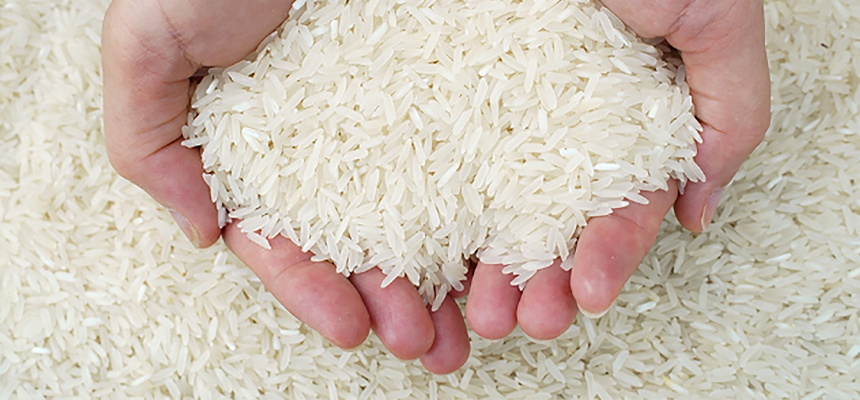
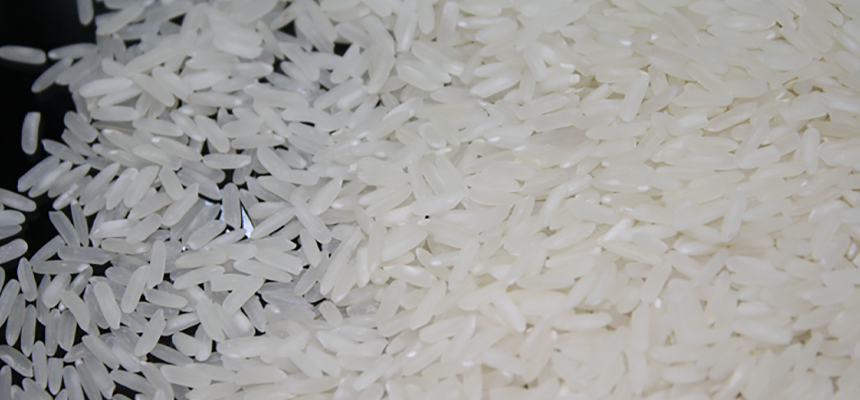
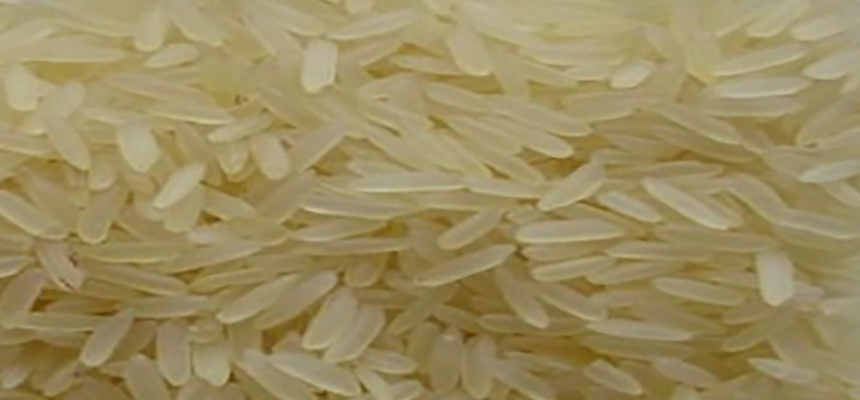
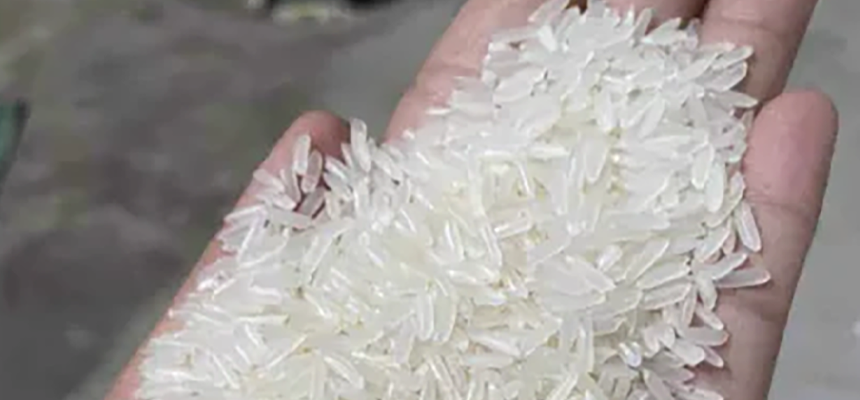
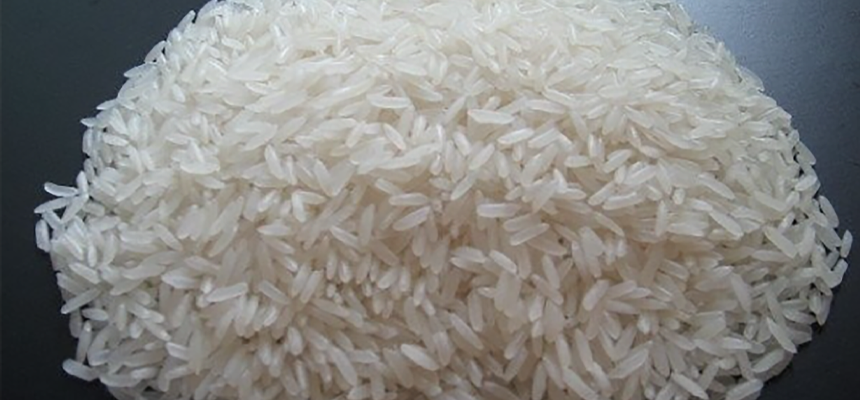
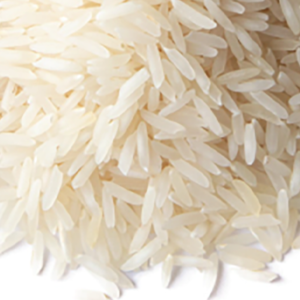
- Look at the grain. Long, slim, mostly translucent, with very few chalky grains.
A DNA test can confirm variety if you ever need certainty, but for most buyers the documents plus a cooking test are enough.
What We Sell
We sell both sides of the Thai Hom Mali vs jasmine rice choice, so you can pick what suits your market.
Thai Hom Mali rice 100% Grade A
| Item | Specification |
|---|---|
| Variety | KDML 105 / RD15 |
| Hom Mali purity | 92% minimum |
| Broken grains | 4.5% maximum |
| Moisture | 14% maximum |
| Chalky kernels | 6% maximum |
| Yellow kernels | 0.2% maximum |
| Admixture | 2% maximum |
| Milling | Double polished, sortexed |
| Crop year | Current season, stated in the contract |
| Packing | 5kg, 10kg, 25kg, 50kg, jumbo, private label |
See the full product on our Thai Hom Mali rice page or read about the Thai Hom Mali rice 100% Grade A spec in detail.
Thai jasmine and Pathumthani fragrant rice
A cheaper Thai fragrant rice with a lighter aroma, good for markets where price matters most. Details are on our Thai jasmine rice page.
Organic jasmine rice
For health food shops and organic ranges. See our organic jasmine rice page.
Thai Hom Mali vs Jasmine Rice: Which Should You Buy?
Here’s how we’d think about Thai Hom Mali vs jasmine rice for your own business.
Choose Thai Hom Mali if:
- Your customers ask for Thai rice or Hom Mali by name
- You sell in supermarkets with a premium own brand
- You supply Thai restaurants or chefs who can taste the difference
- Your market pays for quality and origin
Choose another jasmine rice if:
- Your customers mainly shop on price
- The rice goes into mixed dishes, fried rice or ready meals
- You need the lowest cost per ton for catering or institutions
Some buyers carry both: Thai Hom Mali as the premium line and a cheaper jasmine as the everyday line. That can work very well, as long as the bags are honest about what’s inside.
Labeling: Be Honest About What’s in the Bag
This is where a lot of the confusion comes from, and it can cause trouble with food authorities and customers.
- If the bag says “Thai Hom Mali,” the rice should meet the Thai standard and you should have the certificate.
- If you sell a blend or a different variety, call it jasmine rice or fragrant rice, and show the real origin.
- Don’t mix Thai and non-Thai rice and call the result Thai Hom Mali.
We give you the documents to back up what you print. If you’re creating your own brand, our guide to private label Thai Hom Mali rice explains the process.
Cooking Differences
In the kitchen, the Thai Hom Mali vs jasmine rice difference is mostly about smell and softness.
- Thai Hom Mali cooks soft, glossy and a little sticky, with a clear pandan aroma. It needs slightly less water than ordinary rice, about 1 to 1.2 cups of water per cup of rice.
- Other jasmine rice is usually a bit firmer or a bit stickier, depending on the variety, and the smell is often lighter.
- Both should be rinsed once or twice, cooked covered, and rested for 10 minutes before serving.
New crop rice of either kind needs less water than old crop.
Nutrition
On nutrition, Thai Hom Mali vs jasmine rice is close to a tie. There’s very little difference between them. Both are mainly carbohydrate, low in fat and naturally gluten free. Hom Mali has a fairly low amylose content, which is why it’s soft and a little sticky. If your customers want more fiber, whole grain options like our Thai red cargo rice are a better fit.
Common Myths About Thai Hom Mali vs Jasmine Rice
“Jasmine rice smells of jasmine flowers.” It doesn’t. The smell is closer to pandan and popcorn.
“All jasmine rice is from Thailand.” Not anymore. Many countries grow it.
“Thai Hom Mali is always better.” It’s usually the most fragrant and consistent, but a fresh bag of good Cambodian jasmine can beat an old bag of Hom Mali.
“Grade A means it’s Hom Mali.” Grade A is a milling grade. It says nothing about the variety. Ask for purity.
Documents and Shipping
Every order comes with a commercial invoice, packing list, bill of lading, certificate of origin, phytosanitary certificate issued under IPPC rules, fumigation certificate, surveyor’s quality and weight certificate, and the Thai Hom Mali certificate for Hom Mali lots.
We ship from Bangkok and Laem Chabang on standard Incoterms: FOB, CFR or CIF. One 20 foot container holds about 25 metric tons. More on container orders is in our guide to Thai Hom Mali rice bulk supply.
Where Thai Hom Mali Grows
Part of the Thai Hom Mali vs jasmine rice difference is simply geography. Almost all our Hom Mali comes from the northeast of Thailand, from Surin, Roi Et, Buriram, Sisaket, Yasothon and Ubon Ratchathani.
Some of that land sits on the Thung Kula Rong Hai plain. The soil is sandy, low in nutrients and a little salty, and there’s one rainy season a year. It’s hard country to farm, but Hom Mali grown there has some of the strongest aroma of any rice. It carries a protected geographical indication.
Other jasmine rice is often grown on richer, irrigated land with two or three crops a year. That’s good for volume and price, but it tends to give a lighter smell.
Thai Hom Mali vs Jasmine Rice for Restaurants
Chefs tend to have firm views here. For plain steamed rice served next to a Thai curry, most Thai restaurants abroad want Thai Hom Mali. Customers who know Thai food can tell.
For fried rice, rice bowls, sushi-style dishes or buffet service, a cheaper jasmine can work fine. Day-old rice is what makes good fried rice, and aroma matters less once soy sauce and garlic go in.
Many restaurant groups buy Thai Hom Mali in 25kg bags for the main menu and a lower cost rice for staff meals or mixed dishes. Our guide on Thai Hom Mali rice 25kg and 50kg bags explains the bag options.
Thai Hom Mali vs Jasmine Rice for Retail
On a supermarket shelf, the name on the bag matters. “Thai Hom Mali” and “Thai jasmine” are words that sell in many markets, from Hong Kong and Singapore to the US, Europe, the Gulf and Australia.
If you run a premium own brand, Thai Hom Mali gives you a clear story and the certificate to prove it. If you run a value brand, a cheaper jasmine lets you hit a lower shelf price. Plenty of retailers stock both, side by side, at different price points.
Questions to Ask Any Seller
Before you buy, whichever side of the Thai Hom Mali vs jasmine rice choice you’re on, ask:
- What variety is it, and where was it grown?
- What’s the purity or blend ratio?
- What crop year is it?
- What’s the broken percentage?
- Which surveyor will inspect it at loading?
- What documents come with it?
A seller who answers clearly is worth talking to. One who gets vague about variety or origin probably has a reason.
Our Quality Checks
Every lot we ship, Hom Mali or other jasmine, goes through the same checks: paddy inspection, purity testing, broken and chalky counts, moisture testing, a cooking test for smell and texture, and an independent surveyor at loading. You can read more on our quality control page.
We also keep a sample from every lot, so if there’s ever a question about what was shipped, there’s something to check against.
A Side by Side Cooking Test
If you want to settle Thai Hom Mali vs jasmine rice for yourself, this is the fairest way to do it. It takes about half an hour.
- Take the same weight of each rice, say one cup.
- Rinse both the same way, once or twice in cold water.
- Cook both in the same type of pot, with the same water ratio, about 1 to 1.2 cups of water per cup of rice.
- Cover, cook for 12 to 15 minutes, then rest for 10 minutes with the lid on.
- Open both pots at the same time and smell them straight away.
- Taste each one warm, then again after 30 minutes.
Look for three things: how strong the smell is, how soft and glossy the grains are, and how well the rice holds up as it cools. Ask a few colleagues or customers to try both without telling them which is which. That blind test tells you more about your market than any spec sheet.
Thai Hom Mali vs Jasmine Rice for Food Manufacturers
If you make ready meals, frozen rice dishes, rice snacks or baby food, the Thai Hom Mali vs jasmine rice choice usually comes down to cost and consistency.
- Ready meals sold as “Thai” often benefit from real Thai Hom Mali, especially if the pack says so.
- Frozen fried rice and mixed dishes usually work well with a cheaper jasmine or a lower Hom Mali grade.
- Snacks and flour-based products rarely need whole grain fragrant rice at all. Broken grades are cheaper and do the same job.
Tell us your product and how the rice is processed, and we’ll suggest the grade that gives you the best cost for the result you need.
Storage and Shelf Life
Both Thai Hom Mali and other jasmine rice keep for 12 to 24 months from milling if stored well. The aroma fades faster than the rice itself goes off, so for fragrant rice, storage is really about protecting the smell.
- Keep bags cool and dry, out of direct sun
- Stack on pallets, away from walls
- Keep away from anything with a strong smell
- Sell oldest stock first
In hot, humid countries, aim to sell within about 12 months. That applies on both sides of the Thai Hom Mali vs jasmine rice comparison.
Thai Hom Mali vs Jasmine Rice: A Quick Price Picture
We won’t print numbers here because they change every week. But the order is fairly steady:
- Thai Hom Mali rice 100% Grade A sits at the top.
- Lower Hom Mali grades come a little below it.
- Thai Pathumthani fragrant rice is clearly cheaper.
- Cambodian and Vietnamese jasmine is often cheaper again.
- Ordinary long grain white rice like our white rice 5% broken is much cheaper than any of them.
For a firm quote on any of these, just ask.
Our Honest Advice
If you are new to fragrant rice and not sure where to start, order a sample of each and cook them side by side. Show them to a few of your customers. If they pick the Thai Hom Mali, and your market pays for it, that is your answer. If they cannot tell much difference, or price matters more to them, a cheaper jasmine rice may be the smarter buy. Either way, we would rather help you get the Thai Hom Mali vs jasmine rice decision right for your market than sell you the most expensive rice on our list. Buyers who get the right product for their customers tend to come back.
Frequently Asked Questions
Is Thai Hom Mali the same as jasmine rice?
Thai Hom Mali is a type of jasmine rice, and the original one. But jasmine rice is a broader name that includes other varieties and other countries.
Why is Thai Hom Mali more expensive than jasmine rice?
One crop a year, lower yields, a limited growing area, a strict purity standard and strong consumer demand.
Is Pathumthani rice the same as Hom Mali?
No. Pathumthani 1 is a different Thai fragrant variety. It’s cheaper and has a lighter aroma.
Can I buy both from you?
Yes. We export Thai Hom Mali, Thai jasmine and Pathumthani fragrant rice, and organic jasmine rice.
Can I get samples of both to compare?
Yes. Cooking them side by side is the best way to settle the Thai Hom Mali vs jasmine rice question for your own market.
More answers are on our FAQ page, or read about us. You’ll find everything we export on the products page.
Related Guides
Settle the Thai Hom Mali vs Jasmine Rice Question With a Sample
The easiest way to decide is to cook both. Send us your quantity, bag size, destination port and preferred shipping term, and we’ll send prices for Thai Hom Mali and our other jasmine rice, with samples of each.
Email info@dethairice.com or WhatsApp +66 81 034 6390, or use our contact page.
We ship worldwide.
18 thoughts on “Thai Hom Mali vs Jasmine Rice: Best Buyer’s Guide”